
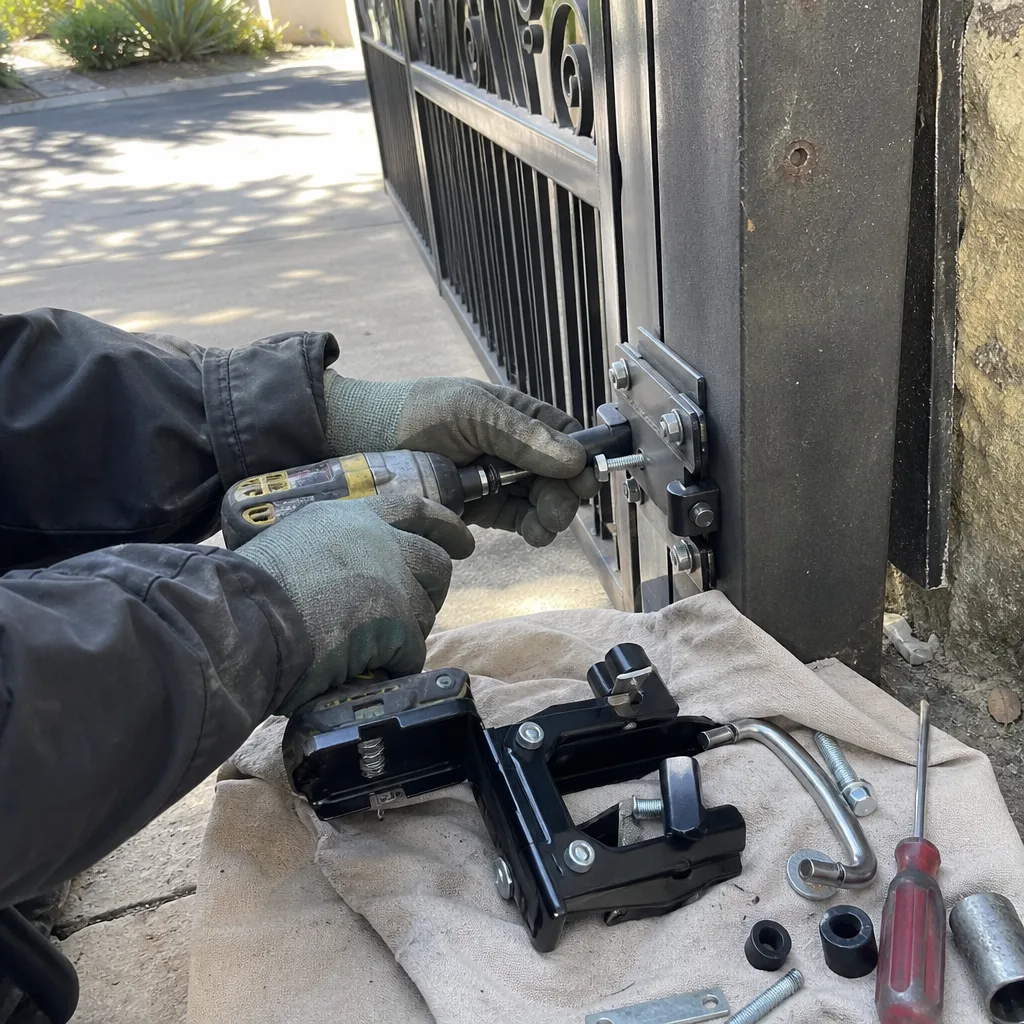
Last updated November 2, 2026
 Wrought iron
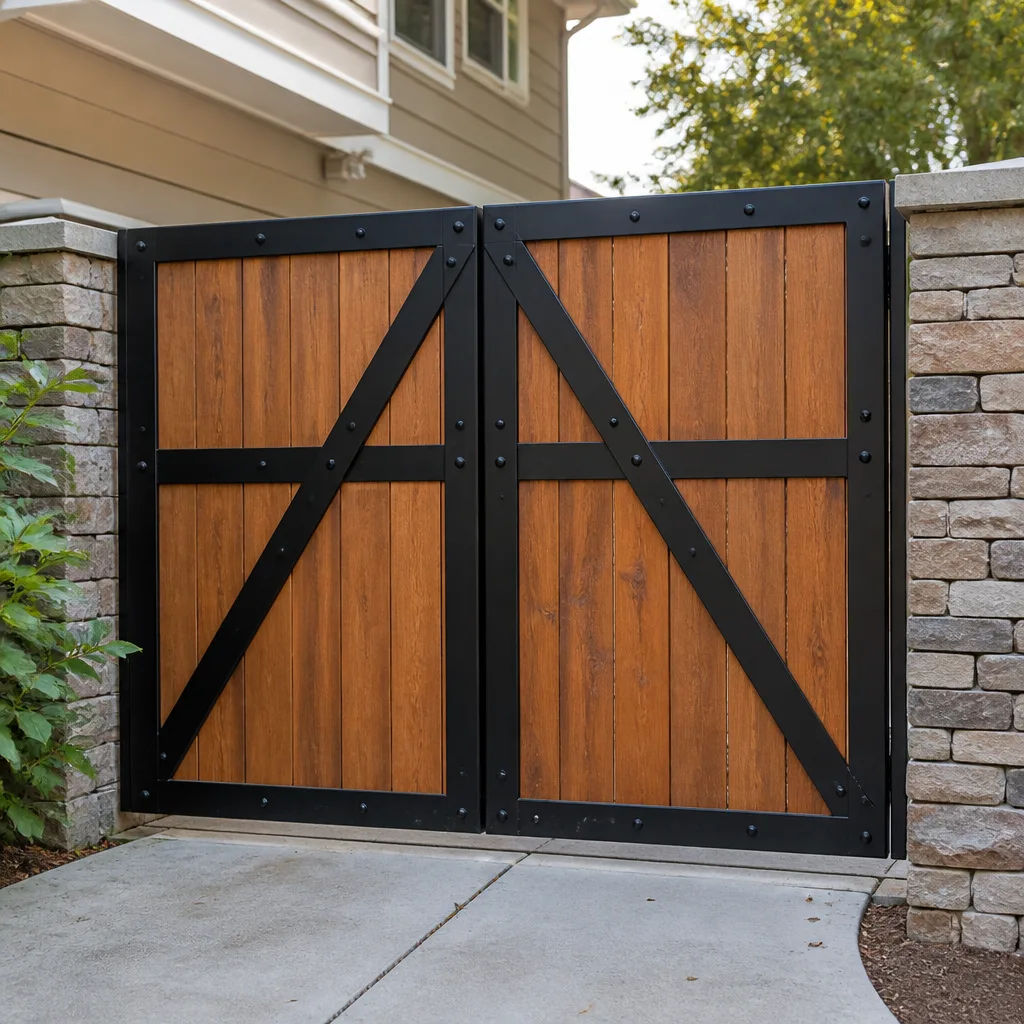 Wood & steel frame
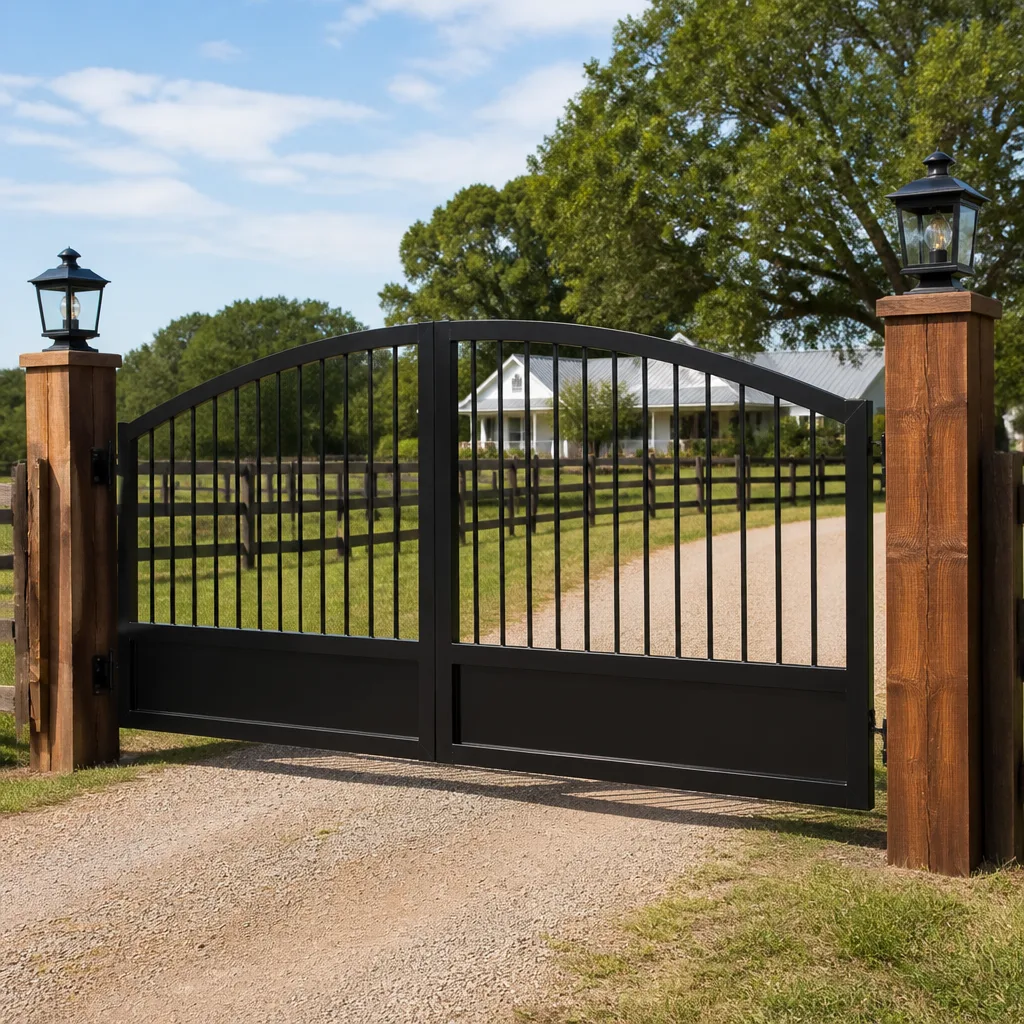 Farm & ranch
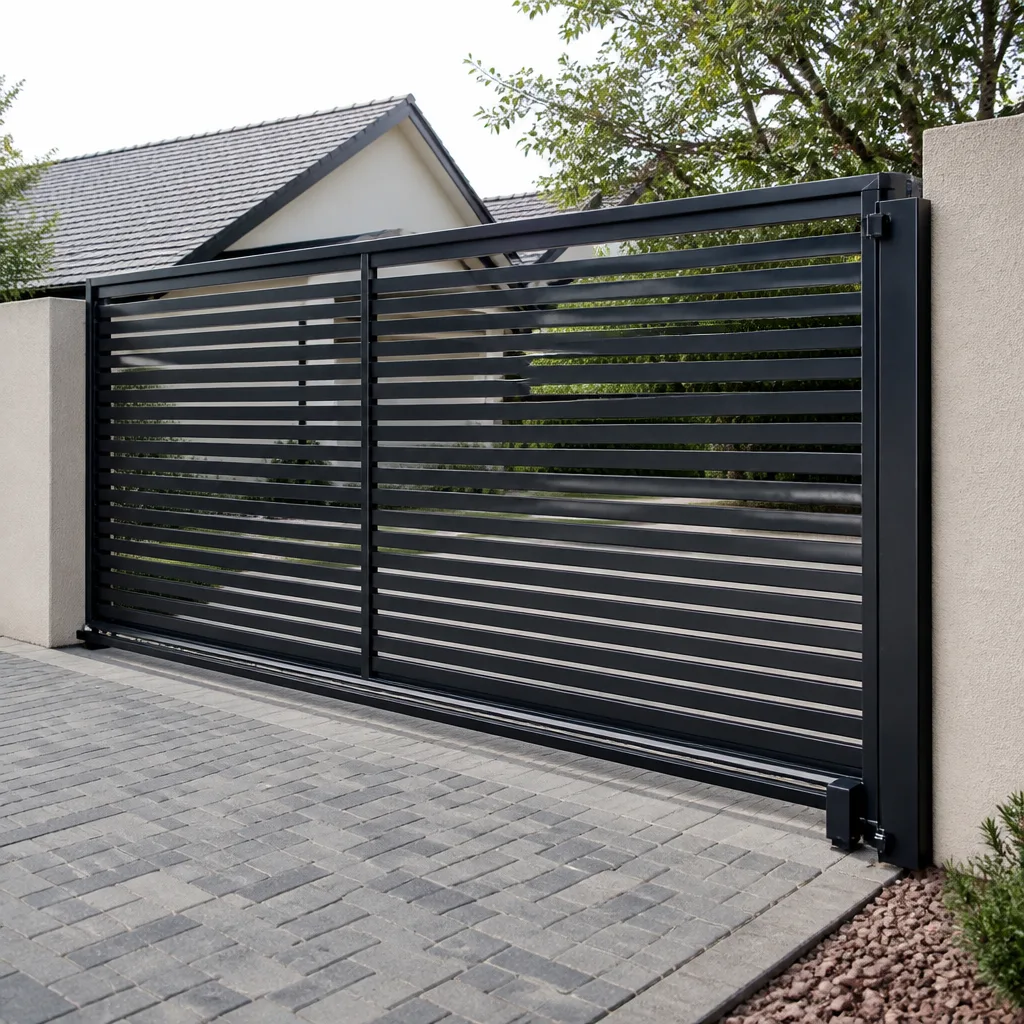 Sliding driveway gates
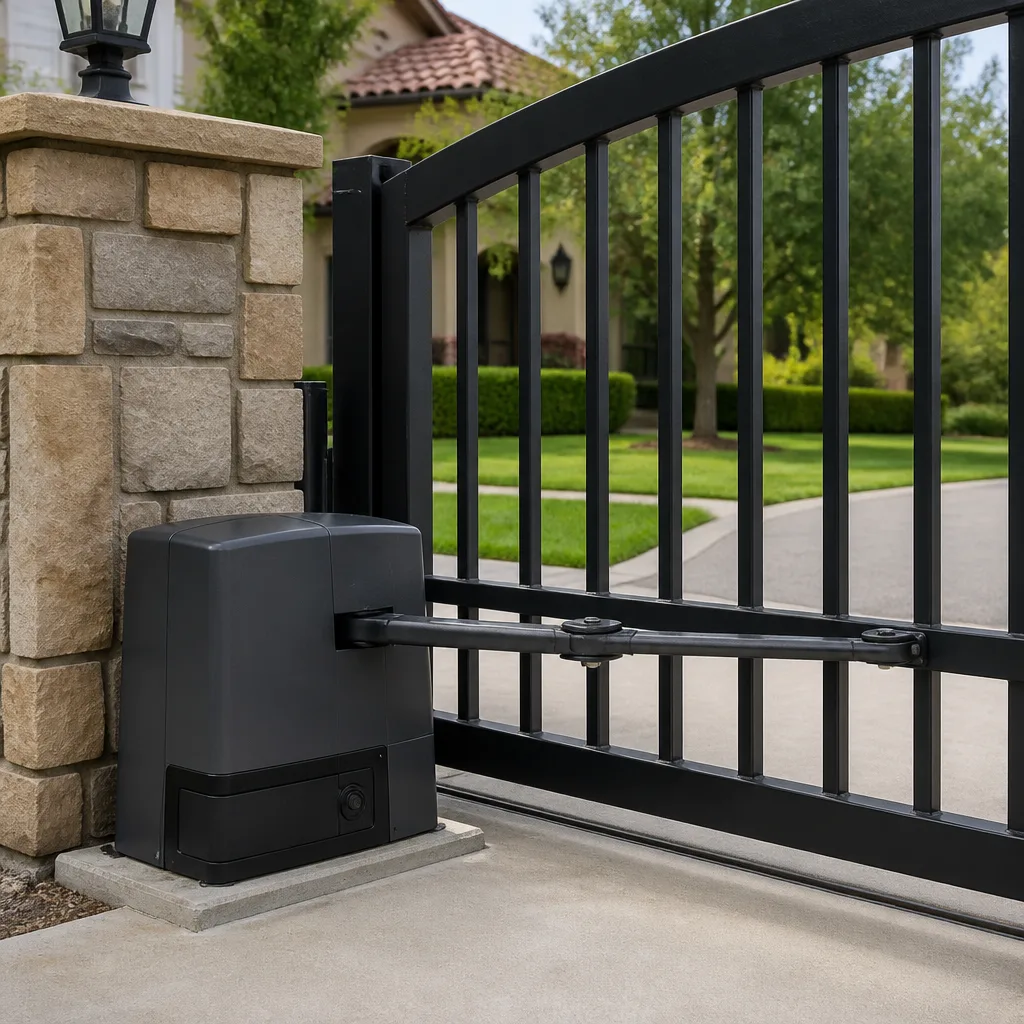 LiftMaster operators
Free on-site gate assessment - hinges, posts, and your LiftMaster or Nice gate operator checked before anything is quoted
The assessment is free and the quote is the invoice.
Get your free estimateGate Repair Emergency Preparedness Guide for Union City Homes
A motorized gate stuck in the closed position during a fire evacuation is not just an inconvenience. Cal Fire incident reports include cases where delayed vehicle egress contributed to property loss, and a manual release you’ve never tested is not a plan. This guide covers exactly what to do when your gate fails at the worst possible moment in Union City: how to disengage the operator on the most common local systems, how to secure a gate stuck open, what to tell the dispatcher, and how to prepare before anything breaks.
Styles & brands we work with
- Wrought iron
- Wood & steel frame
- Farm & ranch
- Sliding driveway gates
- LiftMaster operators
Quick Answer
If your gate fails in Union City, the first step is to locate the manual release mechanism on your operator, disengage the motor, and move the gate by hand so your vehicles are never trapped. Secure a gate stuck open with a heavy-duty chain and padlock wrapped around the gate frame and a fixed post, not through the operator arm. Then call a gate specialist who offers Gate Repair services to diagnose the actual component that failed, so the temporary fix doesn’t become a permanent security gap.
Table of Contents
- Manual Release Procedures for the Five Most Common Union City Gate Operators
- How to Secure a Gate Stuck Open While You Wait for Repair
- What to Tell the Dispatcher to Get the Right Technician Faster
- Power Outage Protocol: Which Gates Default Open, Which Default Closed
- The Three-Item Emergency Kit Every Motorized Gate Owner Needs
- The Hidden Cost of Improvising: Secondary Damage from Emergency DIY Fixes
- What Union City’s Climate and Layout Mean for Gate Emergencies
- Common Mistakes to Avoid
- When to Call a Professional
- Frequently Asked Questions
- The Bottom Line
Manual Release Procedures for the Five Most Common Union City Gate Operators
Every motorized gate operator has a mechanical release that separates the motor from the gate leaf, putting the gate into “free-wheeling mode.” That phrase means the gate is no longer driven by the motor; you can push it open or closed by hand without fighting the gearbox. Knowing where that release lives on your specific operator is the difference between a two-minute fix and a forty-minute panic session in the dark.
From our work on electric gate repair in Union City, the five operators we see most often are LiftMaster, FAAC, BFT, Linear, and Viking. Here is where each one hides its release.
LiftMaster Slide and Swing Operators
On LiftMaster’s residential slide and swing arm models, the manual release is a red or yellow T-handle located on top of or on the side of the operator housing. Pulling it rotates an internal lever that disengages the drive gear. On swing arm models, the release is often at the base of the arm where it bolts to the post. You’ll know it’s disengaged when the arm swings freely with hand pressure and the motor no longer resists.
FAAC Swing and Slide Operators
FAAC’s manual release uses a keyed lock cylinder, not a pull handle. The lock is on the side of the operator housing, and you need the small triangular or flat key that came with the unit. Insert the key, turn it a half turn, and the hydraulic or electromechanical drive releases. If you don’t have the key, a flathead screwdriver will not work reliably and may damage the lock. This is a good reason to store the FAAC release key in the emergency kit described below.
BFT Operators
BFT units use a release lever that is normally locked with a small padlock or a bolt. On the Deimos and Thalia series, look for the lever on the underside or rear of the operator housing. Remove the padlock, pull the lever down, and the gearbox disengages. BFT’s lever is stiff by design, so apply firm, steady pressure rather than jerking it.
Linear Operators
Linear’s swing gate operators, particularly the LSO and SL series, have a vertical release rod that protrudes from the top of the housing. Pull the rod straight up and rotate it a quarter turn to lock it in the disengaged position. On Linear slide operators, the release is a pull-chain or a lever on the drive track. The gate should now roll freely along its track.
Viking Operators
Viking’s heavy-duty slide operators use a large red release handle on the front or side of the unit. Pull the handle out and the motor disconnects from the drive chain. Viking speaks a physical language: if the gate is hard to push even after disengagement, check for debris in the track before assuming the release didn’t work. In Union City, windblown leaves and construction grit from newer subdivisions near the 880 corridor are common track blockers.
What free-wheeling mode actually means operationally: the gate will not move on its own, the opener will not respond to remotes or keypads, and the gate will not stop at its normal end limits if you push it too far. Push slowly and only as far as needed. Never drive through a gate that is only partially disengaged; if the motor re-engages while the gate is in motion, the sudden force can bend the gate frame or shear the drive brackets.
How to Secure a Gate Stuck Open While You Wait for Repair
A gate stuck open is a security problem with a short fuse. An open gate in Union City means anyone can walk or drive onto your property, and if the gate faces a public sidewalk or alley, the exposure is immediate. Here is how to secure it without making the underlying mechanical problem worse.
- Do not use the operator arm as an anchor point. Chaining the gate to the operator arm or wrapping a lock around the motor housing is the most common emergency mistake. The operator arm is not designed to resist pulling force at a lock point, and you can bend the internal drive shaft or strip the gear. That turns a $250 repair into a $900 operator replacement.
- Chain the gate frame to a fixed post. Use a heavy-duty chain and a closed-shackle padlock. Wrap the chain around the gate’s vertical stile and around the nearest gate post or a steel fence post. Pull the gate as closed as it will go, then chain it tight. The lock should be on the outside-facing side of the gate so it’s not reachable from the street side without reaching through the gate.
- If no fixed post exists nearby, use a deep-ground anchor. For properties without a solid post within chain reach, a screw-in ground anchor (available at hardware stores on Alvarado-Niles Road) can work as a temporary anchor point. Drive it in as close to the gate as possible, then chain and lock to the anchor eye.
- Disable the operator. Once the gate is chained, use the manual release to put the operator into free-wheeling mode. This prevents the motor from trying to operate against the chain if a remote accidentally triggers it. Leave the operator’s power switch off if accessible.
- Document the state of the gate. Take photos of the gate position, the chain placement, and the operator housing before calling for repair. When the technician arrives, they’ll know exactly what they’re working with and can plan for the dismount before arriving.
One thing we tell Union City homeowners: a chained gate is a deterrent, not a replacement for a working gate. The chain stops casual intrusion but not determined entry, and it does nothing for fire safety or daily convenience. Treat the temporary securement as a bridge to repair, not a solution.
What to Tell the Dispatcher to Get the Right Technician Faster
When you call for emergency gate repair in Union City, the first person you reach is likely a dispatcher or answering service, not a technician. What you say in that call determines which tech gets sent, what parts they bring, and how many trips it takes to fix the problem.
Here is what the right information sounds like:
- “My gate is stuck [open/closed/halfway] and I can’t move it.” This tells the dispatcher whether you have a security emergency (open) or an egress emergency (closed). A gate stuck closed trapping vehicles is the higher-priority call.
- “The operator is a [brand] [model], and it’s a [slide/swing] gate.” Brand and gate type are the two most useful pieces of information. If you don’t know the model, brand alone helps the technician load the right release key and diagnostic tools. Saying “LiftMaster slide operator” or “FAAC swing with a keyed release” gets the right parts on the truck.
- “The motor makes a humming noise but the gate doesn’t move.” This symptom pattern points to a capacitor failure or a seized gearbox. The technician can bring the likely replacement part.
- “The gate stopped responding to remotes and keypad, and the manual release won’t disengage.” This tells the dispatcher the problem may be in the control board or the release linkage, which changes the diagnostic approach.
- “The gate opens but doesn’t close, and the warning light is blinking.” This is the classic safety sensor fault pattern. Mentioning the blinking light saves time.
A gate repair in Union City dispatcher should also ask about access: is there a pedestrian gate, how far is the operator from the street, and is there a dog or locked side yard. If they don’t ask, volunteer it. The faster the technician gets to the actual equipment, the faster the diagnostic begins.
Power Outage Protocol: Which Gates Default Open, Which Default Closed
Union City has not had a major multi-day blackout in recent memory, but the rolling outages and wind-event shutoffs that hit the East Bay do affect automated gates. What your gate does when power fails depends on how it was configured at installation, and there is no universal default.
Fail-Secure vs. Fail-Safe Configurations
Fail-secure means the gate locks or remains in its current position when power is lost. This is the default for most residential swing gates in Union City because it keeps the property secure during an outage. The downside: if the gate was closed when power died, you can’t drive out unless you use the manual release.
Fail-safe means the gate opens automatically when power is lost. This is common on commercial properties and multi-unit buildings where fire code requires free egress. If your gate swings open the moment the power cuts, it’s fail-safe configured.
What to Do in an Outage
- Locate the operator’s power switch or breaker and turn it off before attempting any manual operation. If power returns while you’re manually moving a gate that is still electrically connected, the motor can suddenly engage.
- Use the manual release as described above to put the gate into free-wheeling mode.
- Move the gate by hand to the position you need: closed and chained if security is the concern, or open if fire egress or emergency vehicle access is the priority.
- Leave the operator powered off until a technician inspects it. Some operators run a self-test on power restoration that can cause the gate to move unexpectedly, and if your chain is still attached, that’s a recipe for bent hardware.
If you don’t know whether your gate is fail-secure or fail-safe, the next power outage is the wrong time to find out. Have a gate specialist note the configuration during the next routine service call and explain the manual procedure for your specific operator. You can also review our Gate Repair Permits, Codes & Inspections in CA: What You Need to Know for regulatory context.
The Three-Item Emergency Kit Every Motorized Gate Owner Needs
When the gate won’t move, the tools you need are never where you’re standing. Here is a three-item kit that covers the most common emergency scenarios, and where to store it so it’s actually usable when you need it.
- Item 1: The operator’s manual release key or handle. FAAC uses a keyed lock. BFT uses a padlock-secured lever. Linear uses a quarter-turn rod. Whatever your operator needs, keep that specific tool attached to a carabiner on the gate post itself, inside a small weatherproof box. The release mechanism is useless if the key is in a kitchen drawer indoors.
- Item 2: A heavy chain and a closed-shackle padlock. This is the securement tool for a gate stuck open. Keep it coiled and hanging from a hook on the inside of the gate post or on a nearby fence. Closed-shackle is non-negotiable: an open-shackle padlock can be cut in seconds with bolt cutters.
- Item 3: A headlamp with fresh batteries. Gate failures happen at night more often than people expect, because the early-morning and late-evening cycles are when motors are coldest and most stressed. A headlamp keeps both hands free to work the release and chain. Store it in the same weatherproof box as the release key.
Store all three items within arm’s reach of the gate, not in the garage. When the gate is stuck closed and you can’t get a vehicle out, the kit has to be accessible from outside the house. A weatherproof ammo box bolted to the inside of a fence post works well.
The Hidden Cost of Improvising: Secondary Damage from Emergency DIY Fixes
The most expensive gate repairs we see in Union City are not the original failures. They’re the secondary damage from the homeowner’s attempt to force the gate open or closed in the moment.
Here is what forcible improvisation looks like and what it costs:
- Using a vehicle to push a stuck gate. The gate frame and hinges are rated for specific load limits. Pushing with a car or truck applies force the frame was never designed to absorb, and the result is usually a bent stile, a sprung hinge, or a sheared post anchor. Repairs to a bent steel frame often exceed the cost of the original motor repair.
- Cutting the chain or track to free a stuck slide gate. A slide gate that won’t move is usually binding on a roller or caught in track debris, not locked by the chain itself. Cutting the chain doesn’t free the gate, it just creates an additional repair: welding and re-tensioning a chain assembly.
- Disconnecting the operator arm bolts with a wrench. On swing gates, removing the arm from the gate leaf without first disengaging the motor means the arm can swing freely and strike the gate or a person. Use the release mechanism, not the mounting bolts.
- Jump-starting or bypassing the control board from a YouTube video. The control board on a modern operator is sensitive to voltage spikes and incorrect jumper placement. What looks like a simple bypass can fry the board and the receiver, turning a $180 repair into a $700-plus board replacement.
When the gate is stuck, the right sequence is always the same: disengage, move slowly, secure, and call. Anything beyond that sequence belongs to a technician with gate-specific training.
What Union City’s Climate and Layout Mean for Gate Emergencies
Union City’s specific conditions shape the kinds of gate failures that happen here, and knowing them helps homeowners anticipate problems before they become 11pm emergencies.
The Bay Wind and Track Debris
Homes in the western neighborhoods near Union City Boulevard and Alvarado-Niles Road get steady bay wind, which pushes leaves, dirt, and blown litter into slide gate tracks. A track filled with debris increases motor load, and over time the motor overheats or the limit switch errors out. This is one of the most common slide gate failure modes we see in Union City, and it’s preventable with a monthly track clearing.
The Wet Season and Electronics
From November through March, Union City’s heavy morning fog and rain expose outdoor electronics to moisture. Control boards and receivers that are mounted without proper weather sealing will corrode, and the failure often shows up as intermittent operation: the gate works in the afternoon but not in the damp morning. That intermittency is the warning sign. A technician who understands coastal East Bay conditions will check board sealing and recommend a waterproof enclosure if the original has degraded.
The Suburban-Industrial Mix
Union City mixes residential neighborhoods with industrial zones along the 880 corridor, and some homes are close enough to warehouse traffic that gate operators cycle more frequently than typical residential units. High cycle counts shorten the life of capacitors, relays, and travel limit switches. If your gate cycles dozens of times a day because of deliveries or shared driveways, the components are aging faster than the manufacturer’s typical lifespan assumes.
Safety Sensors and Sun Angles
The low winter sun angle in Union City, especially on east-west facing driveways, can blind photo-eye safety sensors. The sensor that works fine all summer suddenly refuses to close the gate on a winter afternoon because direct sunlight saturates the receiver. The fix is usually a sensor hood or a slight repositioning, and it’s a quick service call rather than an emergency if you know what you’re looking at.
For homeowners who want a complete overview of what full-service gate work involves, gate installation in Union City covers new system planning, operator selection, and safety sensor placement, all of which feed into how emergency-ready your gate is.
Common Mistakes to Avoid
- Testing the manual release for the first time during an emergency. The time to learn your release mechanism is on a quiet Saturday afternoon, not during a power outage with a vehicle trapped inside. Monthly release tests take two minutes and teach your hands the motion before you need it in the dark.
- Leaving the gate chained after the repair is done. Once the technician fixes the underlying problem, remove the chain and test the full open-close cycle at least five times. A chain left in place will eventually be forgotten and will damage the gate or operator the next time the motor runs against it.
- Ignoring the warning signs in the weeks before the failure. Gate failures are almost never sudden. Slow operation, grinding noises, intermittent remote response, and a gate that stops midway are all pre-failure symptoms. Address them before the gate strands you.
- Calling a general handyman for an electric gate emergency. A gate operator is a specialized electromechanical system with brand-specific controls. A handyman without gate training can replace a hinge but cannot diagnose a FAAC control board or a BFT safety loop fault. The emergency call should go to a gate specialist.
- Leaving the operator powered on while manually securing the gate. If the operator tries to run while the chain is attached, the motor can burn out or the drive components can shatter. Power off first, then secure.
- Forgetting that a gate stuck closed is also a fire-egress problem. In Union City, homes near wildland-urban interface zones on the eastern hills have evacuation risk. A gate that cannot be manually opened quickly is a fire safety liability, not just a convenience issue.
- Relying on a battery backup you’ve never tested. Some Union City operators have battery backups, but batteries age. A backup that hasn’t been load-tested in three years will likely fail when the power goes out. Test it during a planned service call.
When to Call a Professional
If the manual release won’t disengage, the gate is binding on the track, the operator makes a loud grinding noise, or the gate moves erratically and reverses direction, stop troubleshooting. These symptoms point to internal mechanical failures, not user-serviceable issues. A gate that won’t release manually is particularly dangerous to force, because the problem may be a collapsed bearing or a bent drive shaft, and continued pressure could snap the mechanism and send parts flying.
Gate Repair Union City offers free estimates in Union City, and the team works on gate systems exclusively. That single-trade focus means the technician who shows up is thinking about gate electronics, gate mechanics, and gate safety systems at the same time, not treating gates as a side job. Call (833) 593-6430 and describe the symptoms using the dispatcher script above.
Frequently Asked Questions
The cost depends on the component that failed: a capacitor or safety sensor replacement is typically under $300, while a control board or full operator replacement can run $600 – $1,500 or more depending on the brand and system type. The diagnostic visit tells you the real number. Call (833) 593-6430 for a free estimate in Union City.
Yes, a gate that will not open is usually repairable the day you call, provided the needed part is available locally or on the technician’s truck. Gate specialists who work only on gates carry a wider range of brand-specific parts than general service providers, which shortens the time from diagnosis to fix.
Turn off the operator’s breaker, use the manual release to disengage the motor, move the gate by hand to the position you need, and secure it with a chain and padlock if security requires. Do not leave the operator powered on during the outage, because the gate could move unexpectedly when power returns.
Yes, the team is trained on Viking, FAAC, BFT, Linear, LiftMaster, Ghost Controls, DoorKing, Elite, and Mighty Mule systems. If you can provide the brand and model to the dispatcher, the technician can arrive with the correct diagnostic equipment and likely replacement parts.
Test the manual release every month, or at minimum every two months. The test takes two minutes: pull the release, push the gate a few feet, re-engage the motor, and confirm the operator reclaims control. Monthly testing builds muscle memory and reveals a stuck or seized release before the emergency happens.
Yes, and this is a real consideration in the eastern hills of Union City where wildfire evacuation zones exist. A motorized gate that cannot be manually opened creates a delay in egress, and you should treat a gate that fails to release as an urgent repair, not a deferred maintenance item.
The Bottom Line
A gate emergency in Union City does not have to become a security gap, a fire-egress hazard, or a multi-thousand-dollar secondary repair. The difference is preparation: knowing your operator’s manual release, keeping the release key and a chain within reach, and calling a gate-specific technician when the problem exceeds a manual workaround. Practice the release monthly, keep the three-item kit accessible, and don’t hesitate to call a professional before forcing a gate that resists. The right preparation turns a midnight gate failure from a crisis into an inconvenience. Explore our more guides & resources to stay prepared year-round.
For a full picture of the services that keep Union City gates running before emergencies happen, start at the Gate Repair Union City home page.
Written by the team at Gate Repair Union City, serving Union City since 2018.
See the difference
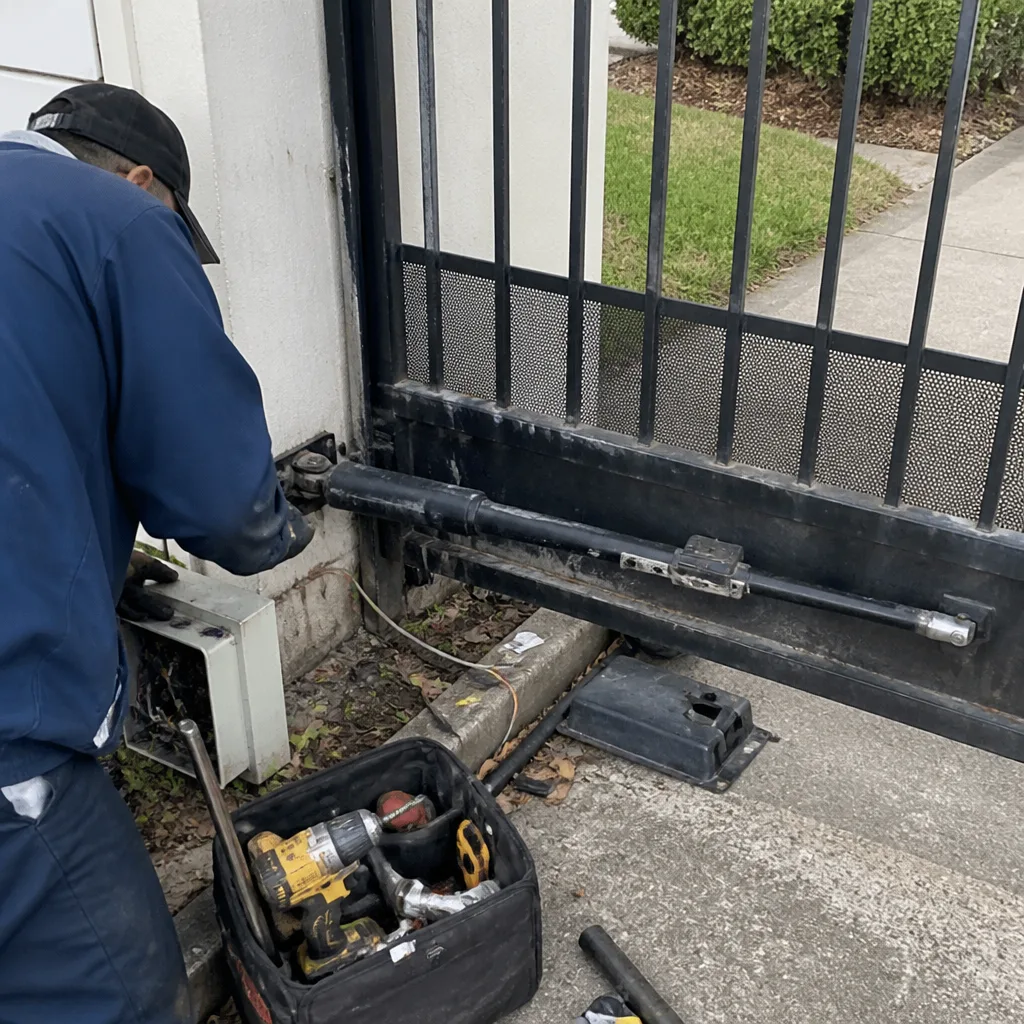 Before
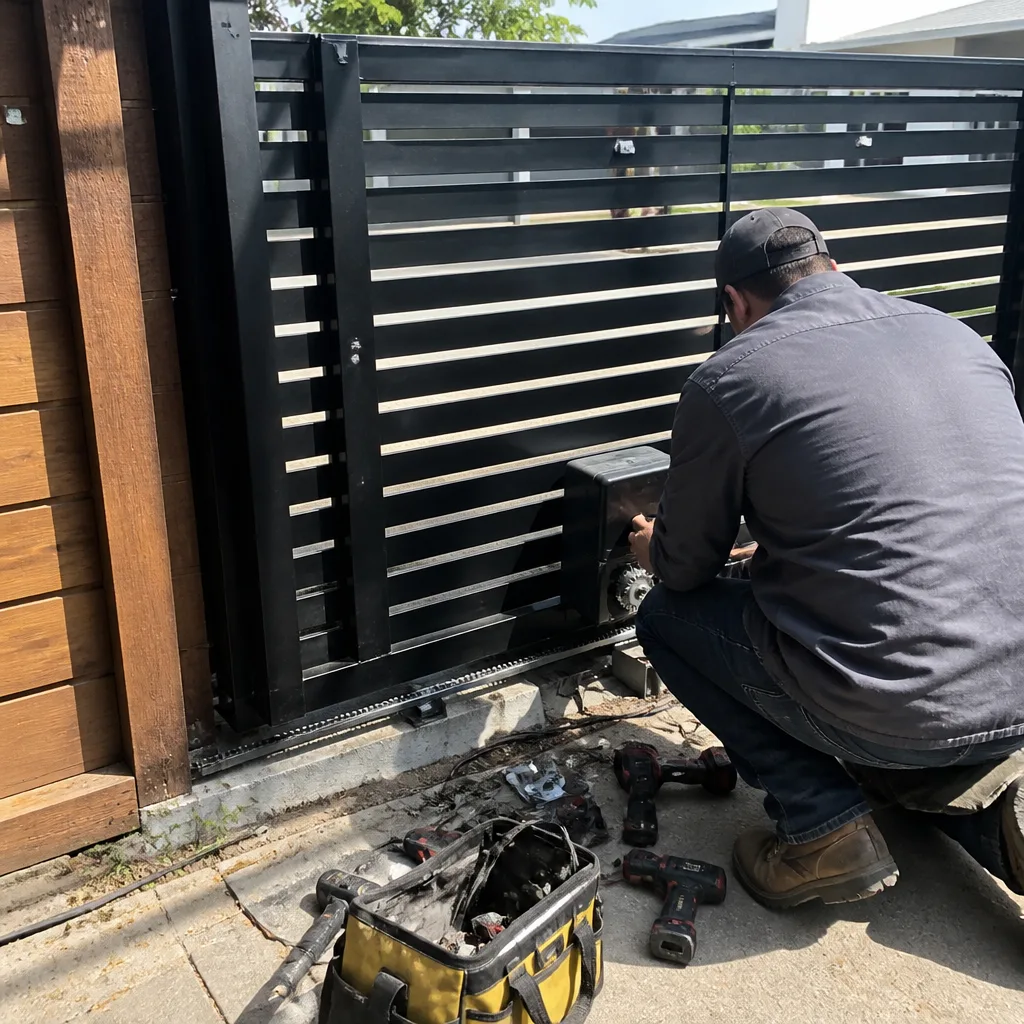 After
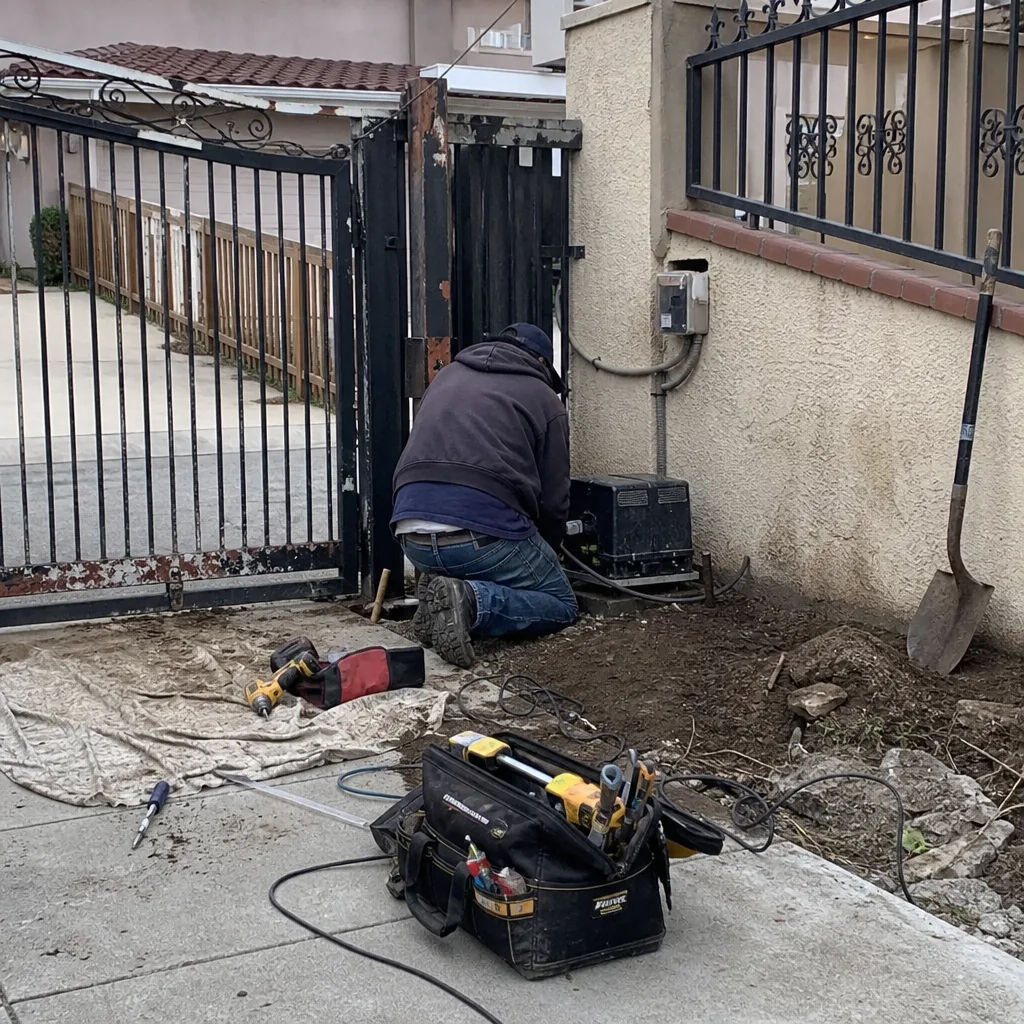 Before
 After
 Before
 After