
Last updated November 2, 2026
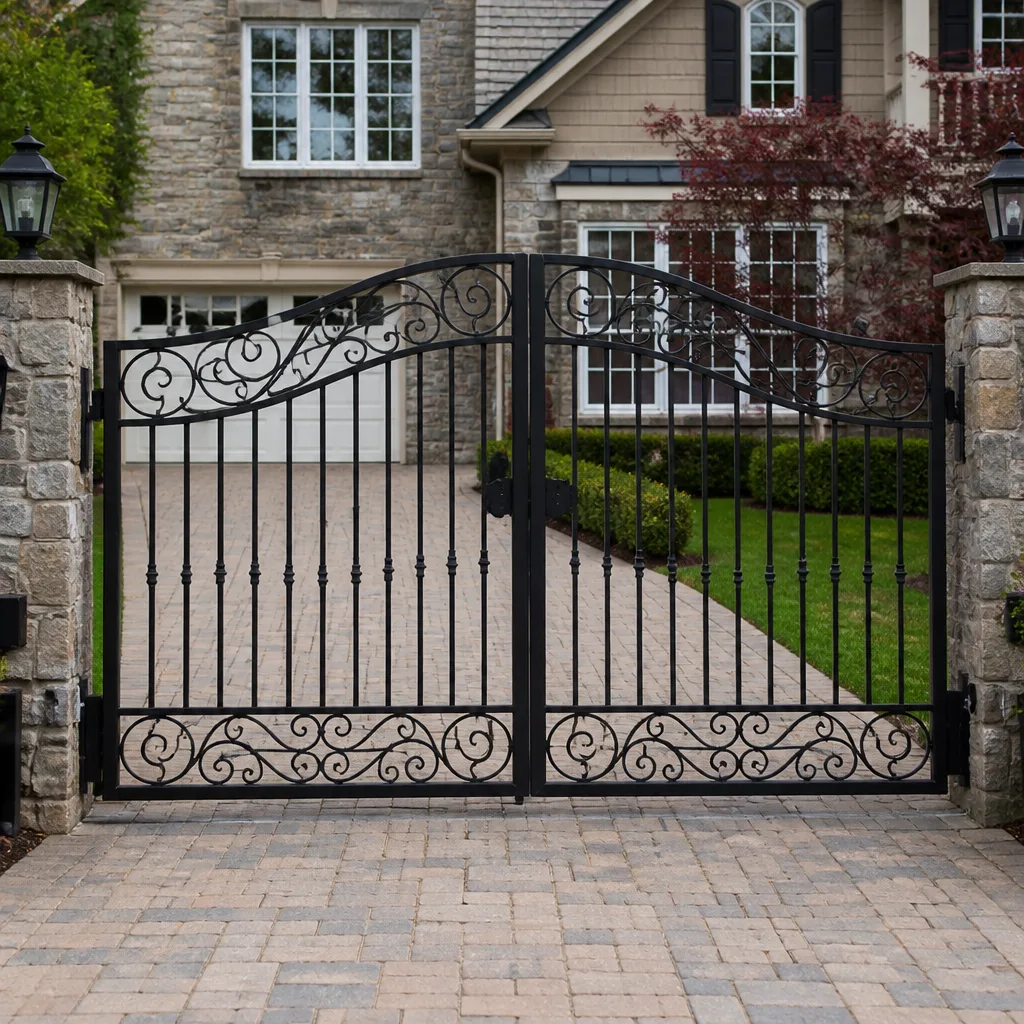 Wrought iron
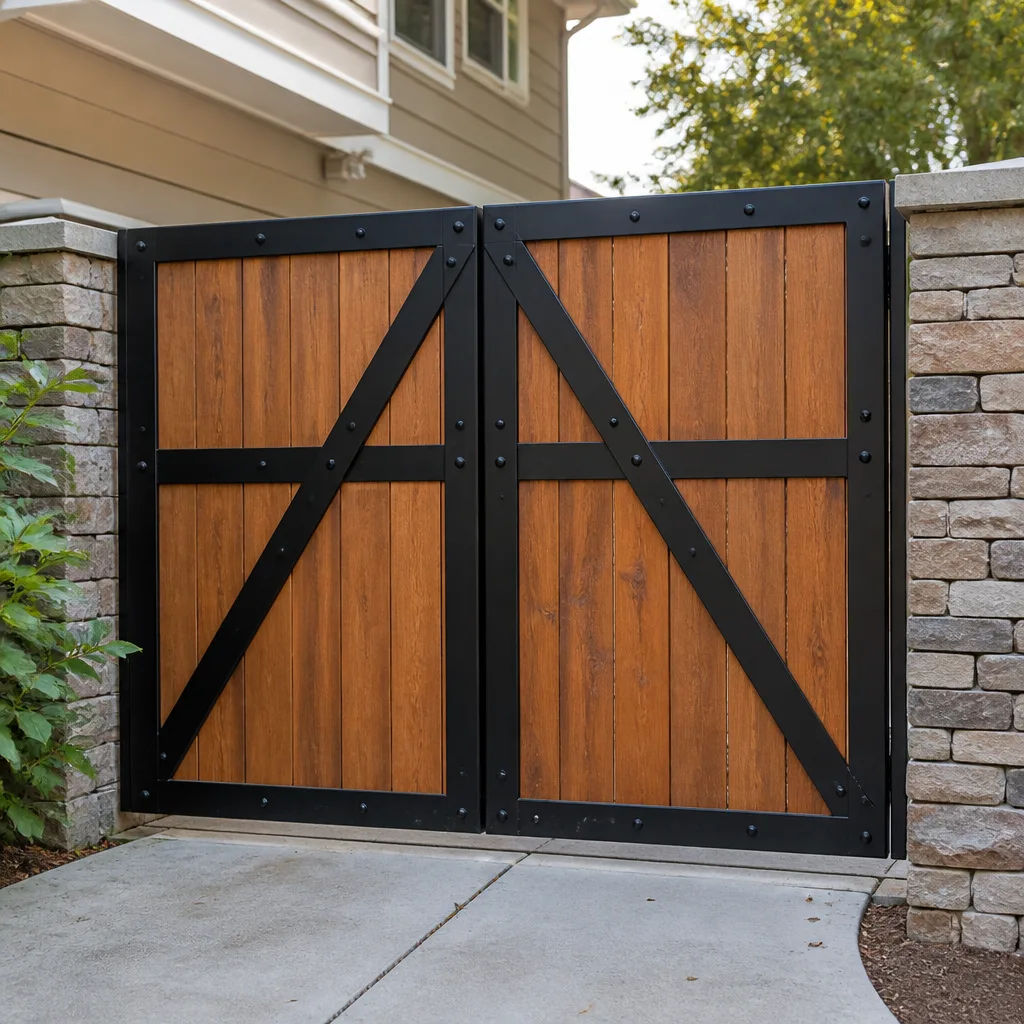 Wood & steel frame
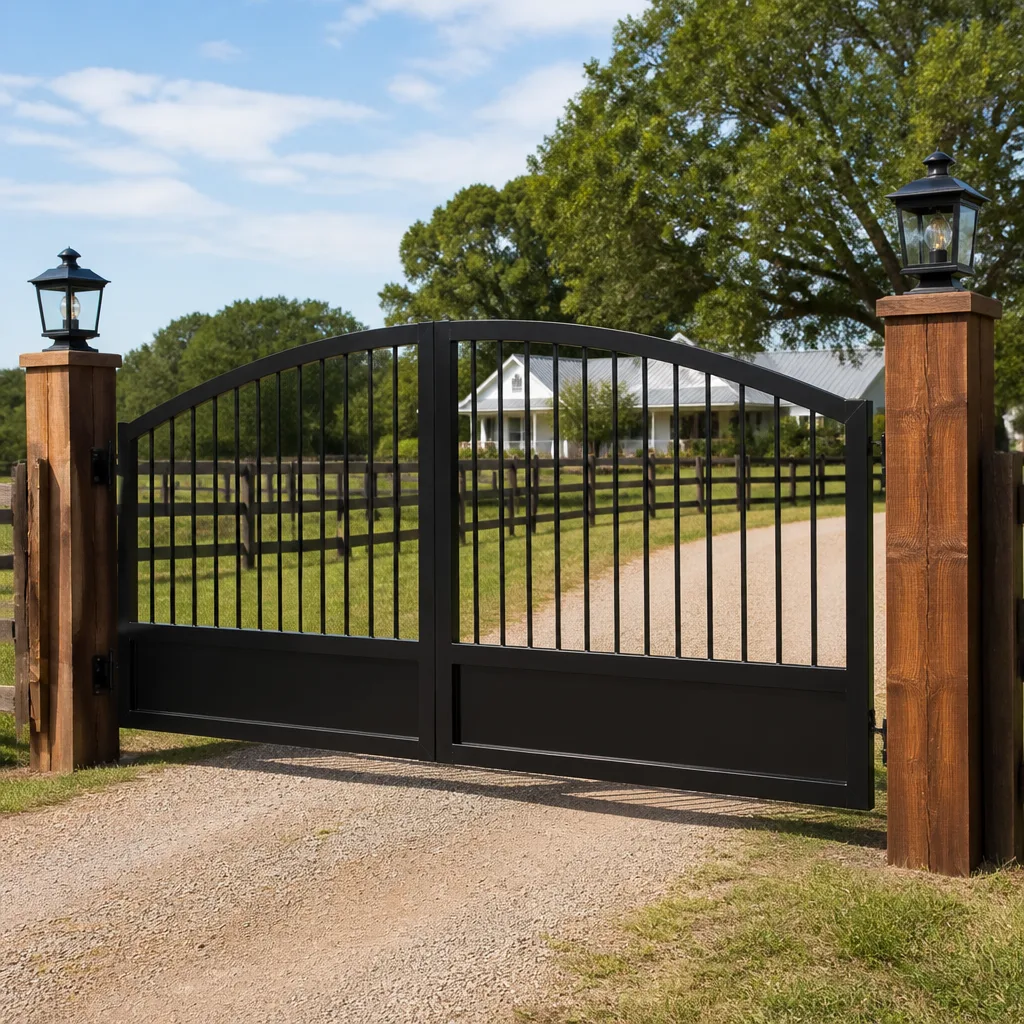 Farm & ranch
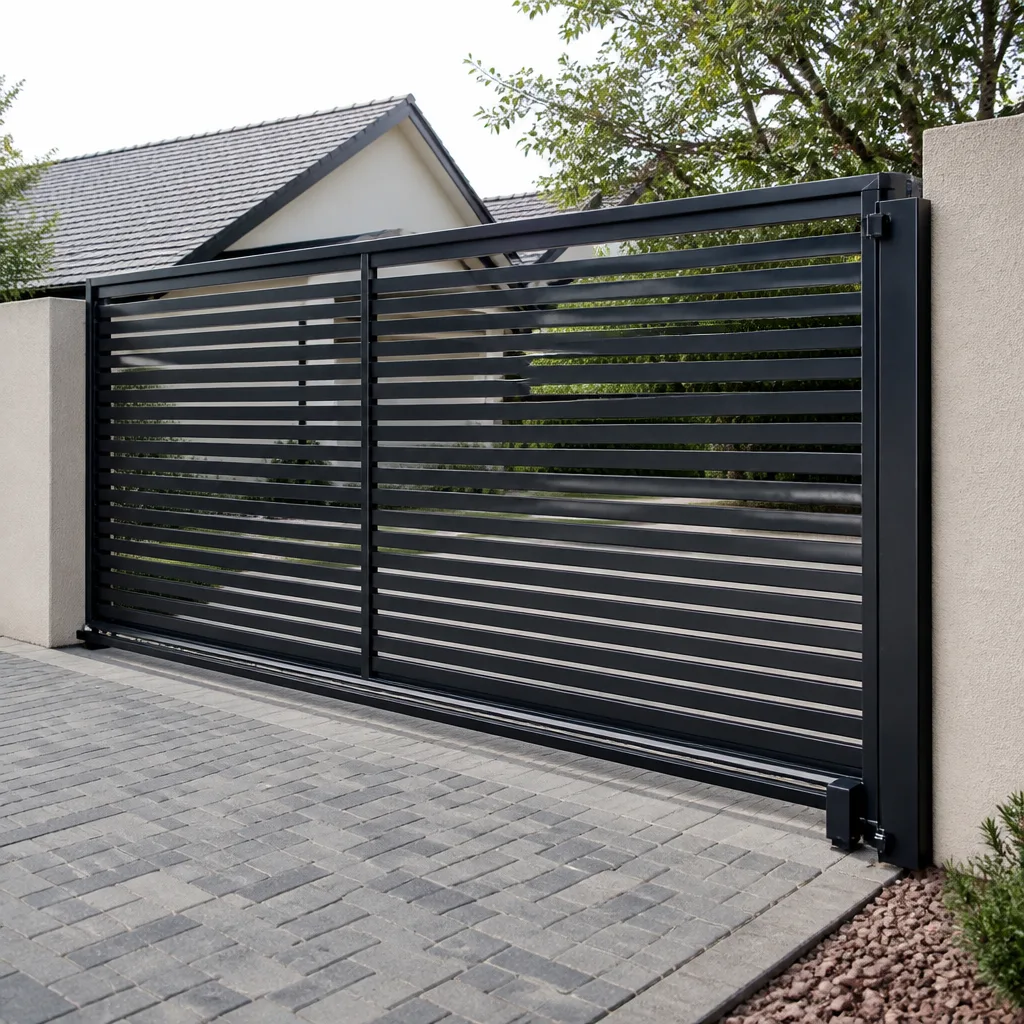 Sliding driveway gates
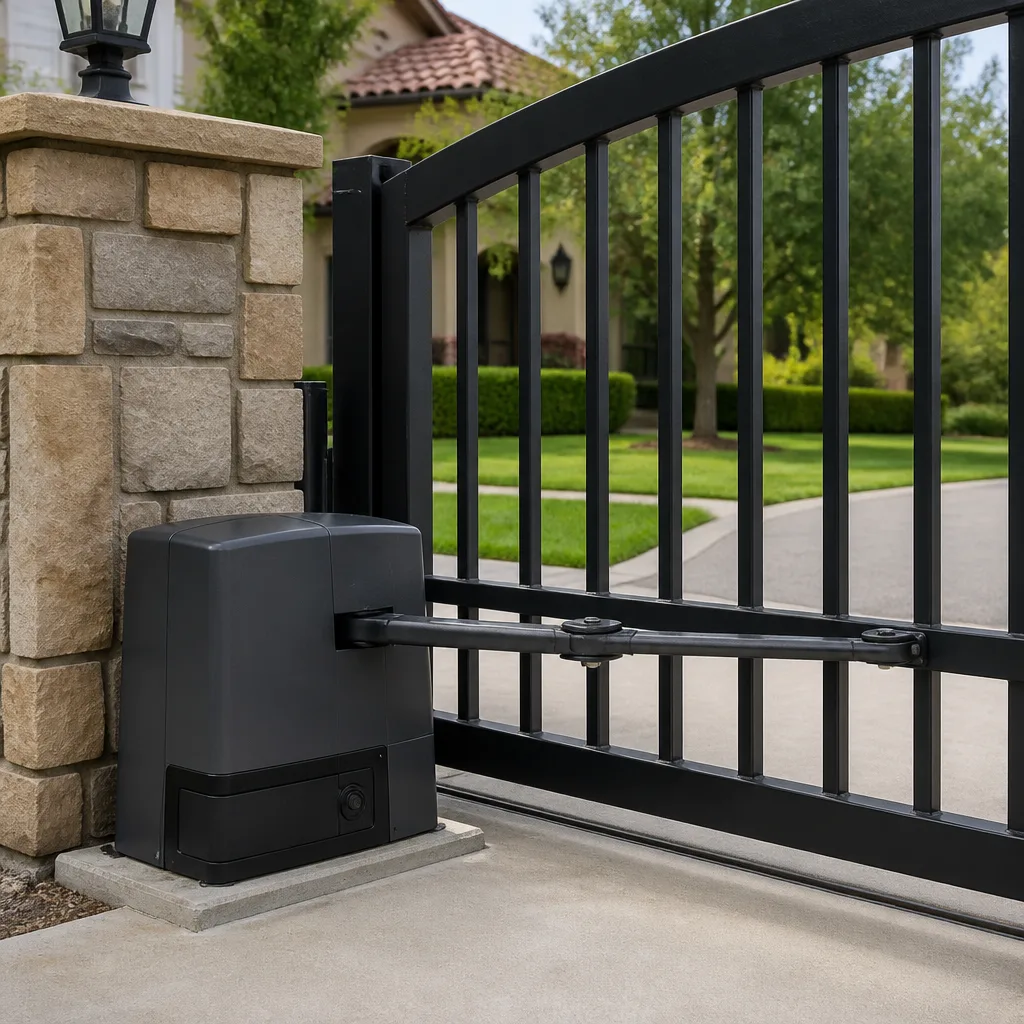 LiftMaster operators
Free on-site gate assessment - hinges, posts, and your LiftMaster or Nice gate operator checked before anything is quoted
The assessment is free and the quote is the invoice.
Get your free estimateGate Repair Permits, Codes & Inspections in CA: What You Need to Know
Here’s a fact most California homeowners don’t learn until it’s too late: the majority of electric gate installations and major repairs in the Bay Area were done without a permit. That unpermitted work sits quietly on your property until the day you file an insurance claim, refinance, or sell the house. Then it becomes a liability that can cost thousands. We see this pattern regularly in Union City, where gate systems built in the 1990s and early 2000s are now reaching the end of their service life. This guide explains exactly which gate repairs trigger permits in Alameda County, what UL 325 compliance means for your automated gate, how unpermitted work affects your insurance and resale value, and when retroactive permitting makes sense. For hands-on help, explore our Gate Repair services.
Quick Answer
Most gate repairs in California do not require a permit. Replacing hinges, welding a cracked frame, swapping a motor, or installing a new control board is typically exempt under state and Alameda County building codes. However, structural changes to the gate itself, new footings or posts, electrical work that runs new circuits, or installing a brand-new automatic gate operator often does require a permit, plus every automated gate in California must comply with UL 325 entrapment protection standards regardless of permit status.
Styles & brands we work with
- Wrought iron
- Wood & steel frame
- Farm & ranch
- Sliding driveway gates
- LiftMaster operators
Table of Contents
- When Does a Gate Repair Actually Require a Permit in California?
- What Gate Repairs Are Clearly Exempt From Permits
- UL 325 Compliance: The Federal Safety Standard Most Homeowners Miss
- How Unpermitted Gate Work Affects Insurance Claims and Property Sales
- Retroactively Permitting an Existing Gate: The Step-by-Step Process
- HOA Rules vs. City Codes: Which One Governs Your Gate in Union City
- Alameda County and Union City Specifics: What Local Inspectors Look For
- Common Mistakes to Avoid
- When to Call a Professional
- Frequently Asked Questions
- The Bottom Line
When Does a Gate Repair Actually Require a Permit in California?
The California Building Code (CBC) and California Residential Code (CRC) treat gates as part of the fence or accessory structure category, but the specific trigger for a permit depends on what you’re actually changing. A good rule: if the work is structural, electrical, or changes how the gate operates at a fundamental level, assume a permit is required until you confirm otherwise. If you’re swapping a failed part for an equivalent part, you’re usually in exempt territory.
In our experience working on gates across Union City, Fremont, and Hayward, the threshold question is always this: did we alter the gate’s footprint, its structural support, or its power supply? If yes, the city or county wants a record of it. Here’s the breakdown:
- New gate installation on new posts or footings: Permit required. The inspector verifies post depth, concrete specifications, and setback compliance.
- Replacing an entire gate panel but reusing existing posts: Typically exempt, though if the new gate is significantly heavier, the posts may need evaluation.
- Adding an automatic operator to a previously manual gate: Permit required in most Alameda County jurisdictions. This changes a passive barrier into a powered device governed by UL 325.
- Installing a new electrical circuit, outlet, or junction box for a gate operator: Electrical permit required. Running a new 120V line to a gate is a wiring job, not a gate job.
- Replacing a failed operator with the same model: Exempt. This is maintenance, not a new installation.
- Replacing a failed operator with a different model or brand: Gray area. If the mounting location or electrical draw changes, some inspectors want a record. Union City building staff have historically treated like-for-like swaps as exempt, but a different operator that requires new mounting plates can trigger review.
The permit threshold is more specific than most contractors tell you because most contractors don’t want to deal with the paperwork. A handyman who says “you don’t need a permit for that” might be right about hinge replacement, but he might also be wrong about that new gate on new posts. When in doubt, call the City of Union City Building Division at City Hall on Alvarado-Niles Road and ask. It costs nothing to ask, and the answer protects you.
What Gate Repairs Are Clearly Exempt From Permits
Let’s be precise about what you can do without any paperwork. The California Residential Code exempts “minor repairs” to fences and gates when the work does not alter the structure, electrical system, or safety characteristics of the installation. From a practical standpoint, here is what that means for a gate owner in Union City:
- Hinge and bracket replacement: Swapping worn hinges, brackets, or mounting hardware for equivalent parts. This is wear-and-tear maintenance.
- Wheel and roller replacement: Replacing slide gate wheels, track rollers, or guide rollers on cantilever or track gates.
- Chain, belt, or gear replacement inside an operator: Internal mechanical parts that restore the operator to original spec.
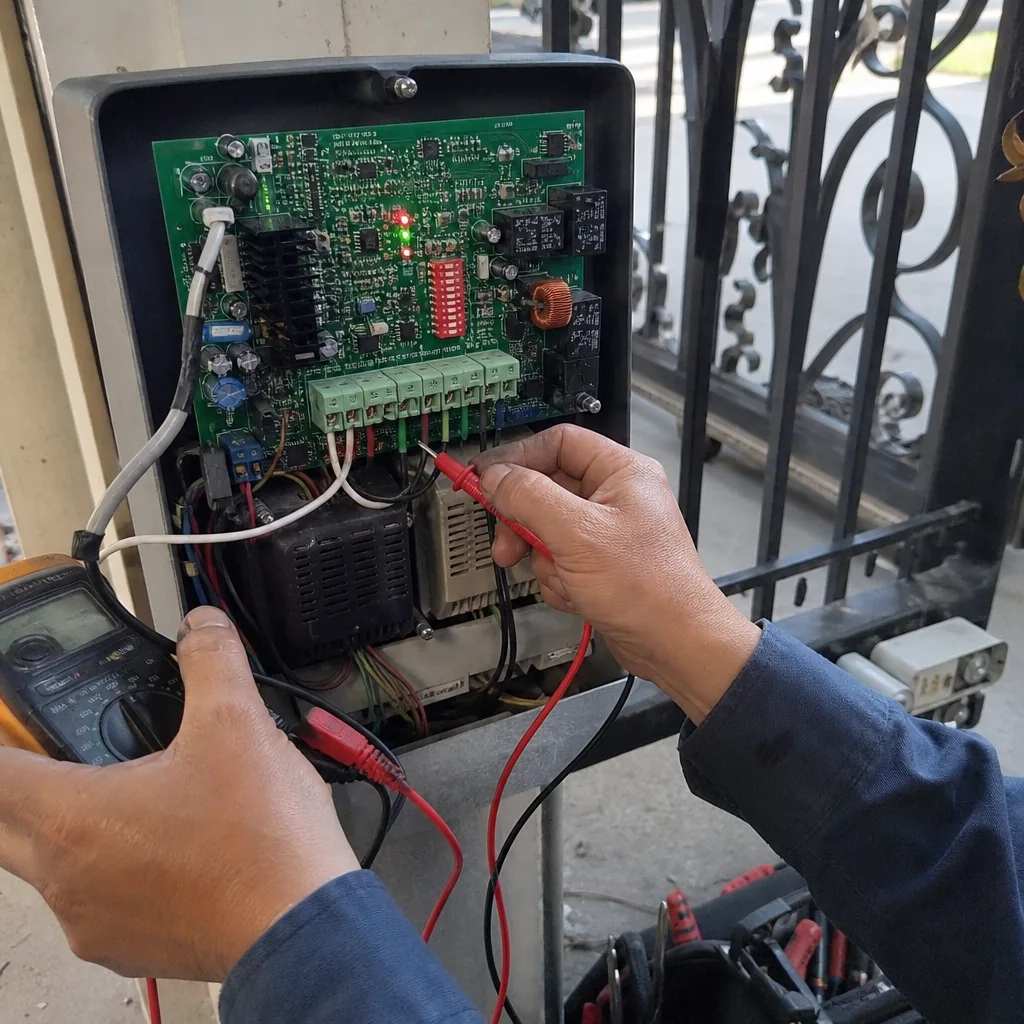
- Control board replacement: Swapping a failed DoorKing or Elite control board for the same or compatible replacement board. No permit needed because the operator’s safety characteristics are unchanged.
- Remote receiver, keypad, or photo eye replacement: Replacing a faulty photo eye sensor, keypad, or wireless receiver is a maintenance swap.
- Welding a cracked frame or panel: Repairing the existing gate in place. As long as the gate’s dimensions and mounting points don’t change, this is maintenance.
- Adjusting travel limits, force settings, or sensor alignment: Tuning an existing operator for reliable performance.
Here’s the key distinction: exemption applies when you’re restoring the gate to its original approved condition. The moment you change something about how the gate is built or powered, you move from maintenance into modification, and modification is where permits live. If your LiftMaster operator failed and you’re installing a new LiftMaster in the same position with the same electrical connection, you’re maintaining. If you’re installing a larger LiftMaster that requires a new concrete pad and a new 20-amp circuit, you’re building new, and that’s a different category.
UL 325 Compliance: The Federal Safety Standard Most Homeowners Miss
UL 325 is not a California building code. It is a federal safety standard that the Consumer Product Safety Commission enforces, and it applies to every automated gate operator sold or installed in the United States. That means it applies to your gate whether or not you pulled a permit, whether or not your HOA approved the work, and whether or not your installer knew anything about it. The standard exists for one reason: automated gates have killed people, mostly children, and UL 325 is the regulatory response.
What UL 325 actually requires on any automated gate, residential or commercial:
- Two independent entrapment protection devices: Every automated gate must have both an inherent system (like a force-sensing clutch or current-monitoring motor) and at least one external device.
- External entrapment protection: This means photo eyes, also called non-contact sensors, positioned to detect a person or object in the gate’s path. On a slide gate, photo eyes are required at both ends of the travel. On a swing gate, they’re required at the open and closed positions.
- Contact edge sensors where required: On gates where a gap larger than 2-1/4 inches exists between the moving gate and a fixed object (a post, a wall, a fence), a pressure-sensitive edge sensor is required in addition to the photo eyes. This is the entrapment zone, and the code is specific about which gaps demand edge protection.
- Warning signage: Every automatic gate must bear a visible warning sign that identifies the entrapment risk and instructs users to keep children away.
- Shear point protection: On V-track slide gates, the rear picket must be protected so a child’s hand or arm cannot enter the shearing zone between the moving gate and the rear post or guard.
We work on Mighty Mule and Ghost Controls systems that homeowners install themselves, and the pattern is consistent: the opener goes in fine, the gate moves, but the photo eyes are missing, the edge sensor was never purchased, and the warning sign is still in the box. The most common UL 325 violation we see in Union City is a residential slide gate with no photo eyes at all, which we cover in our Gate Repair Troubleshooting: Common Problems and How to Fix Them guide. The gate works, and the owner assumes that’s all that matters. From a liability standpoint, a gate that works but isn’t UL 325 compliant is a bigger risk than a gate that’s broken.
If someone is injured by your gate, the plaintiff’s attorney will ask one question: was this gate UL 325 compliant at the time of the injury? If the answer is no, the installer, the manufacturer, and the property owner are all exposed. You can’t avoid UL 325 by claiming ignorance. The standard applies to you as the property owner regardless of who installed the gate.
How Unpermitted Gate Work Affects Insurance Claims and Property Sales
The liability gap from unpermitted gate work doesn’t surface when the gate breaks. It surfaces when money is moving: an insurance claim, a refinance, or a sale. Here’s what we’ve observed working with Union City homeowners through each scenario.
Insurance claims: If a storm drops a tree limb on your unpermitted gate, or a vehicle hits it, your homeowner’s insurance company will investigate before paying. They’ll ask when the gate was installed, by whom, and whether permits were pulled. If the answer is no, the claim can be denied on the basis that the structure was not legally built. Even a partial claim, like damage to an unpermitted gate operator, can trigger an adjuster’s scrutiny. The gate itself, if unpermitted, may not be covered under your dwelling or other structures coverage.
Property sales: California’s seller disclosure requirements (California Civil Code 1102) require you to disclose known unpermitted work. The standard Transfer Disclosure Statement and the Supplemental Statutory Disclosure both ask directly about unpermitted improvements. Most sellers don’t know their gate operator needed a permit in the first place, so they answer “no” to the disclosure question. Then the buyer’s inspector flags the gate, the buyer’s lender or title company identifies unrecorded work, and the deal stalls or the buyer demands a credit. At best, you’re negotiating from a weak position. At worst, you’re revisiting a conversation about the gate you forgot you installed eight years ago.
Refinancing: Appraisers and underwriters don’t care about gates directly, but they do care about accessory structure compliance when the property is in a district with strict aesthetic or safety standards. An unpermitted electric gate with exposed conduit and no photo eyes can raise an underwriting flag on a technical review.
The pattern we see most often: a homeowner adds a gate, lives happily for years, then hits the sale process and discovers that a gate that cost $4,000 to build now requires $1,500 in retroactive permitting, inspection fees, and compliance upgrades to close. It’s not a deal-killer, but it is a predictable, avoidable cost.
Retroactively Permitting an Existing Gate: The Step-by-Step Process
If you have an unpermitted gate, or a permitted gate that was modified without documentation, you can bring it into compliance through a retroactive permit. The process is more common than homeowners assume, and Alameda County building departments are familiar with it. Here’s how it works:
- Request a preliminary review: Contact the City of Union City Building Division and describe the gate. Ask if a retroactive permit is required and what documentation they’ll need. This call is informational and does not trigger an inspection.
- Prepare a site plan: For most gates, you’ll need a simple drawing showing the gate’s location, dimensions, setback from the property line, and the operator’s mounting position. An engineer’s stamp is rarely required for residential gates under 350 pounds, but the building department will confirm.
- Submit the permit application: Include the gate’s specifications: width, height, weight, operator make and model, and photos of the installation. If the gate is automated, the inspector will ask about UL 325 compliance.
- Schedule the inspection: The inspector will visit the property to verify the gate matches the application, the posts are properly set, the operator is properly mounted, and the entrapment protection devices are present and functioning.
- Address any corrections: Common correction items in Union City include missing photo eyes, edge sensors on slide gates with shear zones, improper clearances, and non-weatherproofed electrical connections. Most corrections take half a day or less.
- Receive the final approval: Once the inspector signs off, you have a record of the gate’s compliance, which clears the unpermitted-work cloud for insurance and resale purposes.
Here’s the question we hear most: is retroactive permitting worth it? If you plan to stay in the home indefinitely and the gate is safe and functioning, the answer may be no. If you plan to sell within five years, or if your operator lacks UL 325 entrapment protection, the answer is usually yes. An unpermitted gate doesn’t cause problems while you live there. It causes problems when you leave.
HOA Rules vs. City Codes: Which One Governs Your Gate in Union City
This is the conflict most homeowners don’t anticipate. Your HOA has architectural guidelines. The City of Union City has building codes. They govern different things, and when they conflict, the stricter standard usually wins. But the trigger points are different, and understanding that difference saves money.
Here’s the framework. HOA rules govern appearance, not safety. Your HOA can tell you the gate must be a certain height, a certain color, a certain material, or a certain style. The HOA cannot supersede the building code’s safety requirements, but the HOA review process is often the first stop because it’s what your neighbors and the HOA board will enforce.
City codes govern structural integrity, electrical safety, and UL 325 compliance. The city doesn’t care if your gate is wrought iron or aluminum. The city cares if the posts are set deep enough, the operator is wired correctly, and the photo eyes are in place.
Where Union City homeowners get caught is the sequence. They submit an architectural request to the HOA, get approval, then bypass the city permit process entirely because they assume HOA approval means government approval. It doesn’t. HOA approval is a private agreement. A city permit is a legal record. You may need both, and they follow different timelines and different requirements.
In Union City specifically, many of the newer subdivisions east of Union City Boulevard have active HOAs with architectural review committees. The older neighborhoods between Alvarado-Niles Road and Smith Street are mostly HOA-free, which means city codes are the only governing authority. If you’re in a newer development like the Station District or the neighborhoods off Dyer Street, plan for dual approval. If you’re in a mid-century home near Decoto Road, you’re probably dealing only with the City of Union City.
Alameda County and Union City Specifics: What Local Inspectors Look For
When a Union City building inspector reviews a gate, they’re not doing a deep engineering analysis. They’re checking a specific set of items that repeat on every inspection. Here’s what we’ve seen inspectors focus on in Alameda County, based on our work on gates across the East Bay:
- Post depth and concrete specification: For a typical 6-foot drive gate, inspectors expect posts set at least 24 inches deep in concrete. On sloped driveways, which are common in the hills above Mission Boulevard, they check that the gate clears the grade through its full travel.
- Electrical connections: The operator’s power supply must be a dedicated GFCI-protected circuit in wet locations. Exposed Romex or an extension cord running to the gate will fail inspection every time.
- Entrapment protection presence and function: The inspector will block the photo eye and confirm the gate reverses or stops. They’ll check for edge sensors on any gate with a 2-1/4-inch or larger gap in the entrapment zone.
- Warning signage: UL 325 signage must be visible and legible on both sides of the gate. A faded sign from a 2005 installation doesn’t pass.
- Manual release access: Every automatic gate must have a manual release mechanism that allows the gate to be opened by hand in a power outage. The inspector will verify it works.
- Vehicle detection loops where required: On commercial gates and some residential gates, a loop detector in the driveway prevents the gate from closing on a vehicle. Inspectors verify the loop is functional if one is specified.
Union City’s climate also plays a role. The marine influence off San Francisco Bay means rust and corrosion are persistent problems on gate hardware and operator enclosures. An inspector who sees a heavily corroded operator mounting bracket or a hinge assembly with visible structural rust will flag it, even if the original installation was permitted. The gate’s condition matters, not just its original compliance.
Common Mistakes to Avoid
- Assuming HOA approval replaces a city permit: HOA approval is a private architectural review. A city permit is a legal building record. You often need both, and one does not substitute for the other.
- Installing an operator without photo eyes or edge sensors: A Mighty Mule or Ghost Controls kit installs in an afternoon, but without UL 325 entrapment protection devices, you’ve created a legally non-compliant gate that exposes you to liability every time it cycles.
- Running an extension cord or exposed Romex to the operator: This fails inspection, voids operator warranties, and is a fire hazard in Union City’s wet winter climate. A proper dedicated circuit costs a few hundred dollars and is the difference between a permitted install and a failed one.
- Replacing a failed operator with a larger one on the same pad: If the new operator is larger or requires different mounting points, the original permit may no longer cover the installation. The pad, the electrical draw, and the mounting hardware all change.
- Ignoring unpermitted work before listing a home: The disclosure forms will ask, and the buyer’s inspector will find the gate. Resolving retroactive compliance before listing costs less than negotiating a credit at closing.
- Not testing the manual release after an automated repair: In a power outage, a gate that can’t be opened manually turns a convenience problem into a safety problem, particularly if the gate is the only vehicle access to the property.
- Treating gate repair as a handyman task: A failed DoorKing or Elite operator is a motor, control board, and safety sensor system. A handyman who can weld a cracked hinge may not understand why the control board is throwing an entrapment fault. The two skills overlap less than homeowners assume.
See the difference
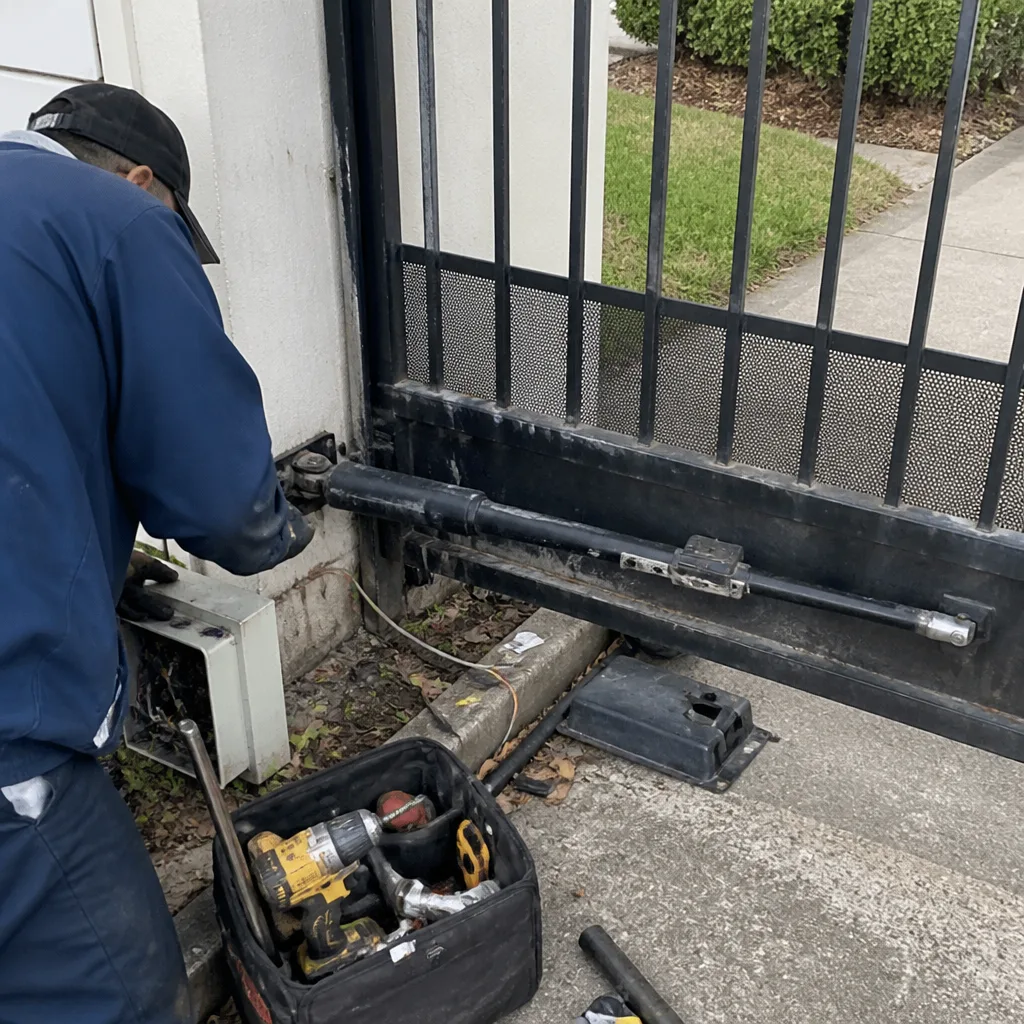 Before
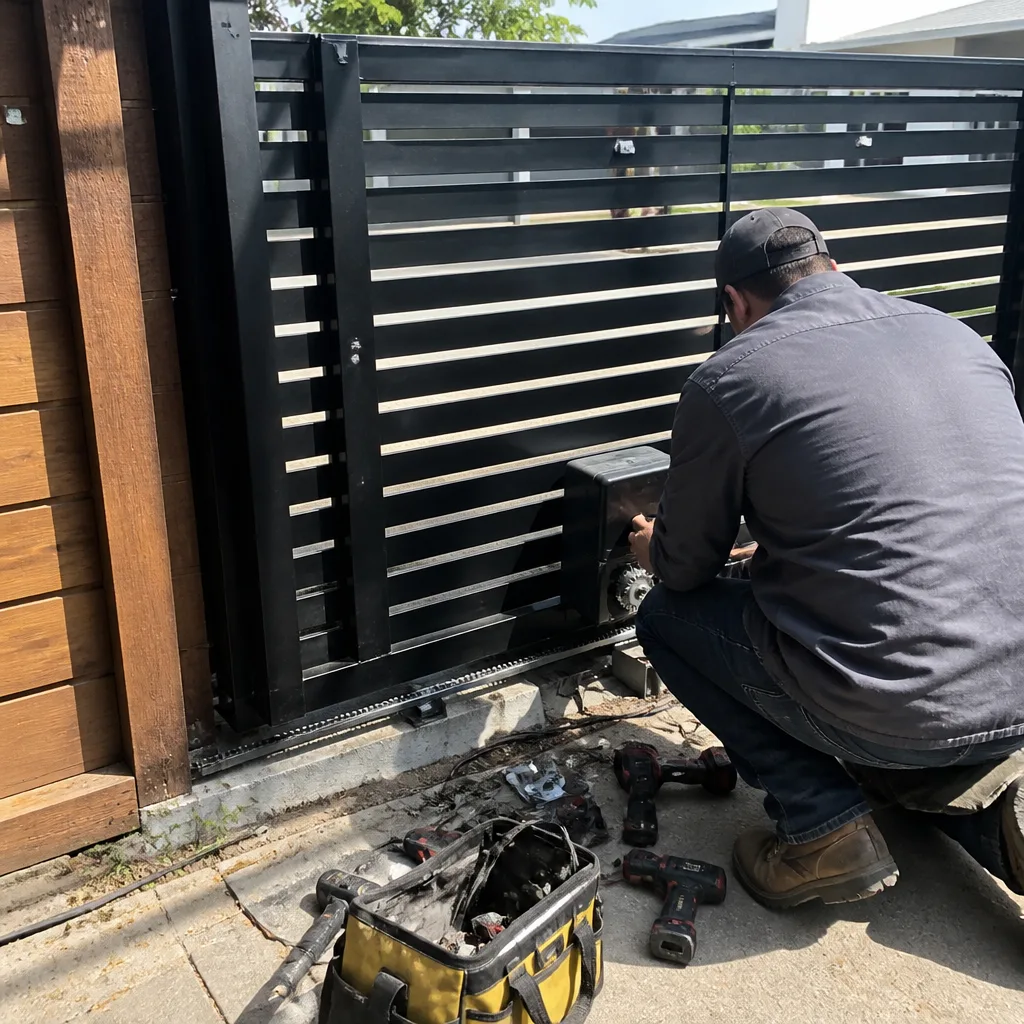 After
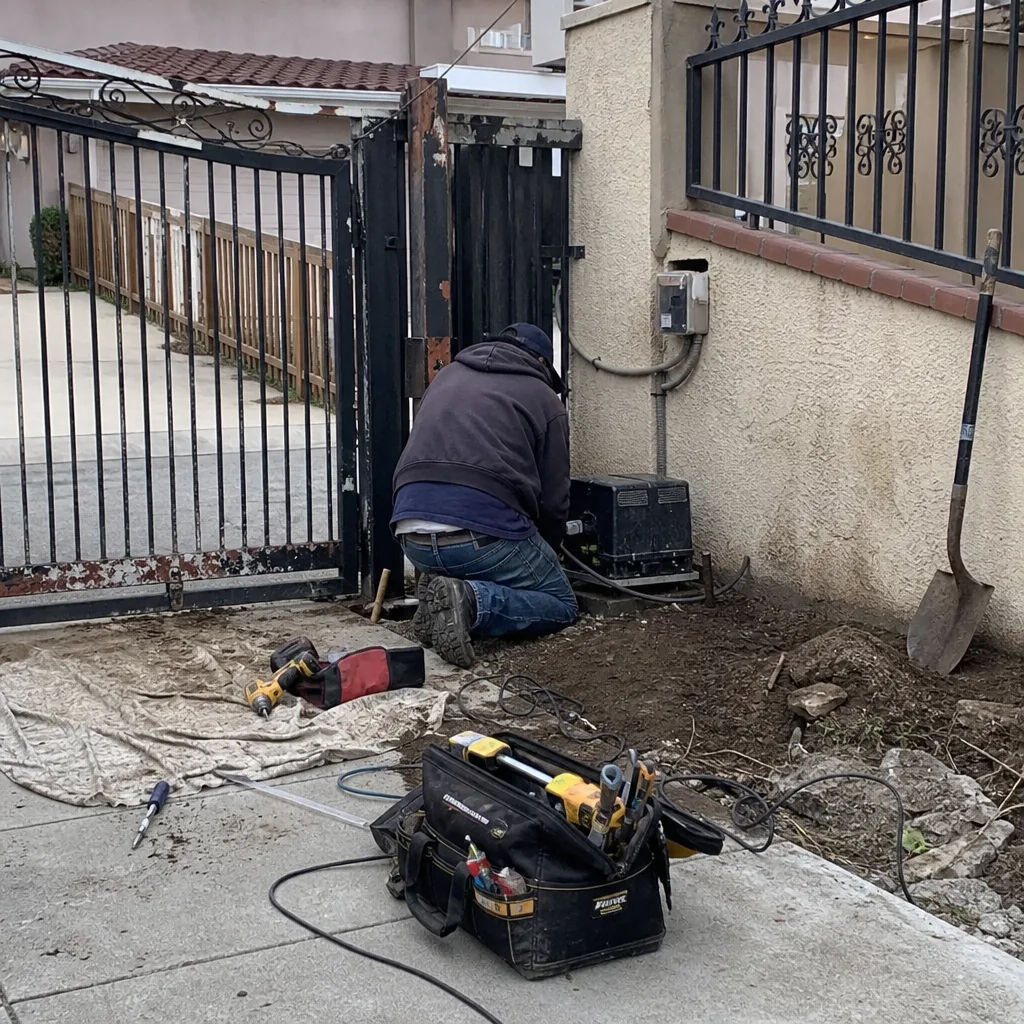 Before
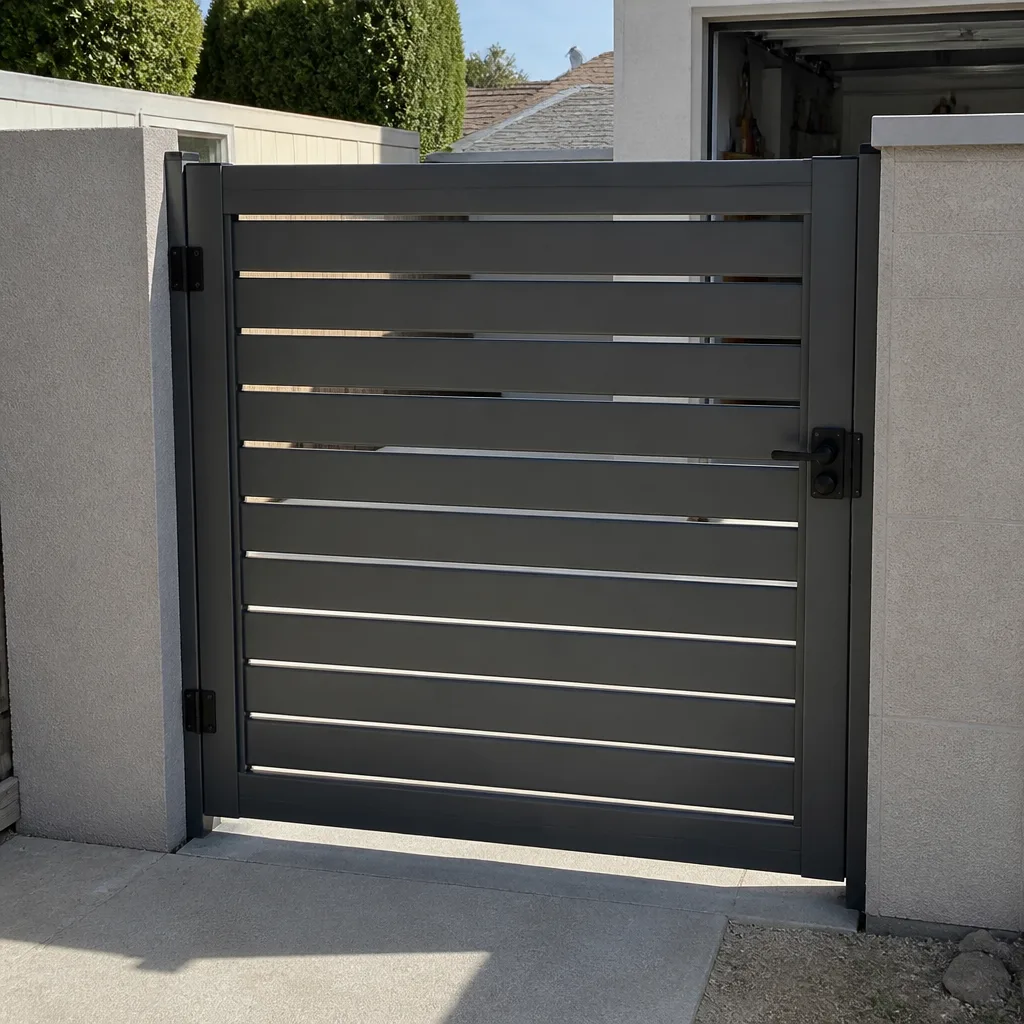 After
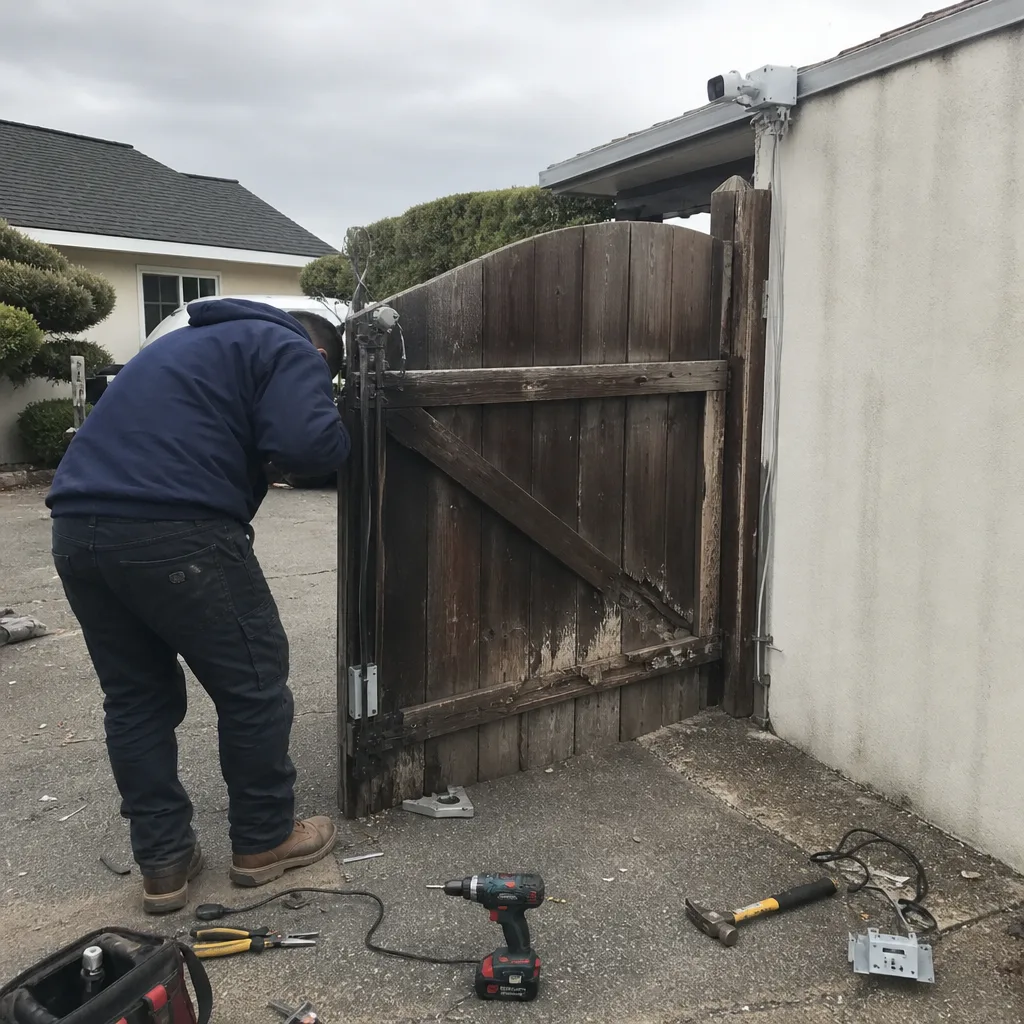 Before
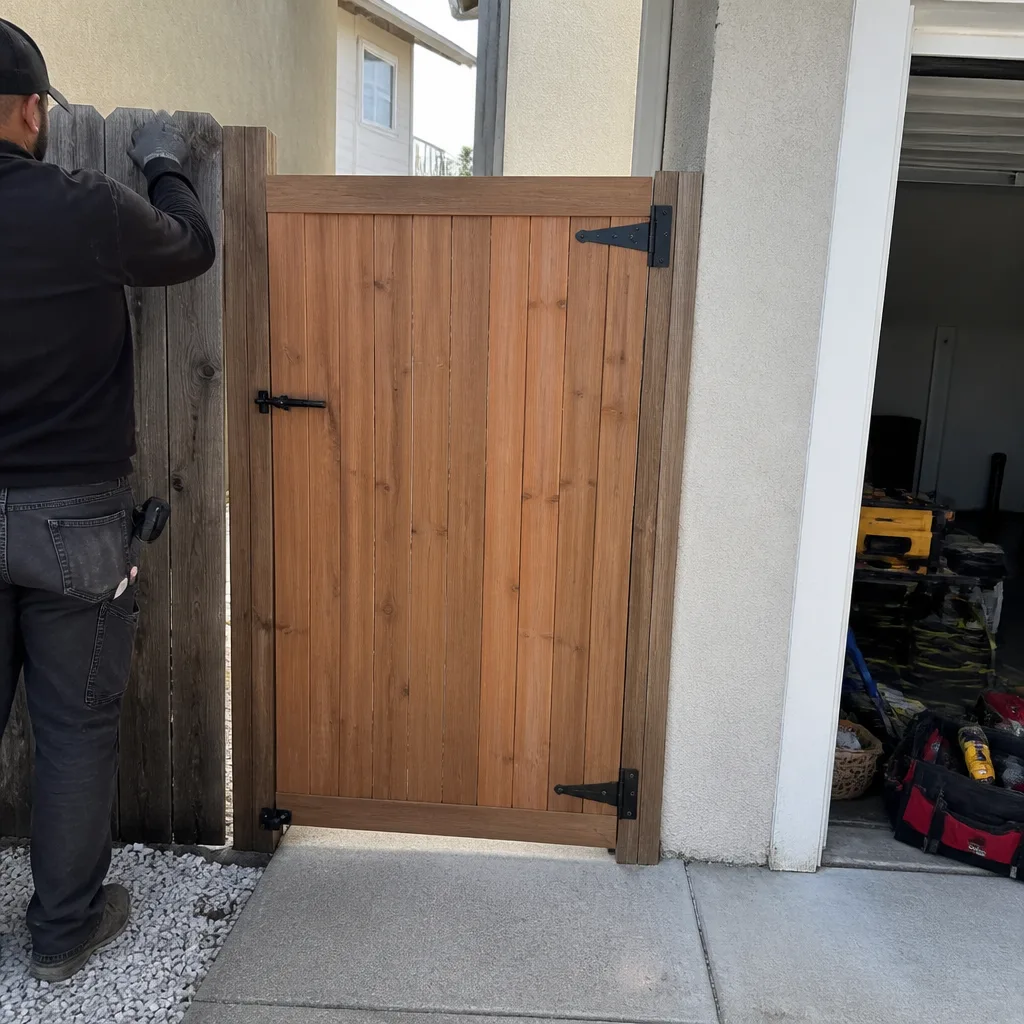 After
When to Call a Professional
If your gate won’t open reliably, won’t close fully, reverses unexpectedly, or trips the GFCI every time it cycles, the problem is usually in the operator, the control board, or the safety sensors. Those are specialized components with specific diagnostic paths. If you’re not comfortable working with 120-volt circuits or calibrating force settings, this is where a gate specialist earns their cost. We work on LiftMaster, DoorKing, Elite, and Mighty Mule systems specifically, and the diagnostic process is different for each brand. If you’re planning to add an operator to a manual gate, or bring an unpermitted gate into compliance, the retroactive permitting process goes faster when the gate is already UL 325 compliant and properly documented. Gate repair in Union City is our only trade, so every service call starts with the full gate system, not just the symptom. If you’re dealing with a gate that works intermittently, that’s almost always a sensor or board issue, not a mechanical one. We also handle electric gate repair in Union City for motors, control boards, receivers, and safety sensors. For homeowners considering a new gate, our gate installation in Union City covers full-system installs from posts to programming. Call (833) 593-6430 for a free estimate.
Frequently Asked Questions
No, if you’re replacing a failed operator with the same or equivalent model in the same mounting position, the work is considered maintenance and is exempt from permit requirements in Union City. If the new operator is larger, requires new mounting hardware, or changes the electrical draw, a permit may be required. Call the City of Union City Building Division to confirm your specific situation.
A retroactive or new gate permit in Alameda County typically ranges from $150 to $500 depending on the scope, plus any inspection fees and the cost of compliance corrections like photo eyes or edge sensors. The permit fee is relatively small; the corrections are usually where the real cost lives. Call (833) 593-6430 for an exact assessment of your gate’s compliance status, and we’ll help you determine what’s needed. You can also browse more guides & resources on gate compliance and repair.
UL 325 does not grandfather existing automated gates. The standard applies to any gate operator installed or serviced in the United States, regardless of the original installation date. If your gate lacks modern entrapment protection devices, it is non-compliant, and the liability remains with you as the property owner.
A photo eye is a non-contact sensor that detects a person or object in the gate’s path using an infrared beam. An edge sensor is a pressure-sensitive strip mounted on the gate’s edge that reverses the gate when it contacts something. UL 325 requires at least one external device in most applications and both on gates with specific entrapment zone gaps.
You can, and many Union City homeowners do with Mighty Mule or Ghost Controls kits. But installing an operator yourself doesn’t exempt you from UL 325 compliance, and an unpermitted self-install with missing safety devices creates the same liability gap as unpermitted contractor work. If you install it, you own the compliance responsibility.
You must disclose known unpermitted work on California’s sale disclosure forms. If the buyer discovers the unpermitted gate through inspection, you’ll likely negotiate a repair credit or complete retroactive permitting before closing. Resolving compliance before listing is usually cheaper than resolving it during escrow. Call (833) 593-6430 for a compliance assessment before you list.
The Bottom Line
Most gate repairs in California are exempt from permits, but the exemptions are narrower than most homeowners realize. Structural changes, new installations, and new electrical work trigger permits. Every automated gate, permitted or not, must meet UL 325 entrapment protection standards. Unpermitted gate work creates a quiet liability that surfaces on insurance claims and property sales. If you own a gate in Union City, know which category your repair falls into, document what you can, and don’t assume that a functioning gate is a compliant gate. When the repair involves a motor, control board, or safety sensor, a gate specialist is the difference between a diagnosis and a guess. For help with any gate in Union City, from the motor to the hinge, call (833) 593-6430 and we’ll walk you through it.
Written by the team at Gate Repair Union City, serving Union City since 2018.