
Last updated November 2, 2026
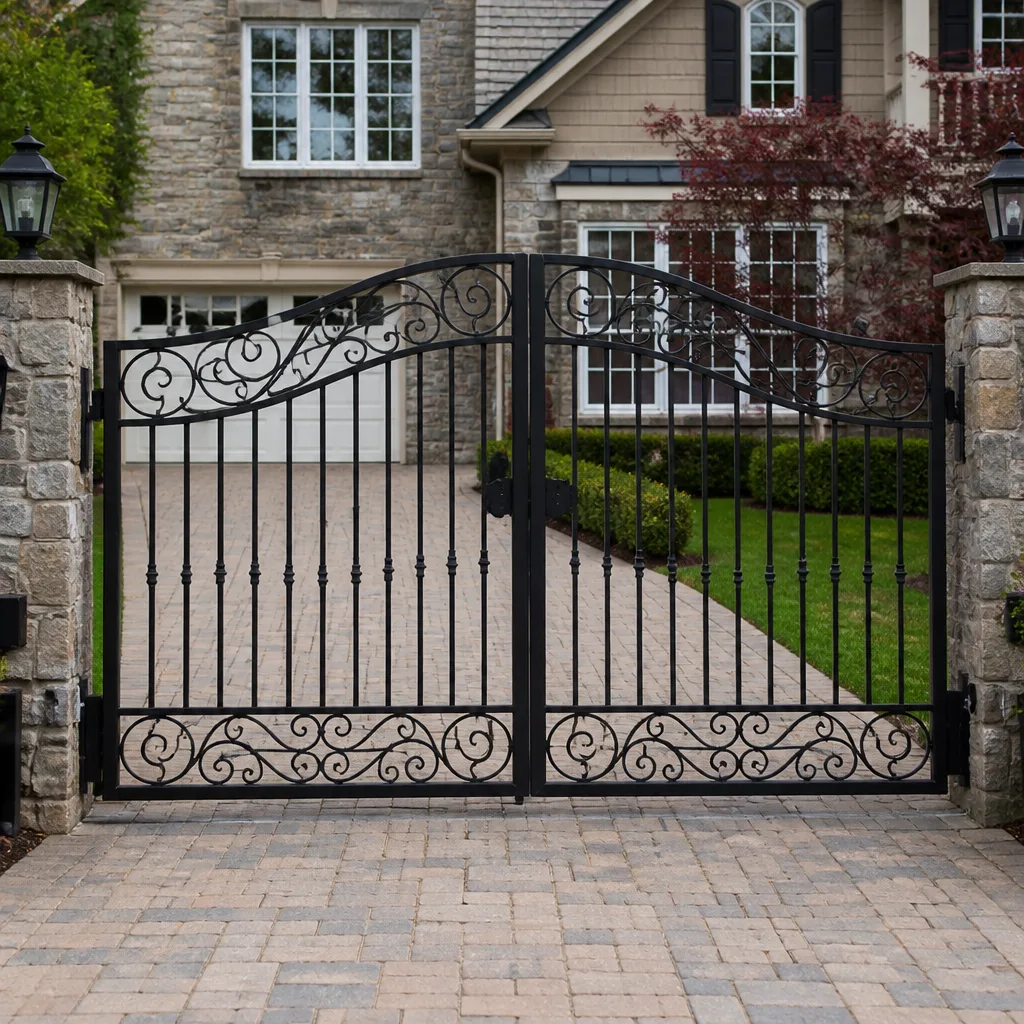 Wrought iron
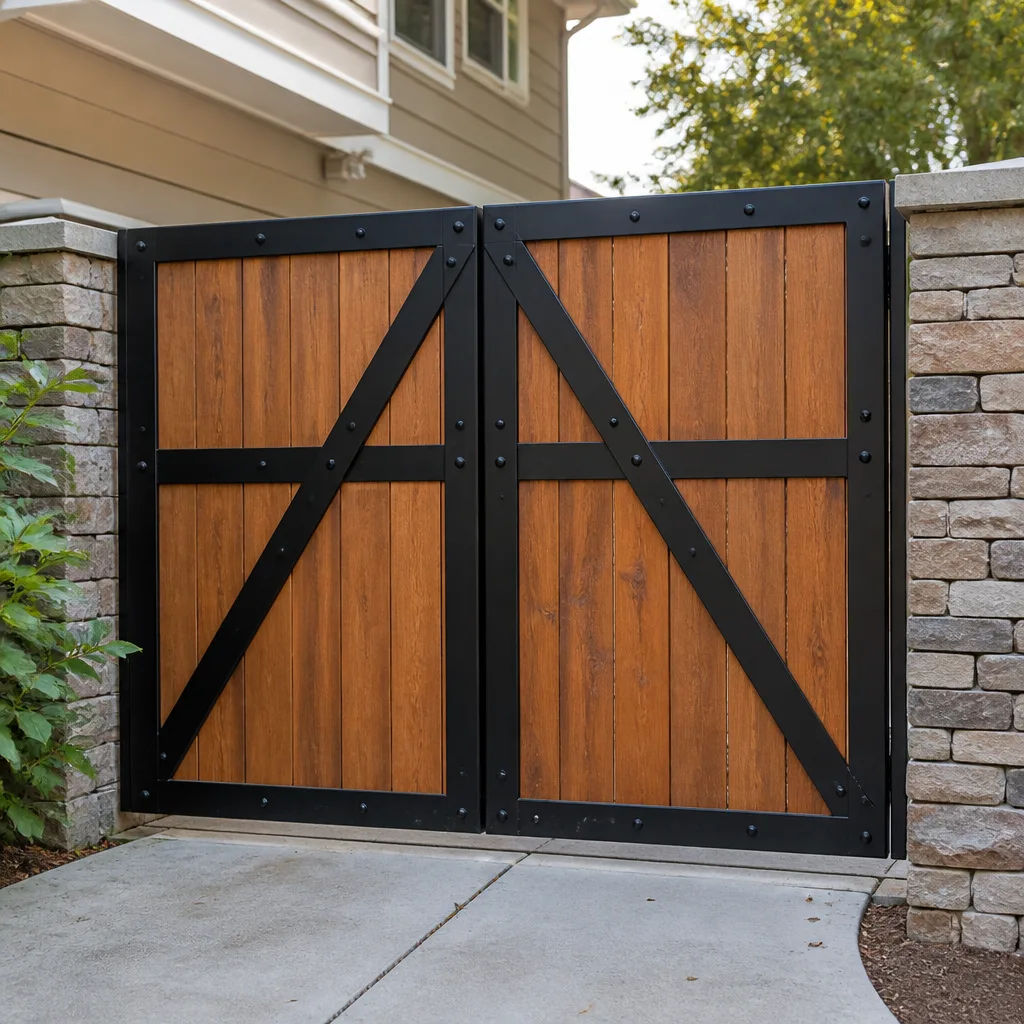 Wood & steel frame
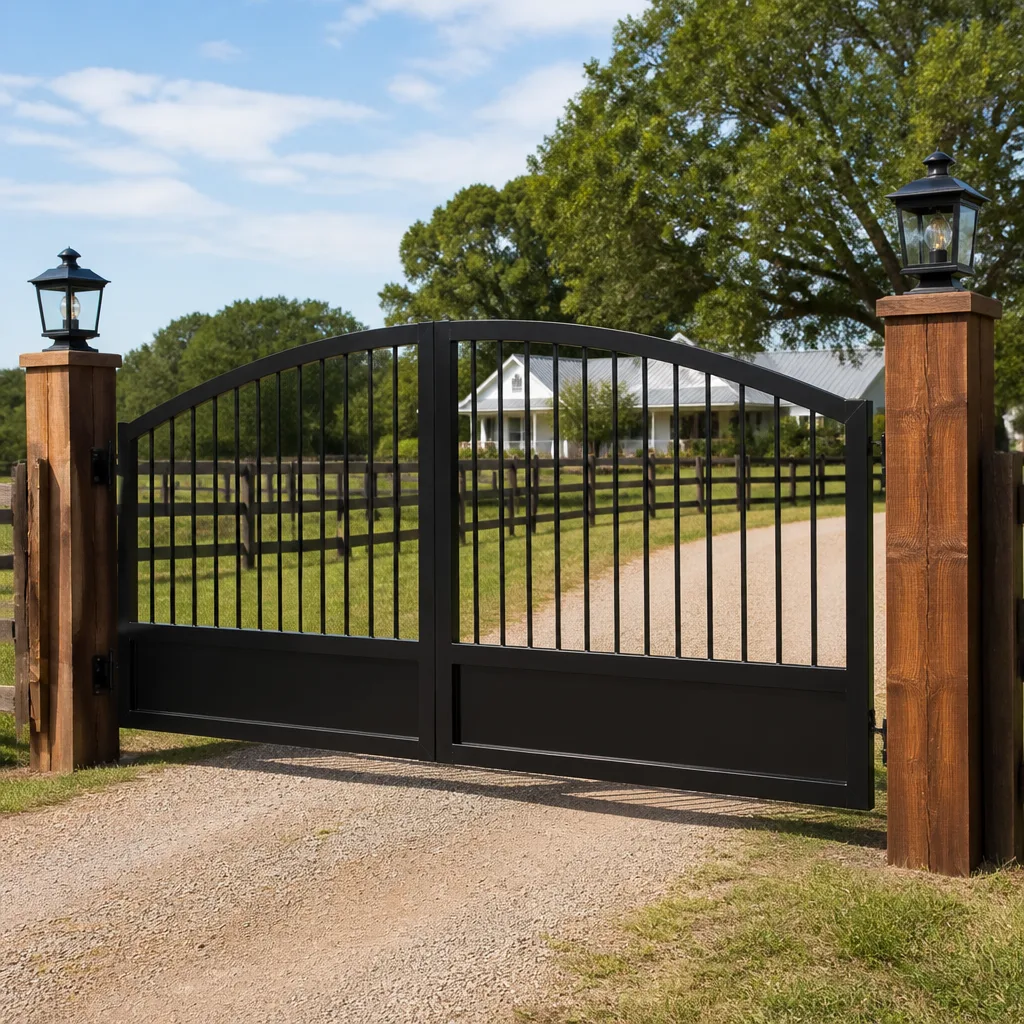 Farm & ranch
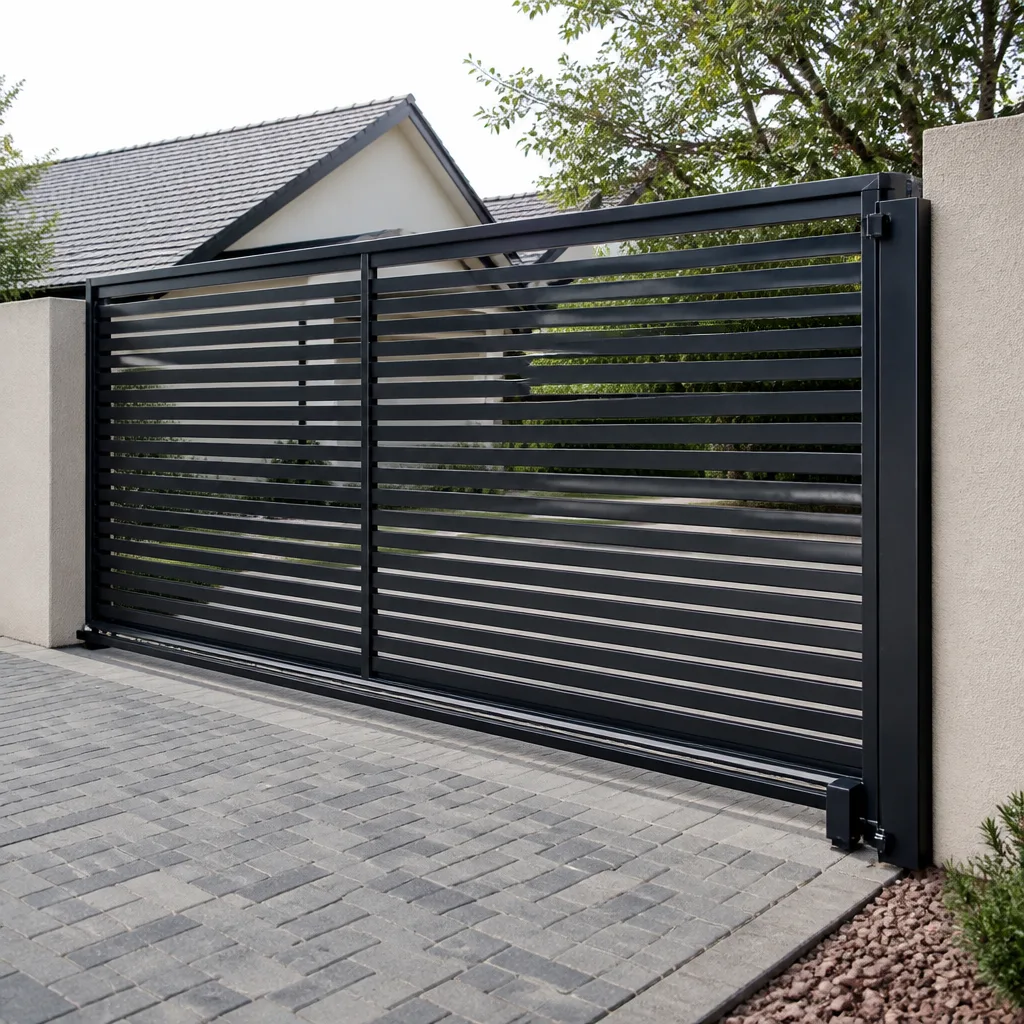 Sliding driveway gates
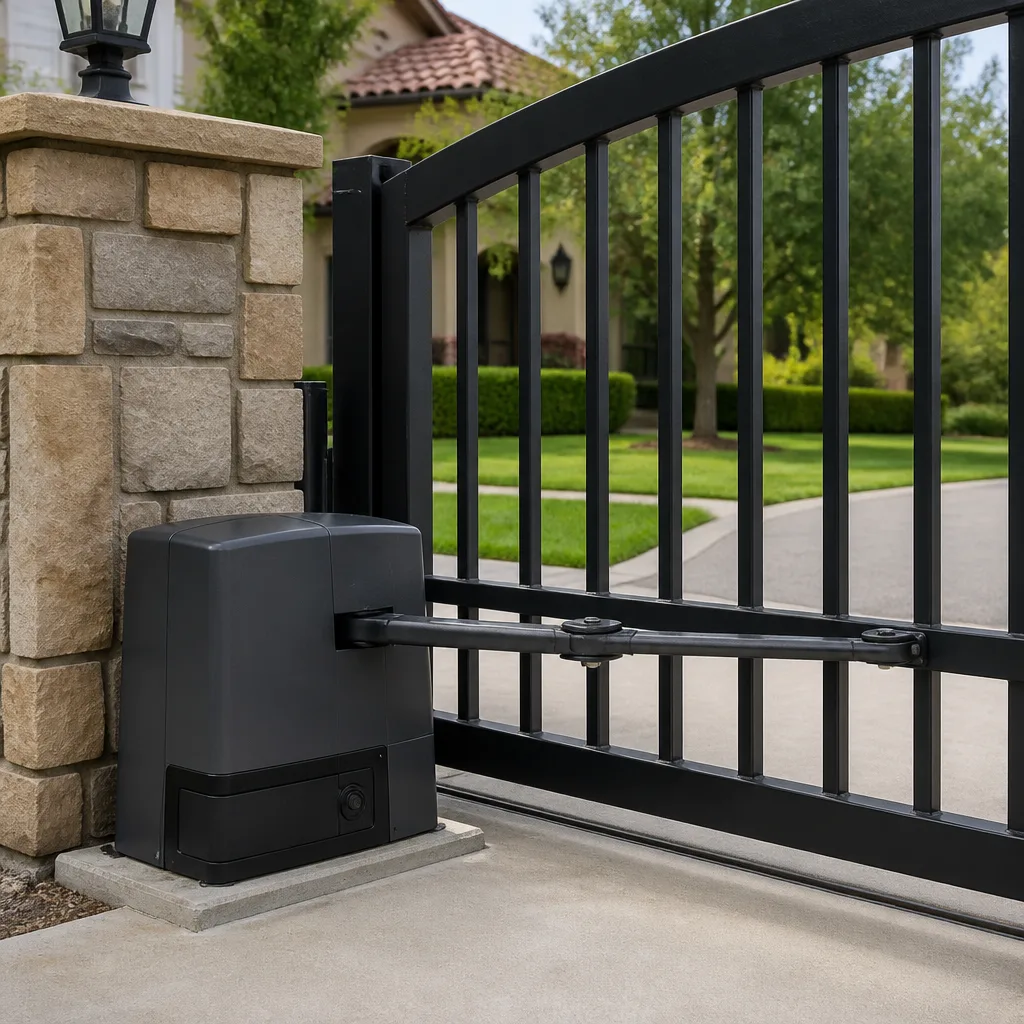 LiftMaster operators
Free on-site gate assessment - hinges, posts, and your LiftMaster or Nice gate operator checked before anything is quoted
The assessment is free and the quote is the invoice.
Get your free estimateHow to Hire a Gate Repair Contractor in Union City: A Step-by-Step Guide
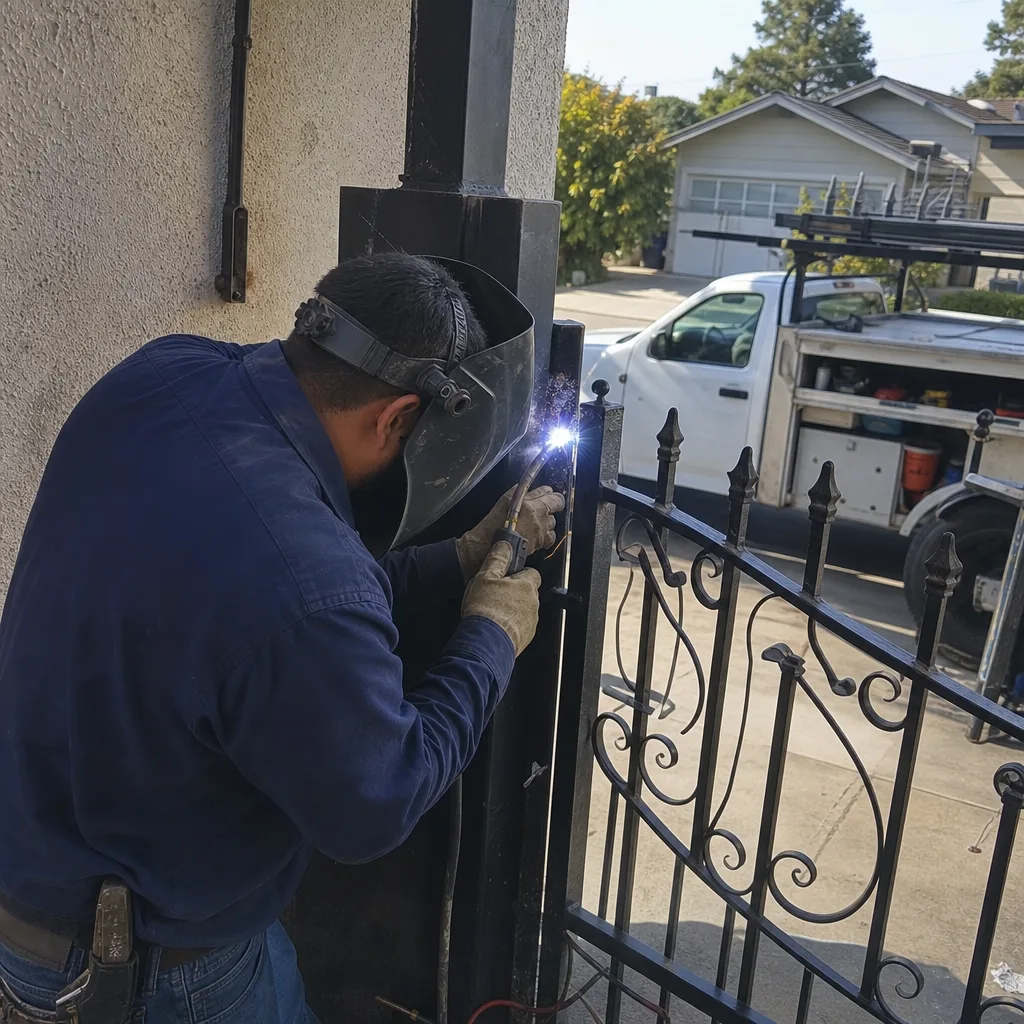
Most homeowners in Union City don’t discover how thin the contractor licensing rules are in California until their electric gate has already failed. Here’s what we mean: any licensed general contractor can legally work on your automated gate, even if they’ve never touched a control board in their life. This Gate Repair guide will show you how to separate actual gate specialists from generalists who will learn on your dime, and you’ll learn this before you spend a dollar. We’ve seen the pattern repeat across Union City neighborhoods, from Decoto to the hills above Mission Boulevard, and the fix starts with knowing what to ask.
Styles & brands we work with
- Wrought iron
- Wood & steel frame
- Farm & ranch
- Sliding driveway gates
- LiftMaster operators
Quick Answer
To hire a gate repair contractor in Union City, first confirm they’re a licensed contractor with a classification relevant to gate work (C-13 fencing, C-61 limited specialty, or D-16 doors, gates, and activating devices), then ask five brand-specific and system-specific questions before scheduling an estimate, and finally read the quote for itemized parts, labor, disposal, and permit lines. For Choosing the Right Gate Repair Brand: A Buyer’s Guide for Union City, see our companion resource. A gate-only specialist who works on your specific operator brand, like LiftMaster or FAAC, will almost always cost more per hour than a handyman but less over the life of the gate.
Table of Contents
- What California License Classifications Actually Mean for Gate Work
- The Five Questions That Separate Gate Specialists from Generalists
- How to Read a Gate Repair Quote Without Getting Burned
- Red Flags Specific to Gate Contractors in Union City
- Verifying Insurance That Actually Covers Motorized Gate Work
- A Vetted Hiring Sequence: From First Call to Signed Quote
- Warranty Questions You Need Answered Before Work Begins
- Common Mistakes to Avoid
- When to Call a Professional
- Frequently Asked Questions
- The Bottom Line
What California License Classifications Actually Mean for Gate Work
California has no dedicated “gate repair” license. That single fact is why hiring a gate repair contractor in Union City requires more diligence than hiring a plumber or electrician. Three contractor license classifications commonly show up on gate job quotes, and each means something different for your specific gate.
The C-13 classification is a fencing contractor’s license. If you have a manual swing gate, a driveway gate mounted on fence posts, or a sliding gate that shares structure with fencing, a C-13 holder is a legitimate choice. They understand post footings, hinge load, and steel fabrication. What a C-13 does not guarantee is any knowledge of operator electronics. A fencing contractor who installs a motor on your gate is doing work closer to electrical and automation work, which falls outside the strict bounds of the C-13 trade classification.
The C-61/D-28 classification is a limited specialty license for doors, gates, and activating devices. This is the classification most aligned with automated gate work. A D-28 holder is specifically tested and licensed for the mechanical and electrical operation of gates and door systems. When you call an electric gate repair specialist in Union City, this is the classification you want to see, because it covers the operator, the control board, and the safety sensors, not just the steel.
The D-16 classification is for doors, gates, and activating devices as a full sub-category under the general building contractor framework. In practice, D-16 and C-61/D-28 cover similar ground for gate work. The distinction matters less than whether the contractor actually works on gates day in and day out. A license tells you someone passed a test. It does not tell you they’ve diagnosed a BFT control board failure in a Decoto driveway at 7 a.m.
Here’s the practical version for Union City homeowners: ask to see the license number, verify it on the Contractors State License Board website, and note the classification. If the classification is B (general building), that’s fine for a full gate installation project in Union City that involves concrete, electrical runs, and structural work. For a repair call on an existing automated system, a C-61/D-28 or D-16 holder is the better filter.
The Five Questions That Separate Gate Specialists from Generalists
Before you schedule an estimate, ask these five questions on the phone. We’re not exaggerating when we say these five questions will eliminate most of the wrong contractors from your list in under ten minutes.
1. “Which operator brands do you service on a regular basis?”
Listen for specific brands. If the answer is “all of them” with no names, that’s a generalist answer. We work on LiftMaster systems specifically, which means our team knows the Control Board part numbers, the common failure modes, and the remote programming sequences without opening a manual. We also service FAAC, BFT, and Linear operators. A contractor who can’t name the last three operator brands they repaired is not a gate specialist.
2. “Do you stock parts for my gate’s brand, or will you need to order them?”
A gate-specific shop carries parts. Not every part for every brand, but the common ones: safety sensors, control boards, remote receivers, hinge brackets, and photo eyes. If the contractor says they’ll need to order everything, you’re paying for their lack of inventory and waiting longer for the fix. In Union City, where many homes have automated driveway gates installed in the last 15 years, the most common parts are LiftMaster and Linear components. A specialist should have those on the truck.
3. “What’s your diagnostic process for an operator that won’t respond?”
This question separates parts-swappers from troubleshooters. A real answer sounds like: “We check power at the board, then we test the transformer output, then we check the safety loop and the photo eye circuit before we touch the motor.” A generalist answer sounds like: “We’ll come out and take a look.” You want the process described in enough detail that it would make sense to another technician. From the motor to the hinge, a specialist can walk you through the diagnostic sequence before they ever show up.
4. “Do you work on manual gates too, or just automated systems?”
Oddly, this is a strong filter. A gate-only specialist works on both. The manual gate is the foundation: the hinges, the post, the alignment, the latch. If a contractor only does automation, they may not understand why your gate binds when the weather shifts. If they only do manual gates, they’ll be lost the moment your LiftMaster operator starts throwing error codes. We only do gates, which means we handle the steel and the circuit board with equal comfort.
5. “Will the person who diagnoses the problem be the same person who fixes it?”
In larger companies, a sales tech quotes the job and a different crew performs it. That’s not automatically bad, but it introduces a gap. The person who heard the motor grinding at 7 a.m. knows something the person reading a work order at noon doesn’t. Smaller gate-specialist firms send the same technician through the whole job. It’s worth asking.
How to Read a Gate Repair Quote Without Getting Burned
A gate repair quote in Union City should be itemized. If it’s a single lump-sum number with no breakdown, you don’t know what you’re paying for, and you can’t compare quotes fairly. Here’s what a proper quote includes.
Line items that should always be separated:
- Diagnostic fee. Often waived if you proceed with the repair. If it’s not waived, it should be stated as a fixed number, not a range.
- Parts. Each part should be listed with its make and model number. For example: “LiftMaster LA400 control board, p/n K74-38151” is specific. “Control board” is not.
- Labor. Stated as either a flat fee per repair or an hourly rate with a not-to-exceed number. If a quote says “labor as needed,” ask them to define “as needed” in writing.
- Disposal. If the old operator, gate leaf, or post is being removed, disposal should be a line item. In Union City, metal recycling is available, so a contractor charging a premium for haul-away is padding the bill.
- Permit pull. Not every gate repair needs a permit. A like-for-like motor replacement usually doesn’t. A new gate installation, especially one that changes the setback from the sidewalk or adds a new concrete pad, often does. If a permit line appears, ask what specifically triggered it.
A lump-sum quote is not automatically dishonest, but it hides the cost structure. When a quote says “gate motor replacement: $2,400,” you can’t tell whether $1,900 of that is parts and $500 is labor, or $900 is parts and $1,500 is labor. You need that breakdown to compare against other quotes and to understand what you’re paying for.
One more point: when you get a quote from a gate specialist that’s higher than a generalist’s quote, compare the parts lines. Generalists often quote the cheapest compatible operator they can find online. Specialists quote the operator that actually fits your gate’s weight, cycle rate, and power supply. In Union City, where many properties have longer driveway runs and heavier gate leaves, the wrong operator fails early. A slightly pricier quote that specifies a correctly-rated operator is the better deal.
Red Flags Specific to Gate Contractors in Union City
General contractor red flags are well known: no license, demand for full payment upfront, no written quote. Gate contractors have their own set of tells that are less obvious.
Vague operator compatibility claims. If a contractor says “this operator works with any gate” without asking the gate’s weight, length, or duty cycle, walk away. Operators are rated for specific loads and usage frequencies. A Mighty Mule operator that works fine on a light pedestrian gate will fail in months on a 900-pound sliding driveway gate. The contractor who doesn’t ask about your gate’s specifics doesn’t know enough to specify the right part.
Pressure to replace instead of repair. Replacement is legitimate when the repair cost approaches replacement cost or when the existing operator is obsolete. It’s not legitimate when the contractor just prefers bigger invoices. A gate specialist should be able to quote both paths: repair and replace, with the cost of each. If a contractor refuses to quote a repair option, get a second opinion. We’ve repaired BFT control boards that other contractors had already written off as dead replacements, and the difference was knowing which test points to check.
No mention of safety sensors. In California, automated gates are legally required to have safety features: photo eyes, reversing edges, or both. If a contractor quotes a new operator installation without mentioning safety sensors, that’s a major red flag. Either they don’t know the code, or they’re planning to skip a required component. Both are unacceptable.
No written diagnostic summary. After a diagnostic visit, you should receive, in writing, a summary of what was found, what was tested, and what the recommended repair is. If the contractor offers only a verbal “needs a new board,” you’re relying on trust with no record. We write up diagnostics on every visit because it protects both sides and gives you a baseline for future issues.
Verifying Insurance That Actually Covers Motorized Gate Work
Standard general liability insurance covers property damage and bodily injury, but motorized gate work introduces specific liability exposure. A gate that closes on a car, a person, or a pet creates a claim that goes beyond typical contractor liability.
Here’s what to ask for and verify before work begins:
- General liability certificate. Request a COI (certificate of insurance) naming you as the certificate holder. The limit should be verifiable directly with the insurer, not just on the contractor’s word.
- Does the policy cover completed operations? This covers work that fails after the contractor leaves. If a gate motor installation causes damage a month later, completed operations coverage responds. Generalists carrying minimal policies may not carry this.
- Is there any exclusion for automated gate or door systems? Some insurance policies exclude motorized gate work specifically because of the entrapment hazard. Ask the question directly. If the contractor’s policy excludes gates, that’s a non-starter.
- Workers’ compensation. If the contractor sends employees rather than working solo, they need workers’ comp. If a worker is injured on your property and the contractor lacks coverage, you may be exposed to the claim. Ask for proof.
We carry insurance appropriate for gate work because that’s all we do. The question of insurance isn’t rude to ask. It’s standard. Any contractor who bristles at the request is telling you something useful.
A Vetted Hiring Sequence: From First Call to Signed Quote
This is the sequence we recommend to any Union City homeowner or property manager. It takes about an hour of total effort and eliminates most bad hires before they set foot on your driveway.
- Call and ask the five questions. From the section above. Take notes. Anyone who refuses to answer or obfuscates drops off the list.
- Verify the license online. Go to the CSLB website, enter the license number, and check that the classification matches the work you need. Note the license issue date. A brand-new license doesn’t mean the contractor is unqualified, but it does mean less operating history.
- Request a COI. Before you schedule the diagnostic visit, ask for proof of insurance delivered to your email. Most legitimate contractors will have it ready. If they say “we’ll bring it to the appointment,” fine, but verify it before you sign anything.
- Schedule the diagnostic. Expect to pay a diagnostic fee. In Union City, that typically ranges from $75 to $150 depending on the contractor and the complexity of the system. Ask up front whether the fee is credited toward the repair if you proceed.
- Receive the written diagnostic summary. If the contractor doesn’t provide one, ask for it. This document is the basis for the quote and your record if anything goes sideways.
- Review the itemized quote. Check that parts, labor, disposal, and any permit line are separated. Compare the parts list against the diagnostic summary. If the quote includes an operator swap, confirm the make and model is compatible with your gate’s weight and duty cycle.
- Sign, and agree on a start date. You’re done. The vetting is done. The price is quoted and agreed before the work starts.
Warranty Questions You Need Answered Before Work Begins
Warranties on gate work break into three layers, and most homeowners only think about one of them.
Parts warranty. The operator manufacturer’s warranty covers defects in the part itself. LiftMaster, for example, provides a limited warranty on many operators, though the length varies by model and whether installation was performed by a recognized dealer. Ask the contractor what the manufacturer’s warranty is on any new part and whether they’ll register the warranty with the manufacturer on your behalf.
Labor warranty. This is the contractor’s own workmanship warranty: how long will they stand behind their repair labor. It’s separate from parts. If a board fails due to a defect 11 months later, the part is covered, but the labor to replace it may not be unless the contractor has a labor warranty. Ask how long their labor warranty runs and what it specifically covers.
System warranty. When you have a new operator installed, some contractors offer a combined system warranty that covers parts and labor for a fixed period, commonly one year, though we can’t speak to what others in Union City offer. What matters is that the warranty terms are in writing on the quote, not promised verbally.
One more question: ask what voids the warranty. Some manufacturers will not honor warranties if the installation was not performed by a qualified installer. Others require annual maintenance for the warranty to stay valid. Know the conditions before you sign.
Common Mistakes to Avoid
- Hiring a fence company because they installed the fence. The fence contractor who built your fence in 2009 may have been excellent at post holes and welding. That doesn’t make them an electric gate specialist. If they don’t service LiftMaster or BFT operators routinely, you’re rolling dice on the automation side.
- Accepting a phone estimate without an on-site visit. A gate’s condition can’t be assessed over the phone. Anyone quoting a repair price sight unseen is guessing. A legitimate quote requires seeing the gate, the operator, the wiring, and the power supply.
- Ignoring the safety sensor line on a quote. If the quote omits safety sensors on an automated gate, the contractor is either unaware of California requirements or planning to skip them. Both are disqualifying.
- Paying in full before the work is done. A deposit for ordered parts is normal. Full payment before completion is not. Always tie final payment to a walk-through of the working gate and a review of what was done.
- Not asking about the control board specifically. Many gate failures are board failures, not motor failures. If a contractor says “needs a new motor” without discussing the board, ask why the board was ruled out. A motor that’s physically fine with a dead board will not be fixed by a new motor.
- Skipping the CSLB check. It takes three minutes online. A contractor’s license number should be on their quote, their vehicle, and their contract. Verify it. This is the single highest-impact step in the whole process.
When to Call a Professional
A gate that’s binding on a warped hinge is sometimes a DIY Saturday job. A gate with a motor, a control board, or a safety loop is not. If your gate is automated and it’s exhibiting any of the following, call a professional: the operator hums but the gate doesn’t move, the gate reverses without hitting anything, the remote works sometimes but not others, or you hear grinding that wasn’t there last month. These are symptoms of electrical or mechanical failure, not adjustment issues, and high-tension gate springs and unguarded drive chains are genuinely dangerous to work on without training. We recommend a trained professional for anything involving the operator, the wiring, or the spring tension. Gate Repair Union City offers free estimates in Union City. Call (833) 593-6430 and we’ll tell you what we’re looking at before we ever bill a dollar.
Frequently Asked Questions
Gate repair costs in Union City vary widely based on the failure type, but you can expect a diagnostic fee anywhere from $75 to $150, a minor hinge or sensor repair in the $200 to $450 range, and a full operator replacement commonly running $1,500 to $3,500 depending on the operator brand and your gate’s weight and duty cycle. For an exact quote on your specific gate, call (833) 593-6430 and we’ll walk you through the diagnostic.
Most like-for-like part replacements, such as swapping a control board or a safety sensor, don’t require a permit in Union City. A full gate installation that changes the structure, the footings, or the electrical run typically does. Your contractor should be able to tell you which applies to your project and why.
The difference is depth: a gate specialist works on nothing but gates, meaning they know the operator brands (we service LiftMaster, FAAC, BFT, and Linear systems regularly), carry the common parts on the truck, and can diagnose a control board failure without a manual. A handyman might be able to replace a hinge, but a control board fault or a safety loop failure is beyond the scope of most generalist work.
Compatibility comes down to the operator’s make, model, and year. The part number on your existing board or motor is the authoritative reference, and a gate specialist can cross-reference that against the manufacturer’s current part list. If a contractor says a part is “probably fine” without checking the part number, get a second opinion.
Yes. As a brand-agnostic gate specialist, we repair gates installed by any original contractor and service systems from budget brands like Mighty Mule and Ghost Controls up to commercial-grade FAAC, BFT, and DoorKing units. We don’t need the original installer’s documentation to diagnose the failure, though having it can speed things up.
In Union City’s climate, we commonly see control board failures from power surges and moisture intrusion, plus limit switch failures from repeated cycling. For Seasonal Gate Repair Care for Union City: Year-Round Homeowner’s Guide tips on protecting your system, see our dedicated post. The bay air is more corrosive than homeowners expect, which accelerates connector degradation inside the operator housing. That’s why we check the connector condition on every diagnostic call, not just the obvious moving parts. For a diagnostic on your system, call (833) 593-6430.
The Bottom Line
Hiring a gate repair contractor in Union City comes down to filters: the license classification, the five brand-specific questions, the itemized quote, and the insurance check. None of these steps is complicated. All of them take minutes. Together they eliminate the generalists, the parts-swappers, and the quote-padders before they ever touch your gate. The trade has no dedicated gate license in California, so the vetting burden is always on you. Use this guide as your checklist, and when you’re ready, call (833) 593-6430 for a free estimate. We’ll run the same diagnostic process on your gate that we’d want run on our own.
Written by the team at Gate Repair Union City, serving Union City since 2018. Browse more guides & resources on gate maintenance and repair.
See the difference
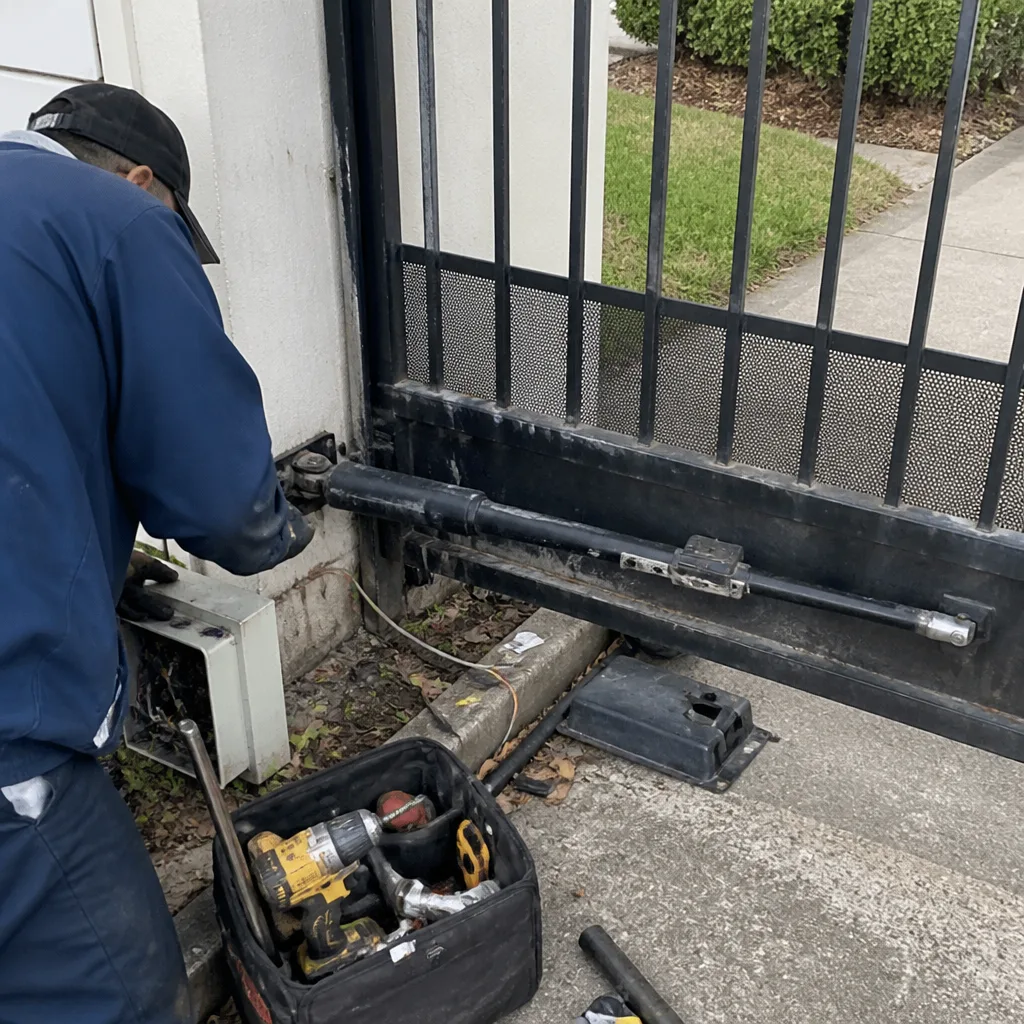 Before
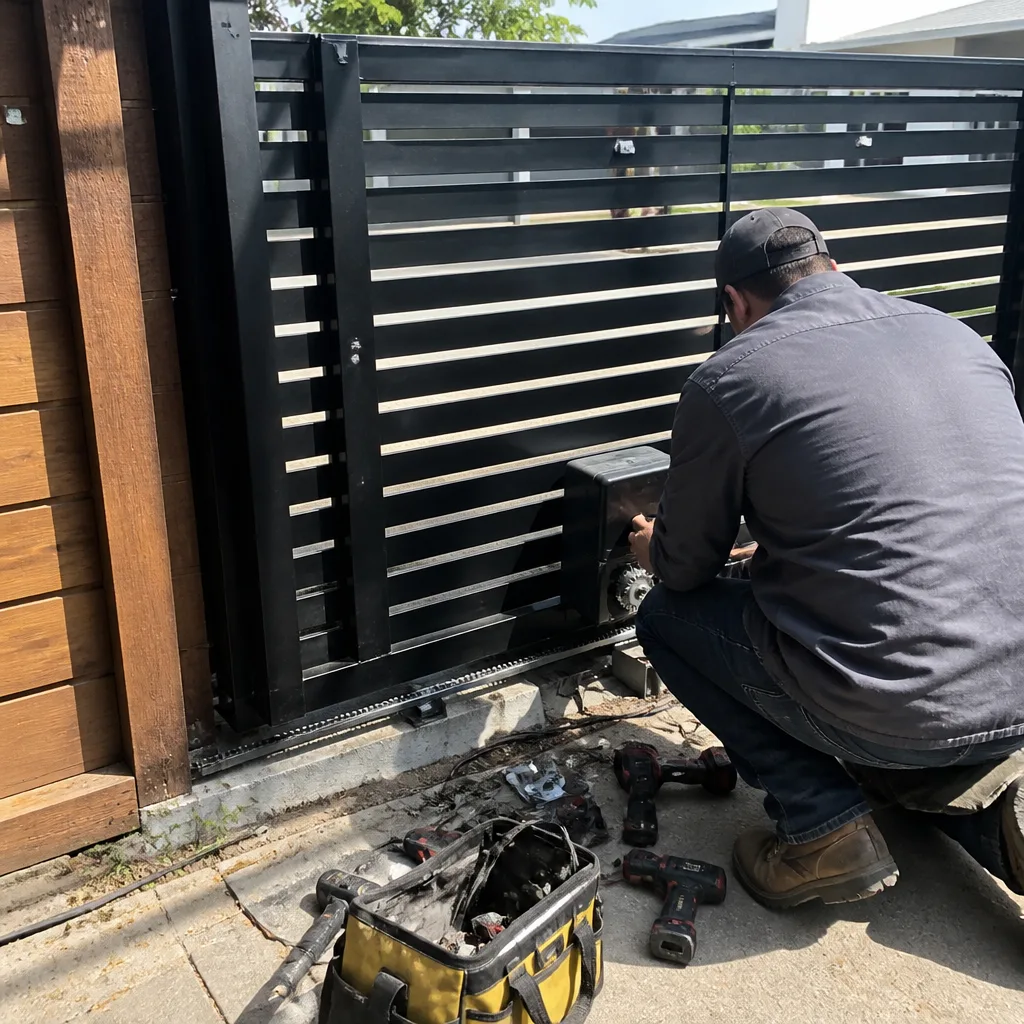 After
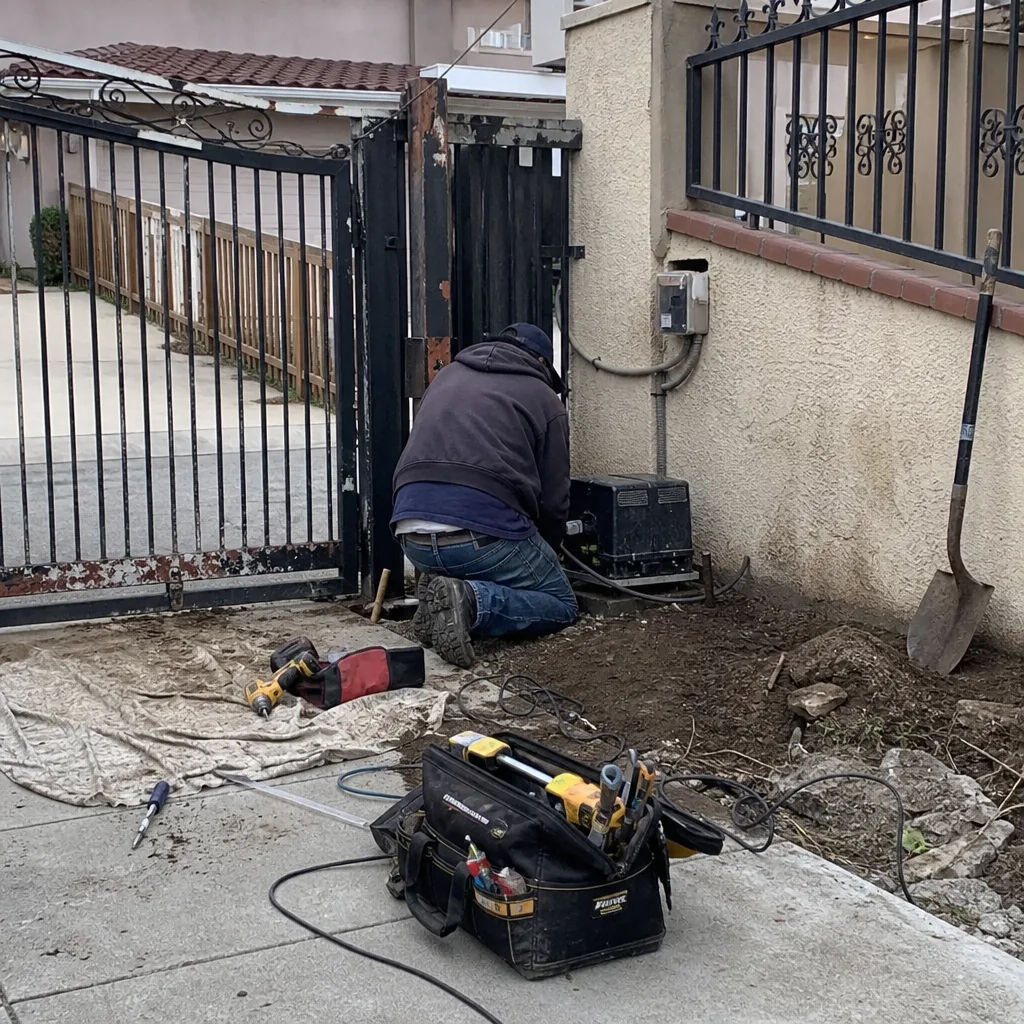 Before
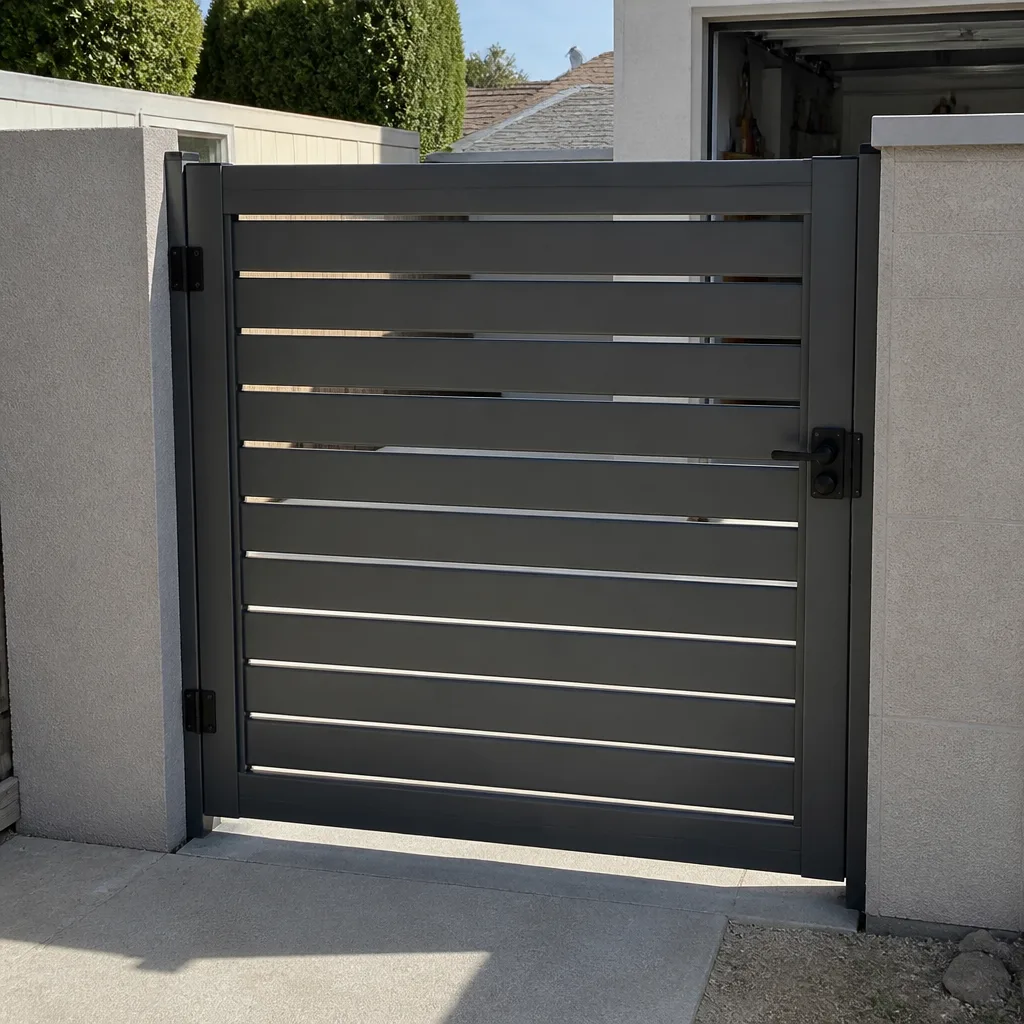 After
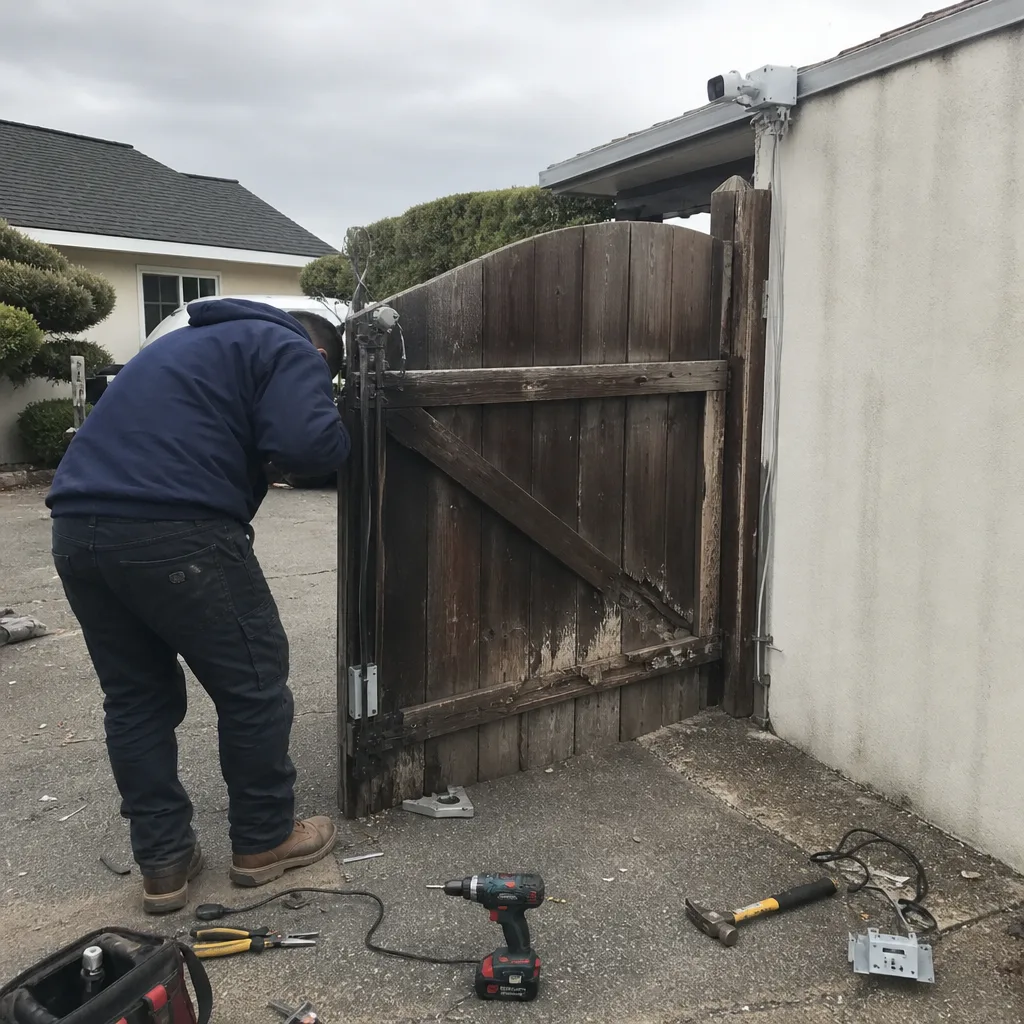 Before
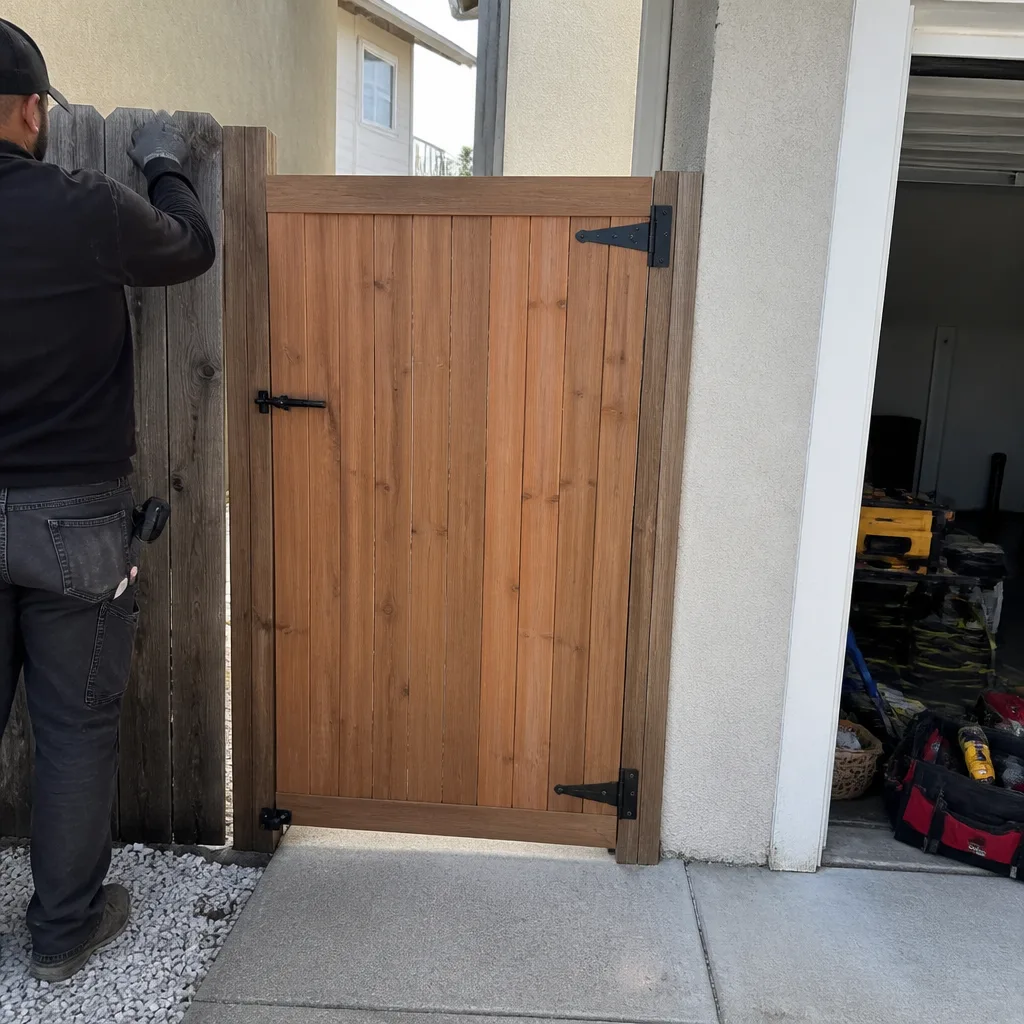 After