
Last updated November 2, 2026
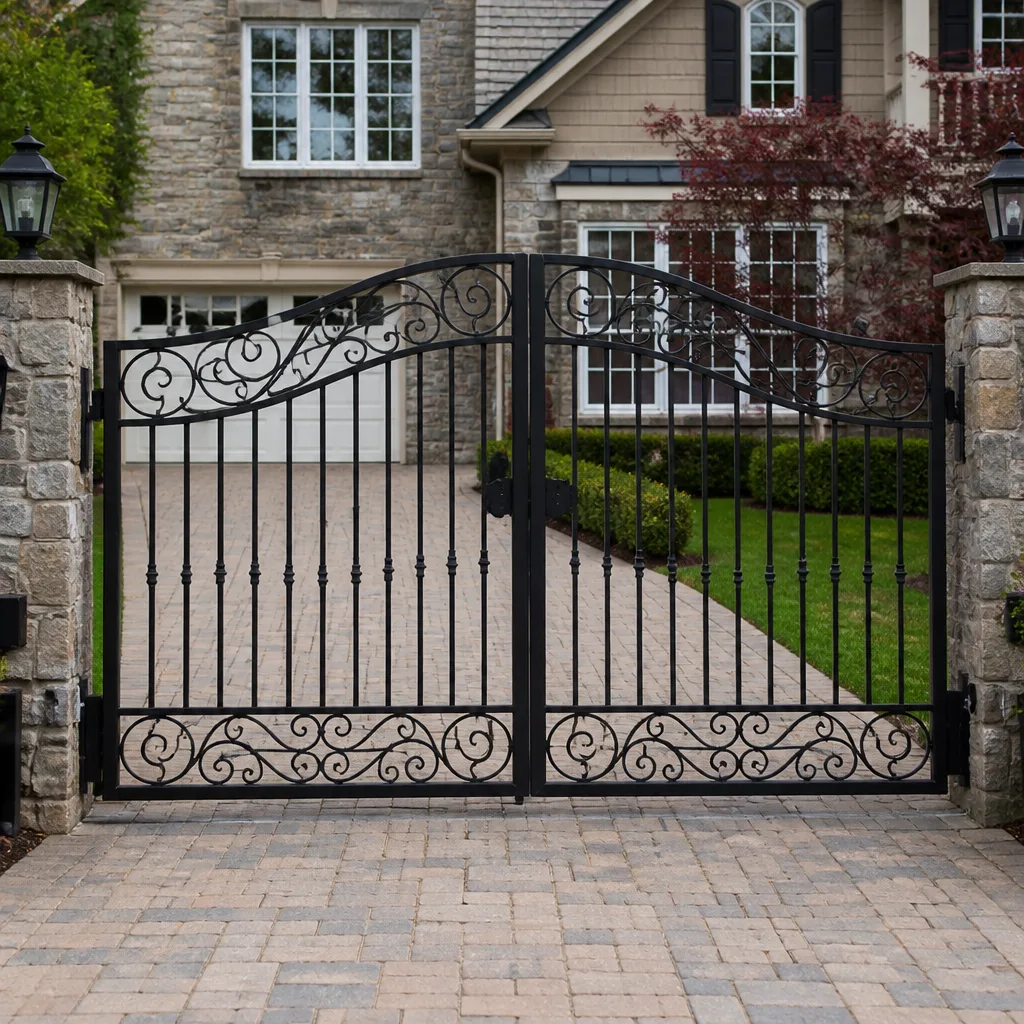 Wrought iron
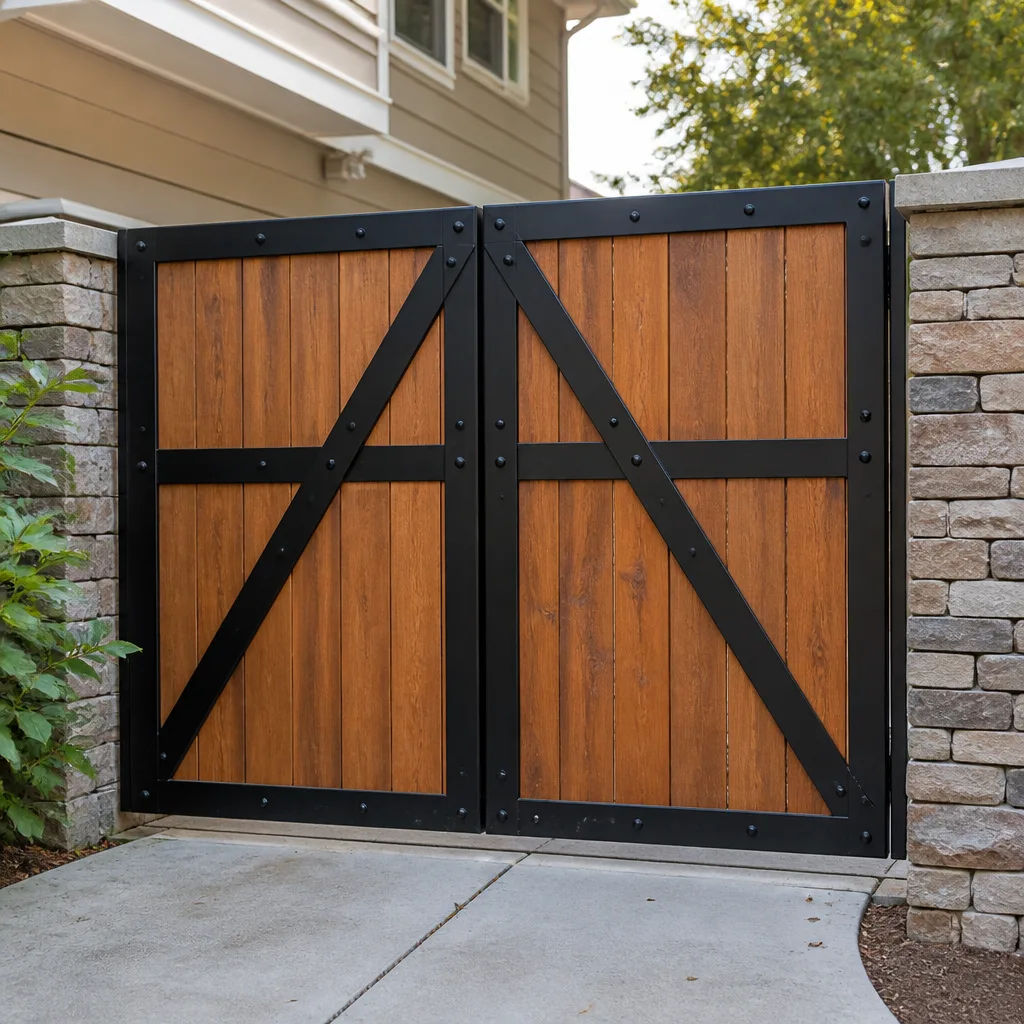 Wood & steel frame
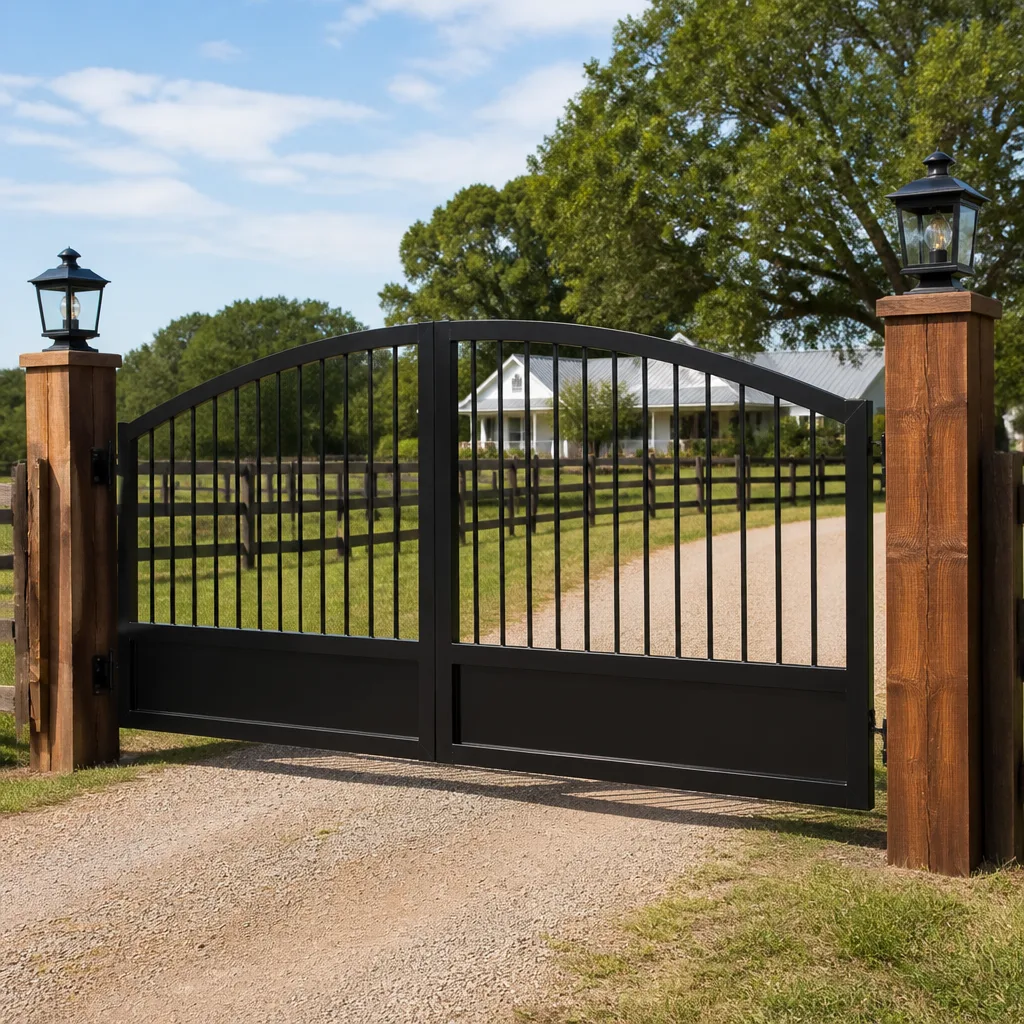 Farm & ranch
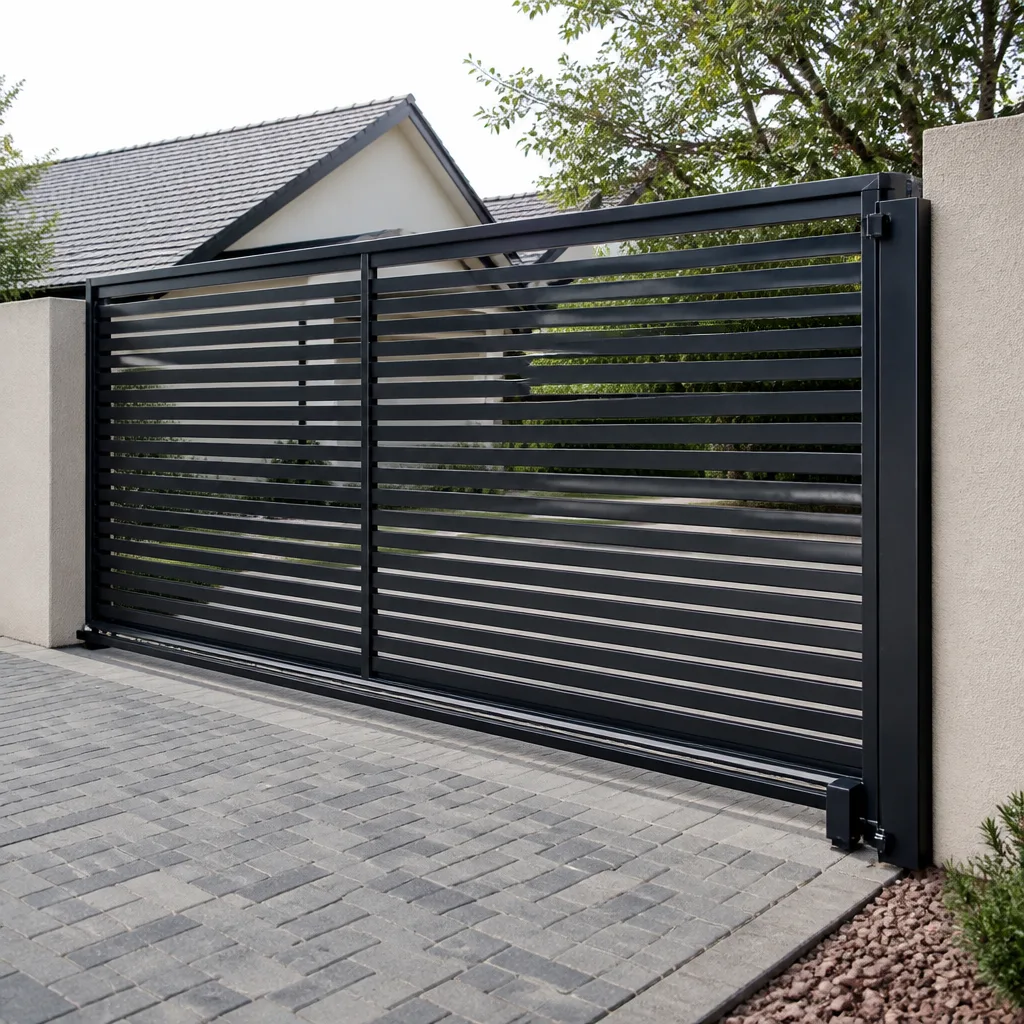 Sliding driveway gates
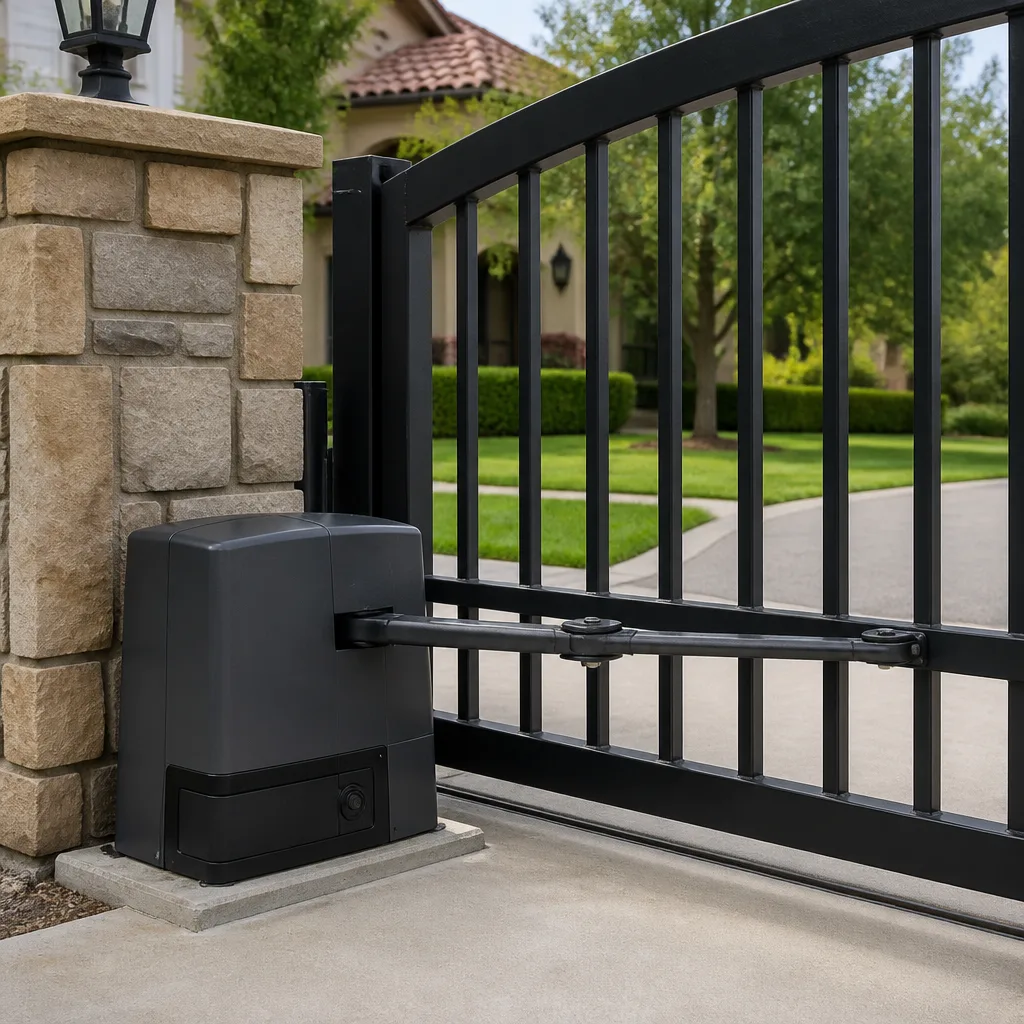 LiftMaster operators
Free on-site gate assessment - hinges, posts, and your LiftMaster or Nice gate operator checked before anything is quoted
The assessment is free and the quote is the invoice.
Get your free estimateSeasonal Gate Repair Care for Union City: Year-Round Homeowner’s Guide
Union City gets more corrosive air exposure in June than most inland California cities get all year. The marine layer delivers salt, moisture, and particulate matter that attack gate hardware on a schedule most homeowners never account for. This guide maps gate maintenance to Union City’s actual climate calendar: marine layer months, dry-heat spells, and the November-through-March rainy season that stresses drainage and shifts soil. You’ll learn what to check each month, which failures happen in which season, and exactly when a professional inspection saves you the most money.
Styles & brands we work with
- Wrought iron
- Wood & steel frame
- Farm & ranch
- Sliding driveway gates
- LiftMaster operators
Quick Answer
Seasonal gate care in Union City means tracking three distinct stress periods, not four seasons: summer marine layer corrosion, late-summer dry heat that cooks electronics, and winter rain that moves soil and floods operator enclosures. The single most important task is a professional fall inspection before the rainy season arrives, followed by a documented post-storm check after any significant rain event. Homeowners who follow this calendar see fewer mid-season failures and typically extend gate and operator life by several years.
Table of Contents
- Union City’s Real Gate Stress Calendar
- Month-by-Month Gate Maintenance Tasks
- The Rainy Season: November Through March
- Summer Heat and Your Gate Operator
- The Marine Layer Problem Most Guides Ignore
- Why Fall Is the Strategic Time for a Professional Gate Inspection
- Post-Storm Inspection: Five Checks Before You Operate
- Common Mistakes to Avoid
- When to Call a Professional
- Frequently Asked Questions
- The Bottom Line
Union City’s Real Gate Stress Calendar
Most gate care advice assumes four seasons. Union City doesn’t work that way. The city sits at the mouth of Niles Canyon, where wind funnels through and carries marine air inland from the Bay. That geography creates a unique pattern: damp, salt-laden mornings from May through August, dry offshore heat in September and October, and a concentrated rainy season that hits hard between November and March. Your gate’s hardware, electronics, and foundation all respond to these patterns differently.
The corrosive window runs longest here. While inland cities like Livermore or Tracy bake dry through summer, Union City stays moist. Steel hinges, powder-coated frames, and exposed fasteners absorb that moisture daily. Rust starts earlier and spreads faster than homeowners expect. We’ve pulled gate hinges in Union City that looked worse at four years than identical hardware in Fremont looked at seven, purely because of wind-driven marine exposure on the west side of town.
The ground moves seasonally here too. Union City’s soil ranges from Bay mud in lower-lying areas near Alvarado-Niles Road to more stable loam on the hillside developments. Bay mud expands when saturated and contracts when dry. Every cycle pushes gate posts slightly out of alignment. Over two or three winters, a gate that once latched cleanly starts dragging across its track or binding against the post. Gate repair in Union City frequently comes down to realigning hardware that shifted during a single wet season.
The practical takeaway: your maintenance calendar should follow these three periods, not the solstice. Treat June through August as corrosion season. Treat September and October as pre-rain prep season. Treat November through March as rain-response season. That shift in thinking alone puts you ahead of most homeowners in the East Bay.
Month-by-Month Gate Maintenance Tasks
Here’s a working maintenance calendar, mapped to Union City’s actual conditions. Ten or fifteen minutes a month covers most of it. The professional inspections are the exceptions, and those are worth scheduling deliberately rather than reactively.
January
Peak rainy season. Check that water isn’t pooling around gate posts or the operator enclosure. If your gate sits low in the driveway, confirm the track drains are clear of leaves and silt. Test the auto-reverse safety function on your operator twice this month. If the gate hesitates or reverses without cause, note it.
February
Another wet month. Inspect the operator enclosure for moisture inside the cover. If you see condensation, that’s a warning sign the seal is failing. Wipe down exposed hinges and check for rust starting at weld points. Tighten any loose hardware that winter storms have worked free.
March
Rain tapers but soil is fully saturated. This is when post lean becomes visible. Check the gap between gate and post at top and bottom. If the gap is wider at the top, your post is leaning outward. Document it with a photo so you can compare in six months.
April
First reliably dry month. Lubricate hinges, rollers, and the operator’s drive mechanism with a dry silicone or lithium spray. Avoid WD-40 as a primary lubricant; it’s a water displacer, not a lasting lubricant, and it attracts dust. Check battery backup systems now, before heat arrives.
May
Marine layer is back in force. Start monthly rust checks on all exposed metal: hinge barrels, bracket screws, the bottom rail of the gate leaf, and any exposed wiring conduit. Sand and touch up small rust spots before they spread.
June
Peak salt exposure month in Union City. Wash the gate with mild soap and water, especially if it faces west or northwest. Rinse salt residue from the operator arm and housing. Do not use a pressure washer on the operator or any electrical housing; a garden hose on gentle flow is enough.
July
Consistent marine layer means consistent moisture. Check that weep holes at the bottom of gate tubes are clear, not clogged with dirt or spider webs. Blocked weep holes trap water inside the gate leaf. That’s a heavy-gauge steel problem that looks fine outside and rots from inside.
August
Fog mornings, warm afternoons. This daily temperature swing works fasteners loose over months. Walk the gate’s entire hardware line with a wrench and snug what’s loose. Do not over-tighten; snug is enough.
September
The dry heat spike. Battery backup systems that sat all summer in a hot enclosure are at highest failure risk now. Test the battery under load: disconnect power to the operator at the breaker and cycle the gate. If it struggles or won’t move, replace the battery before rain season adds another variable.
October
The most important professional window of the year. Schedule a full electric gate inspection if you have a motorized system. This is the month to catch wiring corrosion, failing limit switches, and worn drive components before rain and cold complicate every repair.
November
First real storms arrive. Clean your track if you have a slide gate. If you have a swing gate, confirm the gate doesn’t scrape the driveway surface at the open position, because saturated soil can raise or lower the path just enough to cause contact.
December
Cold wet mornings stress started capacitors and control boards. Listen for clicks without movement, slow starts, or buzzing at the operator. These are early warning signs on brands like FAAC and BFT that are worth addressing before a full failure strands your vehicle outside.
The Rainy Season: November Through March
Union City’s rainy season isn’t the worst in the Bay Area by volume, but it’s consistently wet enough to expose drainage and soil problems that dry months hide. The average season brings over 20 inches of rain, concentrated in bursts. A gate system that works fine in October can fail three ways by February: water intrusion, ground movement, and electrical corrosion.
Water intrusion into the operator enclosure is the most common failure we see. Most residential operators are rated for outdoor installation, but the seal around the housing degrades over years of sun and marine air. Once water gets inside, it corrodes control board connections and eventually shorts the board. The fix isn’t always a new operator; often it’s a new enclosure seal and a board-level cleaning, but catching it early is what makes that repair path possible.
Ground movement in Union City’s Bay mud is the second major issue. When saturated, Bay mud expands unevenly. A gate post that was plumb in September can lean half an inch by January on the west side of town near the lowlands. That half inch translates to a gate that drags, a latch that no longer lines up, or a safety sensor that constantly trips because the beam path is broken. The professional solution is post re-setting or pier reinforcement, and it’s far cheaper to do in the spring when soil has settled than mid-winter when it’s still moving.
Track drainage on slide gates catches many Union City homeowners off guard. Leaves, silt, and small debris wash into the track during storms. If the track’s drain slots are clogged, the track holds water. Steel wheels sitting in water for weeks develop flat spots and rust. The roller bracket bearings fail next. Clearing the track after every significant storm is a two-minute habit that prevents a several-hundred-dollar repair.
For electric gates, the rainy season is also when safety sensors get dirty and start false-triggering. A photo eye that’s been splashed with mud thinks something is in the gate path and refuses to close. Cleaning the sensor lenses monthly during rain season resolves most intermittent “gate won’t close” calls. If cleaning doesn’t fix it, the sensor alignment may have drifted and needs a professional adjustment.
Summer Heat and Your Gate Operator
September and October are Union City’s real heat months, and they catch operators that survived the summer marine layer off guard. While June through August stay moderate with fog, late-summer and early-fall bring dry, hot offshore winds. Temperatures push into the high 80s and low 90s, and gate enclosures in direct sun get much hotter inside.
Hydraulic operators are the most heat-sensitive systems we work on. Brands like BFT and Viking build hydraulic rams that rely on fluid viscosity staying within a designed range. In cold weather, fluid thickens and the gate runs slow. In heat, the opposite happens. Seals that were marginal in June fail outright in September when the operator housing bakes all afternoon. The first symptom is oil weeping at the ram or around the pump body. A small leak ignored through summer becomes a full hydraulic failure by early fall, always at the worst time, because that’s when the operator works hardest.
Battery backup systems are the second heat casualty. Most residential operators have a battery backup so the gate still works during power outages. Those batteries sit inside enclosures that get hot. Heat accelerates battery chemical degradation. A battery that’s two or three years old and spends a September heat wave in a sun-facing enclosure often loses capacity permanently. When the first storm knocks out power in November, the backup that should open your gate is dead. Testing the battery under load in September gives you time to replace it before it’s an emergency.
Control boards and electrolytic capacitors don’t love heat either. Capacitors have a rated operating temperature, and sustained enclosure heat shortens their life. Early signs of capacitor degradation include: the gate occasionally fails to start on first command, the operator hums for a moment before moving, or the remote works inconsistently when the enclosure has been in afternoon sun. Those are not random glitches; they’re heat-related component aging. If you notice them in September, have the board inspected before rain season.
The pre-summer check we recommend is simple and specific: first, test the battery backup under load. Second, inspect hydraulic operators for oil weepage at every fitting. Third, confirm the operator enclosure has shade or at minimum isn’t in direct afternoon sun against a west-facing wall. Fourth, run the gate through five full open-close cycles and note any hesitation, noise, or inconsistent speed. These four checks prevent most midsummer and early-fall failures.
The Marine Layer Problem Most Guides Ignore
Union City’s summer marine layer is the most underappreciated gate killer in the East Bay. From May through August, the city sits under a fog deck that rolls in most evenings and burns off by late morning. That means your gate spends eight to ten hours a day in high humidity air, loaded with salt from the Bay and particulate matter from the corridor’s industrial traffic and airport activity.
Salt air doesn’t just rust. It creates an electrochemical environment that accelerates galvanic corrosion wherever dissimilar metals touch. On a gate, that’s hinge pins against hinge barrels, steel screws into aluminum frames, and copper wire terminals against steel connector blocks. The corrosion happens even when nothing looks wet, because the humidity level alone is enough to sustain the reaction.
What this means practically: hinges on west and northwest-facing gates in Union City age twice as fast as identical hinges on the east side of town. If your gate faces the Bay or sits above Alvarado-Niles Road where the wind channel is strongest, you should inspect hardware monthly during summer, not seasonally. Look for rust staining around hinge pins, powder coating bubbling along the bottom rail, and white oxidation on aluminum components.
The powder coating failure path is consistent. Salt particles settle on the surface. The morning dew dissolves them into a saline film. That film penetrates micro-scratches and sits against the steel. The coating lifts at the edges. Rust starts underneath and spreads invisibly until the coating flakes off. By the time you see it, the underlying metal has been corroding for months.
The countermeasure is equally consistent: monthly washing during marine layer season. Plain water with a small amount of mild soap removes the salt before it accumulates. Rinse thoroughly, and pay attention to the bottom rail and the back side of the gate where water drips down and concentrates. For protected metal like hinge pins and bracket screws, apply a dry lubricant after washing. This isn’t cosmetic maintenance. It’s the difference between hinges lasting ten years and hinges seizing at five.
For electric gates, the marine layer also affects external wiring connections. Low-voltage wire nuts, terminal strips in junction boxes, and photo eye connections all corrode faster here than inland. A trained electric gate specialist can re-terminate those connections with dielectric grease protection, which is a simple, inexpensive upgrade that pays for itself in fewer service calls.
Why Fall Is the Strategic Time for a Professional Gate Inspection
Most homeowners think about gate maintenance in spring, the same way they think about other home upkeep. For Union City specifically, that’s backwards. Fall, specifically October, is when a professional gate inspection delivers the most value, and the reason is straightforward: you’re preparing the gate for the most demanding season of the year while the weather is still dry enough to make any needed repair simple.
Here’s what a fall professional inspection catches that you can’t easily see yourself:
- Wiring corrosion that will short when wet. A technician opens the operator enclosure and inspects every connection. Corrosion that’s been building through the marine layer summer becomes a problem in November when rain raises humidity inside the enclosure. Finding it in October means cleaning and re-sealing connections in dry conditions.
- Worn drive components that fail under cold, wet load. Chains stretch, gears wear, and belts crack. Cold makes everything stiff, which means an operator that works fine in October may strain in January. Replacing worn components before the strain period is cheaper and faster than a mid-winter emergency repair.
- Post alignment before saturated soil moves it further. If a post is already leaning slightly after the summer dry period, it will lean more when Bay mud saturates. October is the last dry window to reset hardware before ground movement accelerates the problem.
- Safety sensor calibration while daylight is predictable. Photo eyes and loop detectors perform differently in different conditions. Testing and calibrating them before rain and short daylight hours means fewer false trips during the season when troubleshooting is most annoying.
- Battery backup load testing before power outage season. The first winter storm that knocks out power is not the time to discover your backup battery died in a September heat wave. A fall inspection includes load testing and replacement if needed.
A fall inspection typically takes a technician under an hour for a standard residential system. What it costs is a fraction of a single emergency callout in February when the gate won’t open and you’re parked outside in the rain. For property managers with commercial systems, the logic is even stronger: one planned inspection prevents an unplanned outage that disrupts every tenant or customer who uses the gate.
Post-Storm Inspection: Five Checks Before You Operate
After a significant rain event in Union City, the temptation is to immediately open and close the gate to see if it still works. That’s actually a risky move if debris has shifted anything into the gate path or water has entered somewhere it shouldn’t. Instead, run these five checks before you operate the gate. They take five minutes and prevent turning a small problem into a major one.
- Clear debris from the track and gate path. Walk the full length of the gate’s travel path. Remove branches, leaves, and any trash blown in by the storm. For slide gates, clear the track and confirm the drain slots are visible and not packed with silt. A pebble jammed in the track can damage a roller instantly when the gate moves.
- Check for standing water around the operator and posts. If water is pooled around a gate post or the operator base, note where it is and how deep. Standing water at a post means the drainage around the post has been compromised, and saturated soil may shift the post over the following days. Don’t operate the gate while water touches the operator housing.
- Open the operator enclosure and look for moisture. If you’re comfortable doing this safely, open the operator cover and check for condensation or water droplets inside. If you see moisture, leave the cover open to dry only if rain has fully passed, and call a professional to inspect the board before continued use. Water inside the enclosure can short the board when the operator cycles.
- Check safety sensors are clean and aligned. Rain splashes mud onto photo eyes and can knock them out of alignment. Wipe the lenses with a dry cloth. If the sensor has an indicator light, confirm it’s lit when the beam is aligned. A dirty or misaligned sensor typically causes the gate to refuse to close, which is a safety response working as designed.
- Check the gate’s physical alignment. Open the gate manually if possible, not with the operator. Watch whether it clears the post, the ground, and the latch. If it scrapes or binds, the storm has shifted something. Operating it with the opener before confirming clearance can strip gears in the operator.
If all five checks pass, operate the gate through one full open-close cycle with the remote while standing back. Listen for unusual sounds, watch for hesitation, and confirm the auto-reverse works. If anything seems off, don’t continue using the gate daily while ignoring it. Small storm-related issues compound quickly when water and electricity are involved.
Common Mistakes to Avoid
- Ignoring the summer marine layer because it looks dry. Union City’s summer fog delivers salt and moisture even when nothing is wet to the touch. Skipping monthly hardware checks from June through August is the most costly maintenance mistake we see.
- Using the wrong lubricant. WD-40 is a water displacer, not a long-term lubricant. It attracts dust, gums up hinge pins, and makes things worse over time. Use dry silicone or lithium spray on hinge pins and rollers.
- Pressure washing the operator or control box. A pressure washer forces water past seals and into electrical enclosures. It causes exactly the kind of internal corrosion that leads to board failure. Gentle hose flow and a soft brush are enough.
- Testing the battery backup in winter for the first time. Battery health should be verified in September, before heat degradation and before the power outage season arrives. Testing it for the first time during a storm is too late.
- Ignoring a gate that’s “a little slow” in winter. Cold weather makes hydraulic fluid thick and mechanical parts stiff, but a gate that’s noticeably slower in January than it was in September is telling you something. It’s not normal, and it’s cheaper to diagnose before it stops entirely.
- Waiting until spring for all maintenance. In Union City, spring is the reward for good fall preparation, not the time to start. The rainy season is the highest-stress season for your gate. Prep before it, respond during it, and use spring for resetting and repair.
When to Call a Professional
Most monthly maintenance on a gate is homeowner-appropriate: cleaning, lubrication, visual checks, and clearing debris. But some situations call for a technician who works on gate systems every day. If your gate won’t open or close and the safety sensors are clean, the problem is likely electrical, and it will not fix itself. If you see rust that’s penetrated through the coating and the metal underneath is pitted or flaking, that’s structural, not cosmetic. If your gate post is visibly leaning or the gate scrapes the ground where it didn’t before, soil movement has already happened, and the post needs professional resetting. If you hear grinding, clicking without movement, or see the operator run but the gate not respond, the operator or drive system has failed, and continuing to use it risks further damage. If water has gotten inside the operator enclosure, do not keep cycling the gate to see if it works. Gate Repair Union City offers free estimates in Union City, call (833) 593-6430.
Frequently Asked Questions
Once a year is enough for most residential gates in Union City, and the best time is October before the rainy season begins. Commercial gates or gates with heavy daily use benefit from twice-yearly service, typically in October and again in April after the rain has stopped.
Cold temperatures thicken hydraulic fluid in operators like BFT and Viking systems, and they make mechanical parts like chains and rollers stiffer. Some slowdown in cold weather is normal, but a dramatic change from the gate’s summer speed usually indicates a component that’s wearing and needs attention before it fails.
You can do basic maintenance like cleaning sensors and checking for visible corrosion, but internal repairs on control boards, motors, and wiring are not safe DIY projects. The voltage inside an operator enclosure is enough to cause serious injury, and a mistake can damage the board beyond repair. This is one job where a professional electric gate repair call is the right move.
Union City’s west-facing exposure to the Bay and its position at the mouth of Niles Canyon creates a stronger, saltier marine layer than cities further south or east. Combined with Bay mud soil that expands and contracts with rain, gate hardware here faces both accelerated corrosion and more significant post movement than most of the East Bay.
Water intrusion into the operator enclosure is the most common post-storm problem we encounter, followed closely by misaligned safety sensors from mud and debris. Both are preventable with a proper fall inspection and a quick post-storm check of the enclosure seal and sensor lenses.
That depends on the condition of the posts, the frame, and the operator as a system. A general rule: if the posts are solid and the frame isn’t structurally rusted, repairing existing hardware and upgrading the operator is usually the better value. If the post is leaning significantly or the frame has rusted through in multiple places, new gate installation is the more cost-effective long-term choice. A professional inspection can give you an honest recommendation based on your specific gate’s condition.
The Bottom Line
Union City gates face a specific set of seasonal challenges: salt-laden marine layer moisture through summer, dry heat spikes in early fall, and a November-through-March rain season that stresses drainage, soil stability, and every electrical component. The homeowners who get the most life from their gates are the ones who treat these three periods as distinct maintenance windows, wash hardware during marine layer season, test batteries before heat hits, and get a professional inspection in October before the rain. A consistent seasonal routine costs little and prevents the expensive failures that happen when a small problem sits ignored through the wrong season. If your gate needs attention, Gate Repair Union City home is here to help. Call (833) 593-6430 for a free estimate, and we’ll assess whether a repair or a new installation makes the most sense for your property.
Written by the team at Gate Repair Union City, serving Union City since 2018.
See the difference
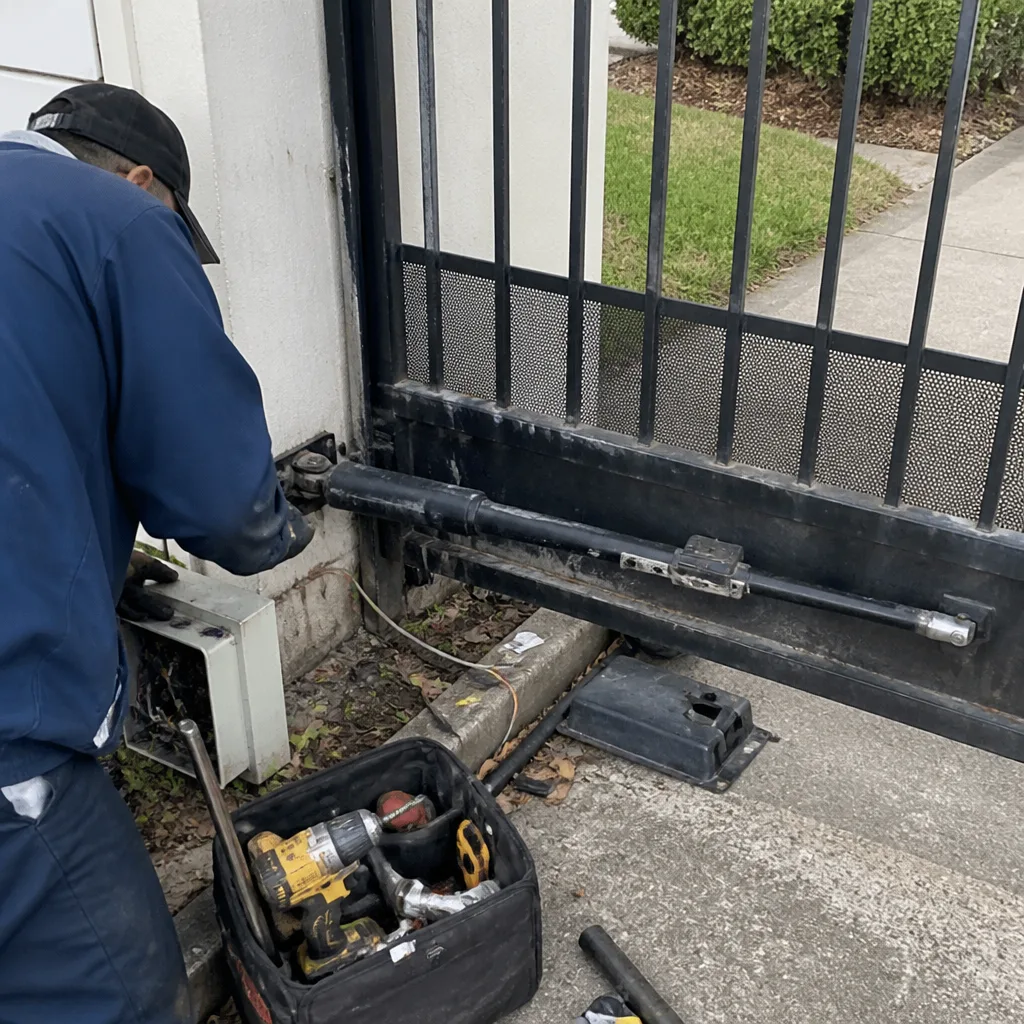 Before
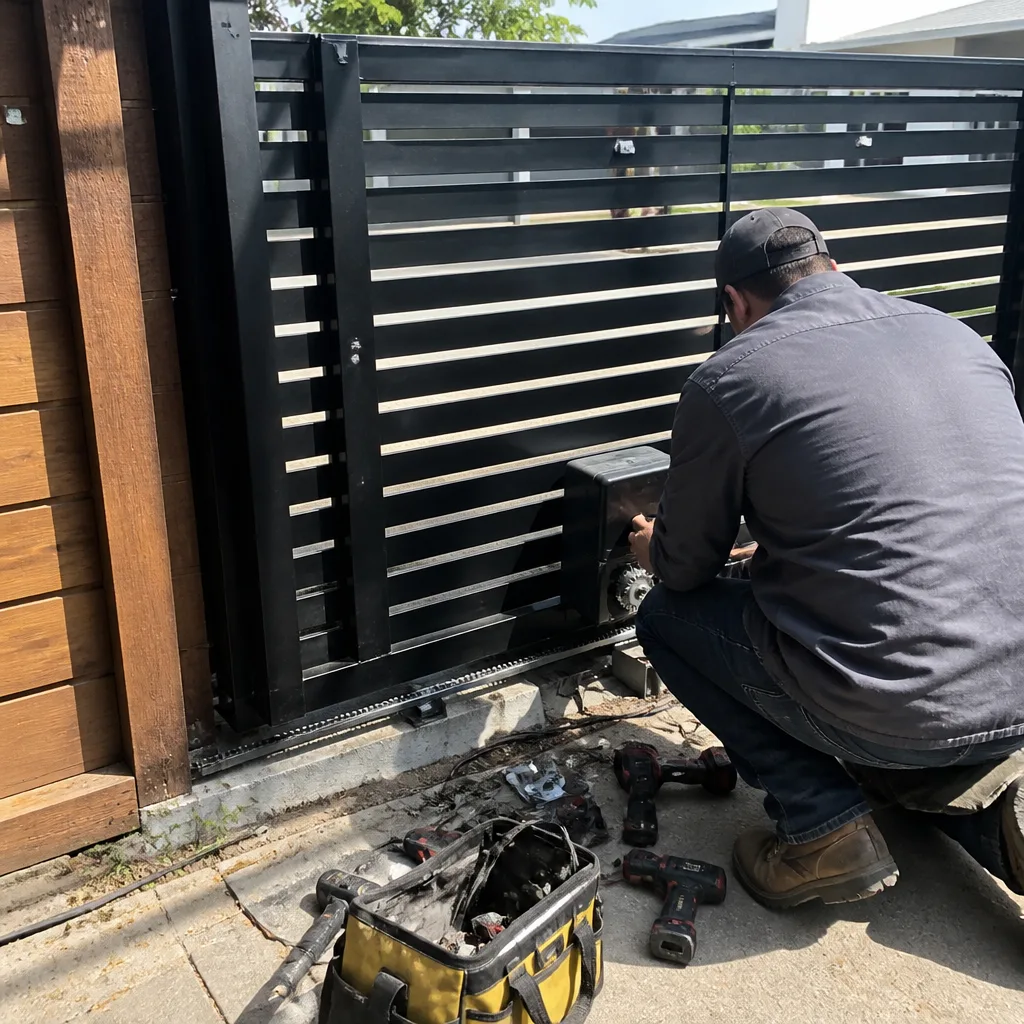 After
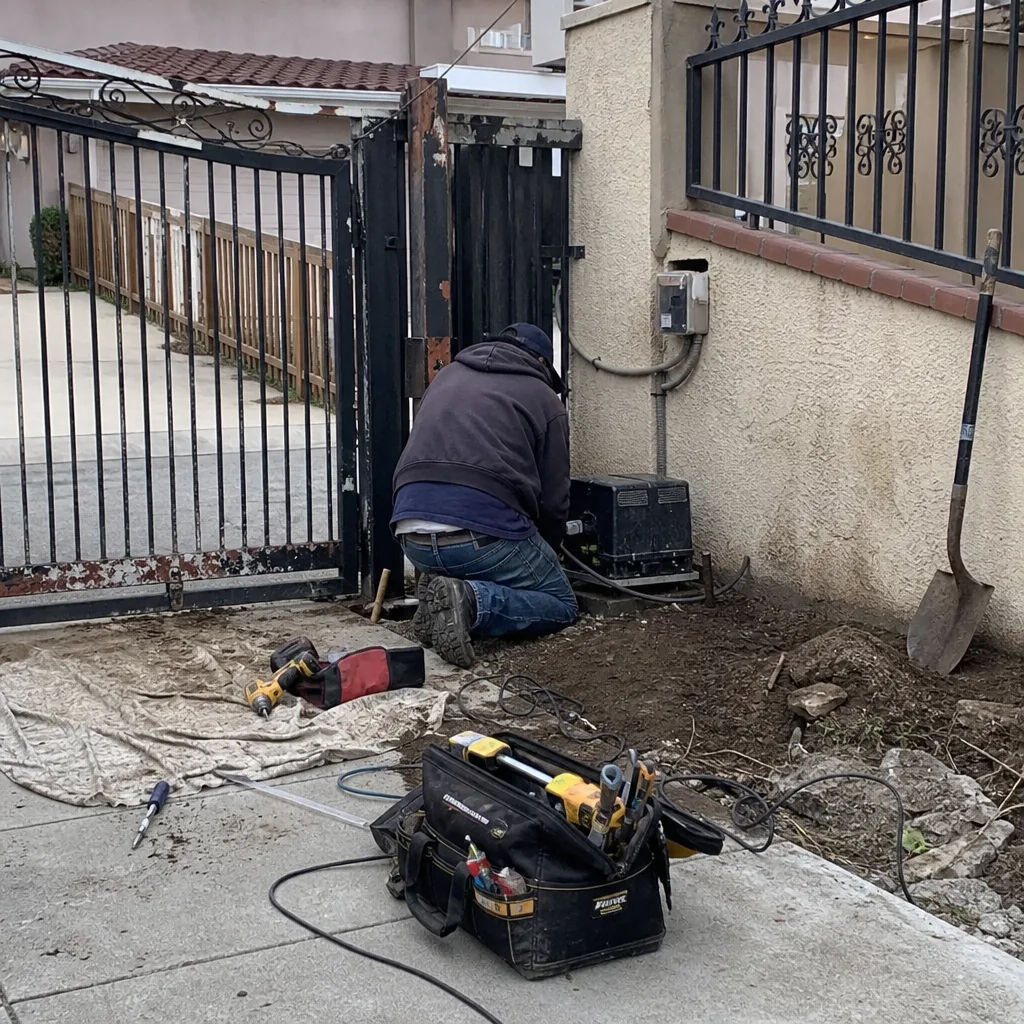 Before
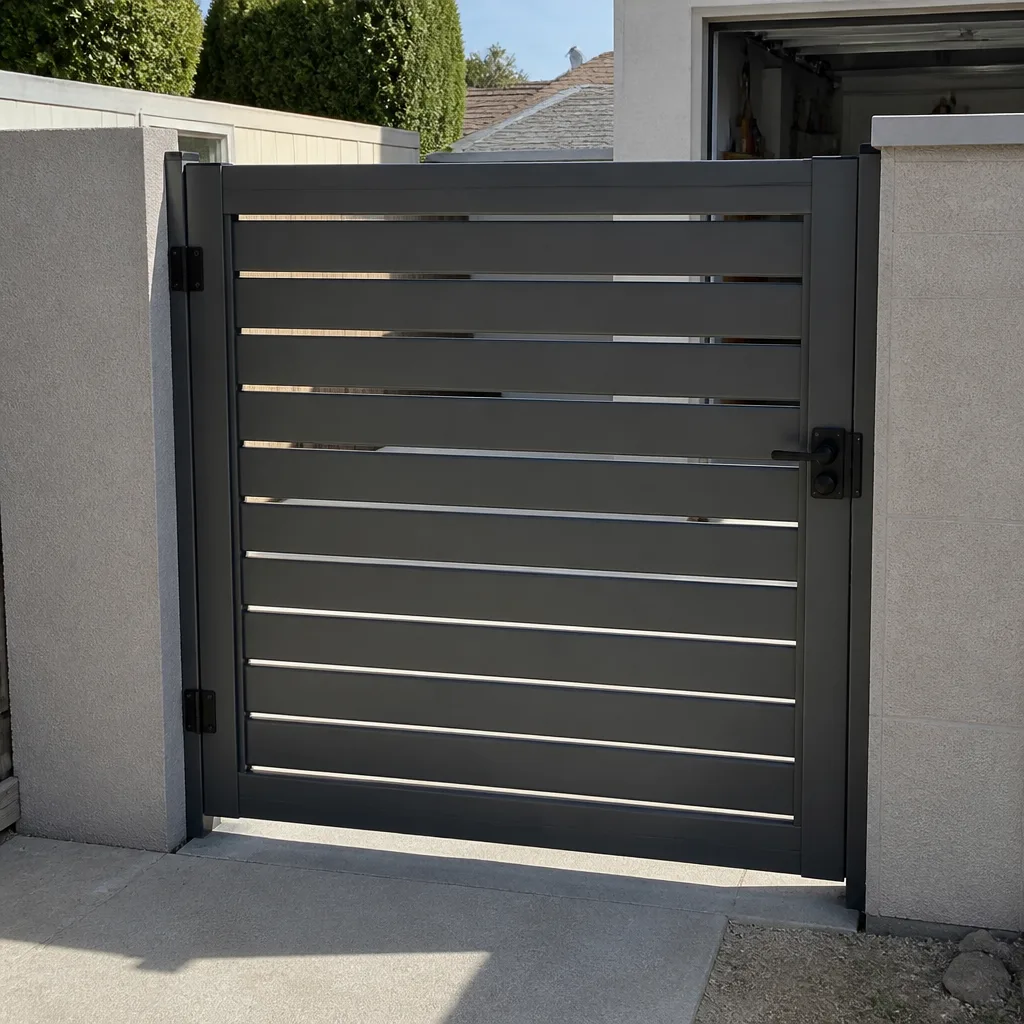 After
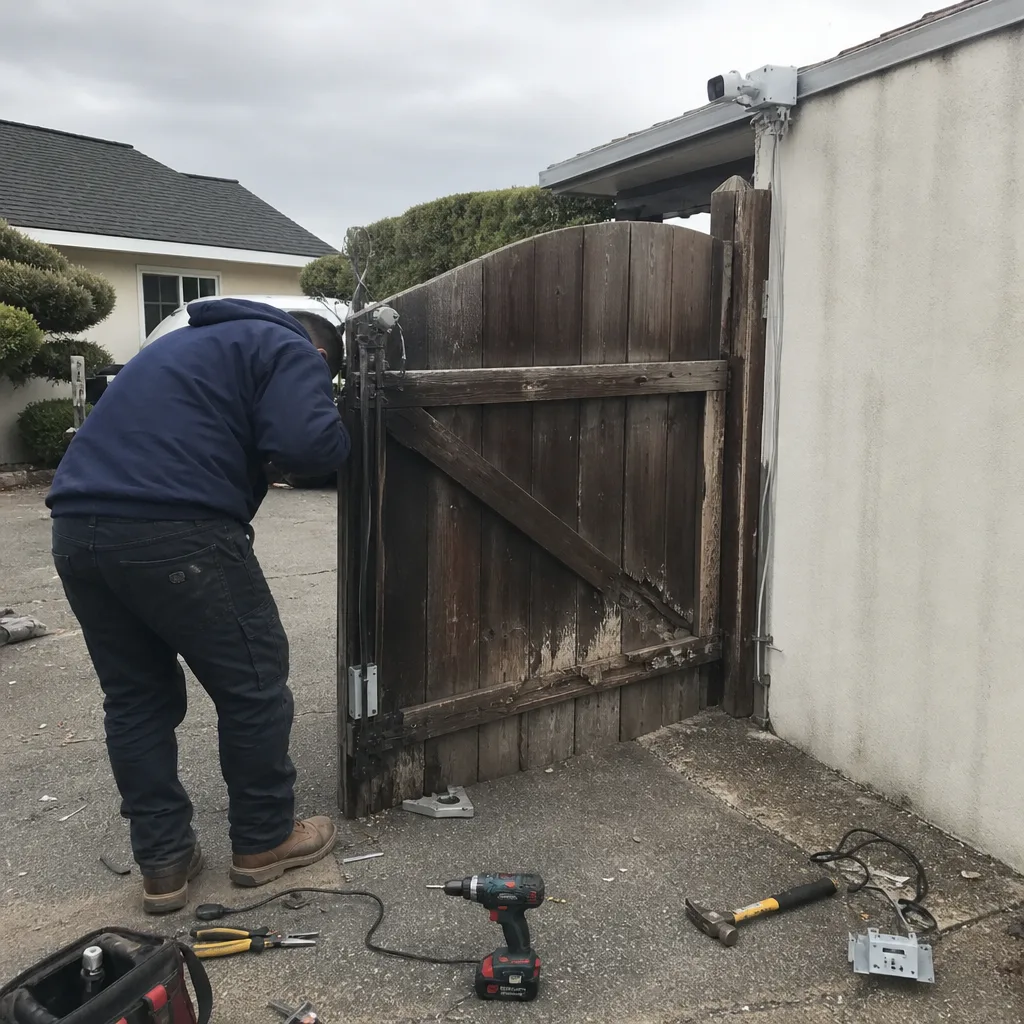 Before
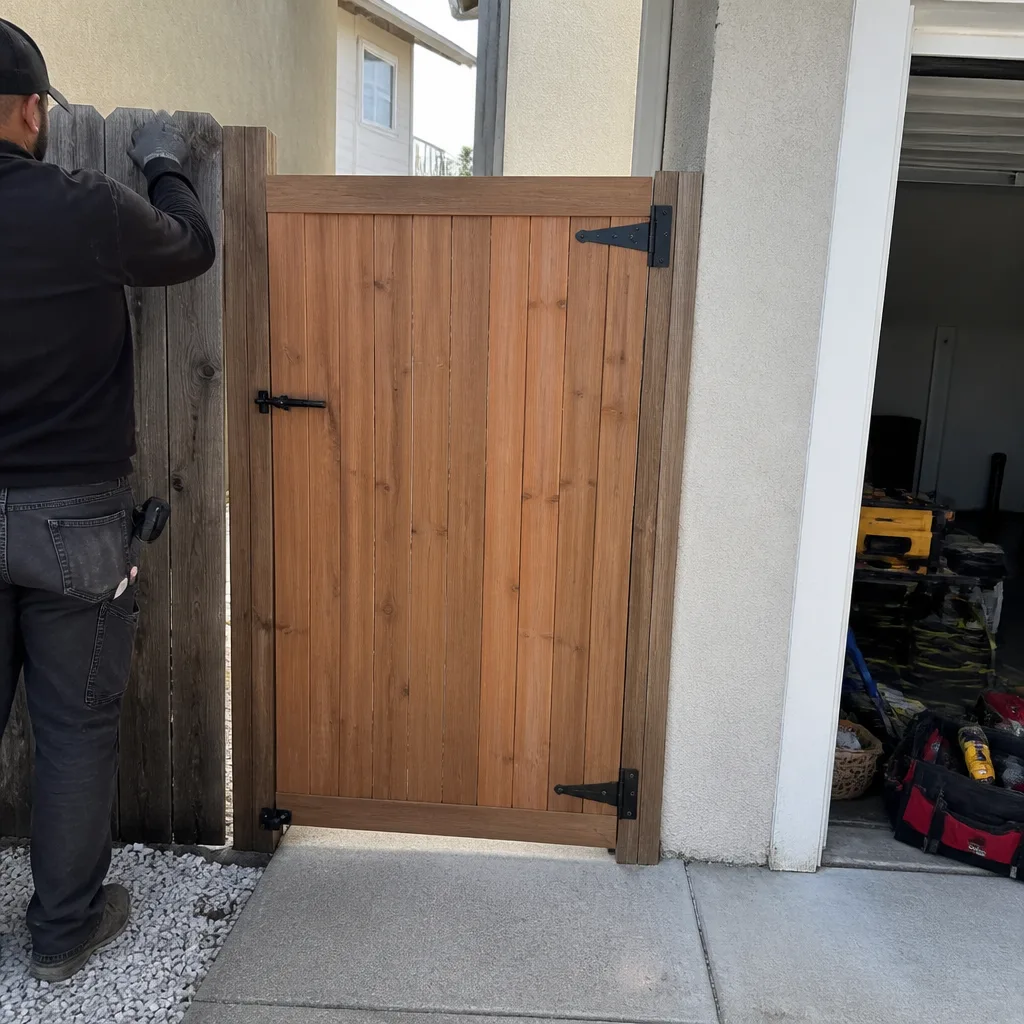 After