
Last updated November 2, 2026
 Wrought iron
 Wood & steel frame
 Farm & ranch
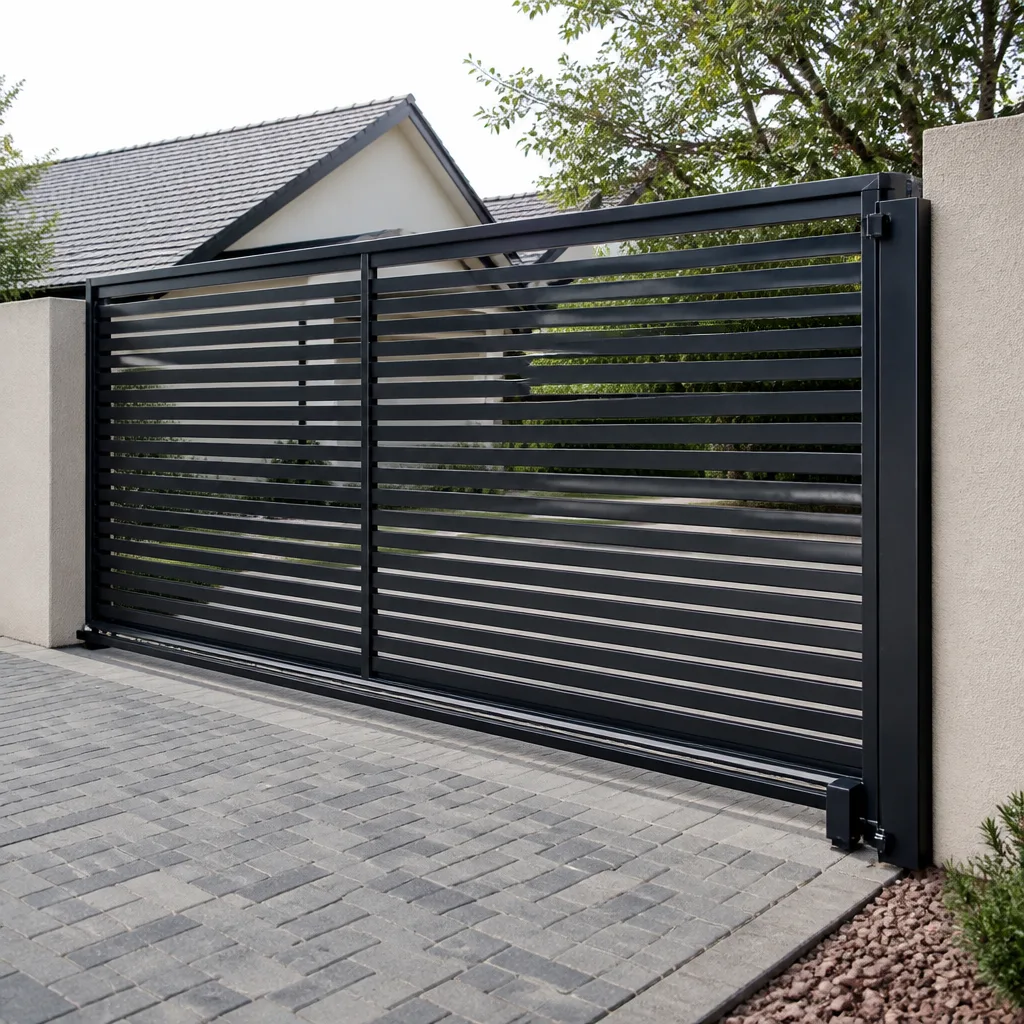 Sliding driveway gates
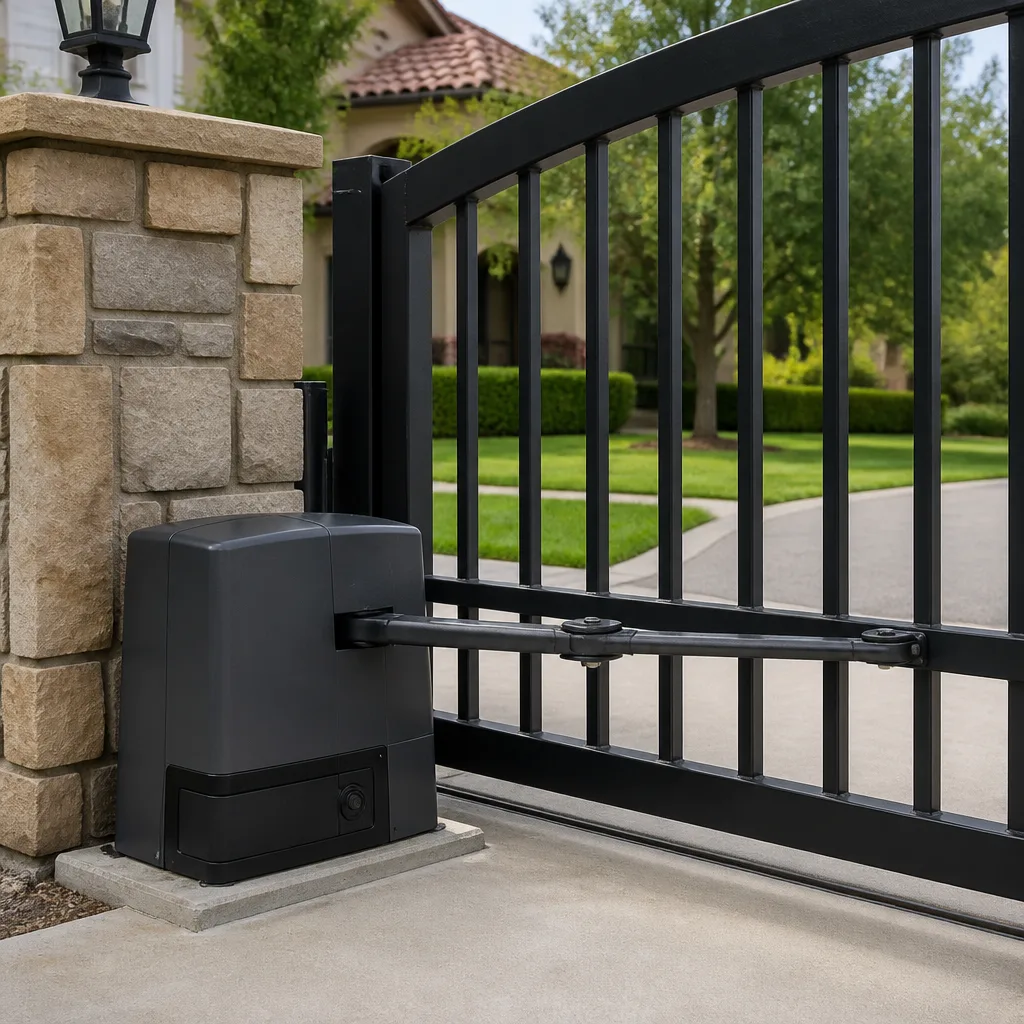 LiftMaster operators
Free on-site gate assessment - hinges, posts, and your LiftMaster or Nice gate operator checked before anything is quoted
The assessment is free and the quote is the invoice.
Get your free estimateGate Repair Warning Signs: A Union City Homeowner’s Reference Guide
Most Union City homeowners don’t think about their gate until it stops moving. By then, the damage is done. What’s surprising, from our repair work across Union City, is that a gate almost never fails without warning. The warnings are just quiet. A gate that hesitates for half a second before moving is not slow. It’s telling you that its motor is working harder than it should, which means something mechanical is creating resistance that will eventually burn out the operator. This guide walks you through what those early signals look and sound like, organized by symptom, so you can spot trouble before it becomes a $2,000 problem instead of a $200 adjustment.
Styles & brands we work with
- Wrought iron
- Wood & steel frame
- Farm & ranch
- Sliding driveway gates
- LiftMaster operators
Quick Answer
The most common early warning signs of a gate that needs repair in Union City are a gate that hesitates before moving, scrapes or grinds while traveling, sits visibly out of level, or makes a clicking sound from the operator without engaging. Any of these means resistance is building somewhere in the system. The fix is usually a mechanical adjustment if caught early, but the same symptom ignored for a few months turns into operator motor failure, a bent track, or a snapped hinge weld, all of which cost dramatically more.
Table of Contents
- Auditory Warning Signs by Gate Type
- Visual Indicators That Predict Structural Failure
- Control Board and Electrical Warning Signs
- Adjustment vs. Replacement: How to Tell the Difference
- Safety Hazards That Require Immediate Shutdown
- Why Union City’s Climate Accelerates Gate Wear
- Common Mistakes to Avoid
- When to Call a Professional
- Frequently Asked Questions
- The Bottom Line
Auditory Warning Signs by Gate Type
A gate should be quiet. Not silent, but quiet enough that you can hear a car drive past while it opens. When a gate starts making noise, that noise is information. Each sound corresponds to a specific mechanical event, and learning to read those sounds is the single most useful diagnostic skill a Union City homeowner can have. Here is what different sounds mean, organized by the type of gate you own.
Sliding Gates: The Scrape, the Grind, and the Thump
Sliding gates move on a track and a set of rollers, and almost every problem announces itself audibly.
- A scraping sound that stays consistent: The gate frame is dragging on the track or, more commonly, a roller has seized and the gate is sliding over it instead of on it. In Union City, fine dust from dry summer months gets into roller bearings and acts like sandpaper. A seized roller that keeps getting used will wear a flat spot into itself and eventually carve a groove into the track.
- A rhythmic thump-thump-thump as the gate travels: You have a flat spot on a roller wheel or a piece of debris stuck to the track. The gate literally bumps over it on every pass. If you can hear the thump from inside your house, the roller has already degraded badly.
- A grinding sound when the gate starts moving: This is the operator gearbox or chain slipping. Sliding gate operators in the budget category, like Mighty Mule and Ghost Controls units, use a plastic drive gear that strips when resistance builds. The grinding is the gear teeth skipping. By the time you hear it, the gear is already damaged and the motor is overheating trying to compensate.
Swing Gates: The Squeak, the Pop, and the Whine
Swing gates pivot on hinges, and the sounds are different because the forces are different.
- A high-pitched squeak on every movement: A hinge pin is running dry. Grease solves it for now. But if the squeak returns within weeks, the hinge bushings are worn and the pin is no longer centered, meaning the gate is slowly leaning and putting uneven load on the operator arm. We see this regularly on older single-swing gates in the older Union City neighborhoods around Alvarado Boulevard where hinges have been through 20 years of temperature swings.
- A sharp pop when the gate reverses direction: This is the hinge or the operator bracket shifting. Bolts have backed out or a weld has cracked. It’s a structural sound, not a lubrication issue, and it means the gate is working its hardware loose with every cycle.
- A whining or straining noise from the operator motor: The motor is pulling more amperage than it should. That only happens when something is fighting it. On BFT and Viking swing operators this is especially important because both brands have thermal protection that will eventually trip, leaving you with an open gate that won’t close and can’t be reset until the motor cools down.
Our gate repair team in Union City has diagnosed more failed operators than we can count that arrived at the shop with the same story: “It made a funny noise for a while, and then it just stopped.” The noise is the early warning. The silence after is the bill.
Visual Indicators That Predict Structural Failure
Your gate talks with more than sound. Look at the gate post, the frame, and the ground clearance, and you can often see a failure forming six to twelve months before it happens. The key is knowing what normal looks like in Union City’s conditions, because our soil and our dry-season winds create predictable patterns.
1. The Leaning Gate Post
The single most predictive visual warning on swing gates is the post itself. Walk to the side of your gate and sight down the post like a plumb line. If the post leans even a few degrees away from the gate when the gate is open, the concrete footing is failing. Union City’s clay-heavy soil tends to move less than other parts of the Bay, but dry season shrinkage around shallow footings is real. A gate post dug to 18 inches will start to lean years before one set at 36 inches. Once the post moves, the hinge bearings run out of alignment, the gate sags, and the operator arm binds. The repair at that point is not a hinge adjustment. It’s a new footing and post.
2. Ground Clearance That Changes
Measure the gap between the bottom of your gate and the ground at both ends when the gate is closed. Write it down. Check it again in three months. If one end has lost clearance, the gate frame is twisting or the hinges are wearing unevenly. On sliding gates, the same measurement from the gate frame to the track tells you if rollers are collapsing. A gate that once had two inches of clearance and now has one inch on the latch side has a hinge problem, not a ground problem. If you let it go until the gate scrapes the driveway, you’re adding motor strain every single cycle.
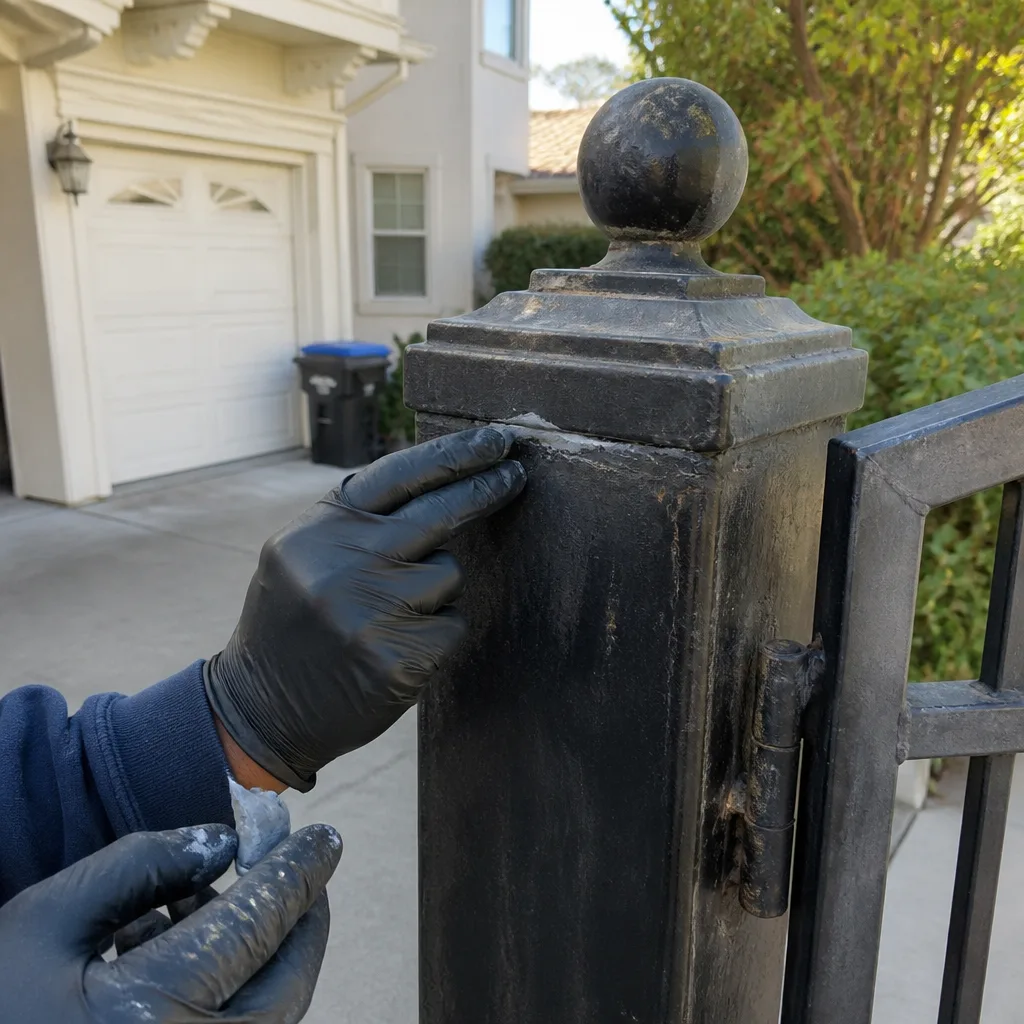
3. Rust Staining at Welds and Bolts
Union City’s proximity to the Bay means morning fog and salt-laden air, especially for gates within a mile or two of the marshlands. Rust rarely starts on the flat steel of a gate face. It starts at welds, bolt heads, and anywhere the powder coating got chipped. What you’re looking for is orange-brown weeping stains running down from a weld. That stain means water is inside the tube and migrating through the joint. The weld itself may still be holding, but the steel around it is thinning from the inside, where you can’t see it. A gate that looks fine on the outside can have less than 30% of its original wall thickness at the bottom rail. That’s the gate that snaps clean in half eventually, usually at the worst possible time.
4. The Gate That Doesn’t Sit Square
Stand in front of your closed gate and look at the gap lines. On a double swing gate, the two leaves should meet evenly top to bottom. If one leaf sags lower than its partner or the gap is wider at the top than the bottom, the frame has racked. This happens gradually on any swing gate, but there’s a specific pattern to watch. When gate manufacturers like Linear and Viking install swing gates, the hinge barrels should share a single vertical axis. Once the gate is out of square by half an inch or more, that axis is gone, the operator is now lifting as well as pushing, and every cycle accelerates hinge wear. The gate is not going to heal itself. Square it back up or replace the hinges now, before the frame damage becomes irreversible.
A gate repair specialist who works on nothing but gates looks at these visual markers the way a mechanic looks at tire wear. Each one tells a story. If you want to learn more about how we inspect gates across Union City, this is the core of what we do on every gate repair visit in Union City.
Control Board and Electrical Warning Signs
Electric gates add a second layer of warning signs that manual gates don’t have, and most of them surface before the operator ever stops working. You don’t need to open the operator housing to spot these. You need to pay attention to behavior.
The Gate That Starts and Then Stops
If your gate begins its travel normally and then stalls two feet later, reverses, and tries again, that’s not a mechanical jam. That’s the control board’s obstruction detection tripping because the board is reading too much current draw. Yes, a physical obstruction could cause it. But if there’s nothing in the gate’s path and the weather is normal, a start-stop-reverse sequence usually means the motor is pulling more amps than the board expects. That’s caused by mechanical resistance, a failing capacitor, or an undersized operator that’s been installed on a gate it was never built to run. This is one of the most common callouts for electric gate repair in Union City, especially on gates where an owner installed a budget operator on a heavy gate and it worked fine for a year before the motor started losing torque.
Intermittent Remote Response
You press the remote. Nothing. You press it again. The gate opens. Most people blame the remote battery. Sometimes that’s it, and replacing the battery costs six dollars. But there’s a more telling version of this symptom: the remote works from twenty feet away in the morning but won’t work from ten feet in the afternoon. That pattern points to the receiver antenna or the control board’s receiver module, not the remote. Heat from direct afternoon sun on an operator housing can cause a marginal solder joint on the receiver board to expand and lose contact. BFT and Linear operators, both common in Union City, house receivers inside the main control enclosure, and we’ve traced afternoon remote failures back to exactly this thermal issue more times than we can remember.
Safety Sensor Behavior That Changes
Photo eyes and safety loops are designed to fail safe, meaning the gate refuses to close if the sensor circuit is interrupted. If your gate stops closing with no obstruction visible and you have to hold the override button to force it closed, the safety circuit is telling you something. On photo eyes, look for a small LED indicator on the sensor itself. A flickering or dim LED means misalignment or a failing sensor, not a blocked beam. On safety loops cut into your driveway, a gate that refuses to close unless you hold the button is the classic symptom of a loop that’s gone open. The gate thinks there’s a car on it. We see loop failures often in Union City driveways where tree roots have lifted the pavement, breaking the loop wire underneath.
Clicking Without Movement
A distinct click from the operator with no gate movement is one of the most misunderstood sounds we diagnose. The click is the relay or capacitor trying to start the motor. If the motor hums for a half second and then stops, that’s usually a failed start capacitor. If the click is followed by silence and nothing else, the motor is dead or the board is not sending run voltage. In either case, repeated clicking is not harmless. Every failed start attempt sends current through components that are not meant to carry it for long. A capacitor that fails catastrophically can damage the control board. If your gate clicks but doesn’t move, stop pressing the button and call someone who works on operator boards, motor contactors, and remote receivers, not just the hinges. We only do gates, and electric gate diagnosis is a daily part of what we do.
Adjustment vs. Replacement: How to Tell the Difference
The most valuable skill a Union City homeowner can develop is knowing whether a gate problem is a tune-up or a transplant. The financial difference is enormous. A hinge adjustment runs under $200 on most gates. An operator replacement runs $1,500 to $2,500 depending on the brand and horsepower. Here’s how to tell which category your gate falls into, using the symptoms from above.
You’re In Adjustment Territory When…
- The noise is new, the gate still travels its full path, and the gate is not visibly leaning or sagging. A new squeak or a light scrape that started in the last week or two is almost always a lubrication or alignment issue.
- The gate is square when you sight down the hinge line and the post looks vertical, but the gate has shifted slightly and now rubs the latch post. That’s a hinge shim or a striker plate adjustment.
- The remote works intermittently from a consistent distance and changing the battery fixes it for a while. A weak remote battery is not a control board failure.
- The opening and closing limits have drifted. The gate runs fine but stops two inches too early or bounces off the stop. That’s a limit switch adjustment, not a hardware failure.
You’re In Replacement Territory When…
- The gate has been noisy for months and the noise has been getting progressively worse. Motors, gears, and rollers wear down. Once the wear pattern is established, adjusting the gate geometry cannot un-wear a bearing.
- The gate post is visibly leaning or the concrete around the post has cracked. No hinge or bracket adjustment can compensate for a moving foundation. The post must be reset or replaced.
- The operator clicks but the gate doesn’t move, and the symptom is the same with a fresh remote battery. The fault is internal to the operator. On most residential models, a failed motor or a burned control board means an operator replacement, because the cost of internal repair parts plus labor approaches the cost of a new unit.
- Rust has penetrated the gate frame deeply enough that tapping the steel with a screwdriver produces a dull thud and showers of scale instead of a metallic ring. The steel is compromised. Patching it buys time, not strength.
In our experience, the most expensive repair bills we see in Union City come from gates that spent months in the adjustment category and were ignored until they graduated to full replacement. The margin between the two categories is measured in weeks, not years, once the symptoms start. Knowing which side of that line your gate sits on is the difference between calling early and calling after the damage is done. And the truth is, if you’re not sure which category you’re in, a professional gate assessment is a lot cheaper than a full operator replacement. We work on gate systems from brands like BFT, Linear, Viking, and Ghost Controls in Union City, so we can likely identify your issue precisely just from hearing the symptoms over the phone.
Safety Hazards That Require Immediate Shutdown
Some gate problems are inconvenient. Some are dangerous. Know the difference, because the dangerous ones need to be treated as an emergency, not a maintenance item.
Signs of Entrapment Risk
An automatic gate is a powerful machine. A residential swing gate operator can exert enough force to seriously injure a child or pet, and even a small sliding gate can crush what’s in its path if the safety systems fail. The warning signs that your gate has become an entrapment hazard are specific:
- The gate doesn’t reverse when it hits resistance. Put a rubber trash can in the gate’s path and close it. The gate should reverse immediately. If it keeps pushing against the can, the force sensitivity is set too high or the control board’s obstruction detection has failed. This is an emergency. Disconnect the operator and close the gate manually until it’s repaired.
- The safety edges or photo eyes are missing, visibly damaged, or disconnected. A gate that once had a rubber safety edge along its leading edge and no longer does is a gate that will not stop for a child’s hand. In California, including Union City, UL 325 compliance is the standard for automatic gate safety, and it exists because gates have killed and injured people.
- The gate can be opened or closed with the remote while someone is working on it physically. This means the power disconnect isn’t being used properly, or the operator’s manual release is faulty.
Signs of Electrical Fault
Automatic gate operators run on line voltage, usually 110V at the operator site. A fault in the wiring or the operator housing can energize the gate itself. Warning signs include:
- A tingle or shock when touching the gate frame or operator housing. This is the most serious electrical warning there is. A gate should never have voltage on the frame. Call an electrician or a gate specialist who handles operator wiring immediately, and keep people away from the gate until it’s disconnected from power.
- Repeatedly tripping breakers or GFCI outlets. If your gate operator keeps tripping the circuit breaker, the operator is drawing too much current. That means a motor short, a failed capacitor, or water intrusion in the operator housing. Repeatedly resetting the breaker without diagnosing the cause can lead to a fire inside the operator.
- Burnt electrical smells from the operator housing. That’s insulation melting. Turn off power at the breaker and leave it off until inspected.
If your gate shows any entrapment or electrical fault warning, stop using the automatic function and close the gate manually with the release handle until a gate specialist can inspect it. Some of the older electric gates we see in Union City are still running on control boards that predate modern UL 325 enforcement. Those boards do not have the same obstruction sensitivity as current units. If your gate is older and you don’t know whether it meets current safety standards, it’s worth finding out sooner rather than later.
Why Union City’s Climate Accelerates Gate Wear
Gates wear out differently in Union City than they do in, say, Tracy or Concord. The climate specifics here matter, because they determine which warning signs show up first and how fast they progress.
Bay Fog and Salt Air
Union City sits at the edge of the Bay, and the summer fog pattern that rolls in through the Hayward corridor carries moisture and salt further inland than many residents realize. Neighborhoods west of 880 and near the Union Landing area see more of this than neighborhoods up against the hills, but the effect is real across the city. Steel gates with scratched or chipped coatings rust faster here than in the Central Valley, not because the steel is worse, but because the air provides the electrolyte. Powder coating is better protection than liquid paint, but neither one survives a chip to the metal. What this means in practice: a rust stain on your gate is more urgent in Union City than it would be in Fremont’s Mission San Jose district, where the air is drier. Don’t wait to touch up chips and scratches. The rust clock is running faster here.
Clay Soil and Seasonal Movement
Union City’s soil is heavy clay in much of the city, especially in the flatlands between Alvarado Niles Road and the Bay. Clay expands when wet and shrinks when dry. Gate posts set in concrete still move if the concrete column isn’t deep enough, because the soil around the concrete moves and carries the concrete with it. This is why we see more leaning gate posts in Union City after a dry winter than after a wet one. The wet winter softens the clay and then the dry summer shrinks it, and the post tips. A gate post that was plumb when installed in the wet season can be visibly out by October. This is a local pattern. If your gate post leans, assume soil movement is part of the picture and have the post reset at an appropriate depth, not just shimmed.
Dry Season Dust
The opposite problem shows up in the fall. Union City’s dry season runs May through October, and the hills above the city send fine dust down with the evening winds. That dust gets into roller bearings, operator gearboxes, and chain drives. Rollers that were lubricated in April are running dry and gritty by August. Sliding gates in particular suffer. The fix is simple: keep rollers cleaned and lubricated on a schedule that matches our local dry season. If you do nothing else, annual roller maintenance in the spring and fall can extend the mechanical life of your gate by years. This is one of the most common bits of advice we give on our gate repair home page, and it applies to every sliding gate in the city.
Common Mistakes to Avoid
- Spraying WD-40 on everything. WD-40 is a water displacement formula, not a long-term lubricant. It breaks down existing grease, and in less than a month the gate is louder than before. Use a proper lithium or silicone grease on hinge pins and rollers, and hit the chain with a chain-specific lubricant. If you’re not sure which lubricant to use, the wrong one is worse than none.
- Driving a binding gate with a bigger motor instead of fixing the mechanical resistance. We see this in Union City over and over. The operator dies, and someone replaces it with a more powerful operator instead of fixing the hinge or roller that caused the old one to fail. The new operator costs more and fails faster because the mechanical problem hasn’t changed. Fix the resistance first. The motor lasts.
- Ignoring a gate that only acts up in one season. Seasonal gate problems are diagnostic gold. A gate that only makes noise in the dry season has a lubrication or dust problem. A gate that only trips its safety loop in the rainy season has a water intrusion problem. A gate that only acts up when the afternoon sun hits it has a thermal issue on the board. Don’t dismiss a seasonal symptom as “just the weather.” That’s the weather revealing a weakness.
- Lubricating without cleaning first. Grease over dirt creates grinding paste. Clean the surface, remove the old dirty grease, then apply fresh lubricant. The order matters. A dirty hinge pin that just gets re-greased will wear faster than one that was left alone.
- Forcing a gate that’s stuck. If the gate jams and you muscle it through, something bends. A gate that won’t move under its own power is trying to tell you that a roller is seized, a hinge has snapped, or something is jammed in the track. Forcing it open applies human force to components that have already failed. That’s how a $30 roller replacement becomes a bent track and a $900 repair.
- Skipping safety system checks because “it’s been fine for years.” Safety edges, photo eyes, and loop detectors fail quietly. You don’t know they’re dead until they don’t stop the gate when they should. Test them periodically. The test costs nothing and takes thirty seconds.
- Painting over rust without treating it. Painting over rust seals the moisture in. The steel keeps corroding under the paint, and by the time the paint bubbles, the damage is deeper than it was before you “fixed” it. Rust needs to be removed or chemically neutralized, then primed, then top-coated. Anything less is cosmetic theater.
When to Call a Professional
Some gate work is genuinely DIY-friendly: cleaning rollers, lubricating hinges, checking remote batteries, testing safety reversal. Other work is not. You should call a gate specialist when the gate post is leaning, when the operator clicks but won’t run, when the control board shows scorch marks or melted connections, when rust has reached the point where you can push a screwdriver through the steel, or when the gate fails its safety reversal test. These are not adjustments. They’re repairs that require specific tools, specific parts, and a working knowledge of how the operator interacts with the gate mechanics. One more thing: when in doubt, call. The cost of a professional assessment is a fraction of the cost of repairing damage caused by guesswork. Gate Repair services in Union City include free estimates. If your gate has been making a noise you don’t recognize or behaving oddly, call (833) 593-6430 and describe the symptom. We can often tell you over the phone whether it’s urgent, and if it is, we’ll schedule you for a visit. From the motor to the hinge, we work on the whole system because we only do gates.
Frequently Asked Questions
Minor gate repairs in Union City, like hinge adjustments, roller replacements, and limit switch settings, typically cost $150 to $400 depending on the gate type and the parts involved. Operator replacements on electric gates typically run $1,200 to $2,500 depending on the brand and horsepower of the operator unit. The final quote is always discussed and agreed before any work starts. Call (833) 593-6430 for an exact quote on your specific gate. Estimates are free.
A full gate installation in Union City includes the gate itself, posts set at appropriate depth, hinges, operator (if automated), control board, safety devices like photo eyes or edges, and all wiring. The specifics depend on whether it’s a swing or slide gate and whether it’s attached to an existing fence run. A proper installation also includes setting the post footings below frost and soil movement depth, which in Union City’s clay soil typically means 30 to 36 inches. Ask for a written breakdown of everything included before work begins.
For emergency situations where a gate is stuck open and cannot be secured manually, we make every effort to get a technician out the same day in Union City. Call (833) 593-6430 and describe the situation. If the gate can be closed manually using the release handle, you can secure the property until we arrive.
Yes. Electric gate repair is one of the three core services we offer, and it includes the full electrical system: operator, control board, receivers, remote programming, safety loops, photo eyes, and safety edges. In Union City, automatic gates are required to meet UL 325 safety standards, and the work we do on electric gates is designed to keep the gate compliant as well as functional. We work on specific systems from brands including BFT, Linear, Viking, and Ghost Controls, so the parts and the diagnostic knowledge match your specific operator.
In Union City, the most common gate problem we see is sliding gate roller failure caused by seasonal dust getting into the bearings. The dry season from May through October introduces fine grit into roller assemblies, and gates that aren’t maintained on a seasonal schedule wear through rollers faster here than in other parts of the Bay. Find more guides & resources on our blog. The second most common is swing gate post lean caused by clay soil movement between the wet and dry seasons. If your gate is noisy in the fall or your post looks off after a dry summer, those are the two local patterns you’re likely experiencing.
A gate usually needs adjustment if the noise is recent, the gate is still square, and the post is vertical. A gate usually needs component replacement if the noise has been present for months, the post has visibly moved, the operator clicks without moving, or the steel has rusted through. The financial difference is substantial: an adjustment typically runs under $400 while an operator replacement starts near $1,200. If you can’t confidently tell which category your gate is in, call (833) 593-6430 for a free assessment.
The Bottom Line
A gate that works is not necessarily a gate that’s healthy. In Union City, where coastal fog, clay soil, and seasonal dust all work against gate hardware, the warning signs show up early and clearly if you know what you’re listening and looking for. Squeaks, scrapes, pops, clicks, leaning posts, changing clearances, and failing safety reversals are not annoyances to live with. They’re specific messages about specific parts of your gate system, and each one has a timeline. Catch them in the first weeks and you’re paying for adjustments. Ignore them for a season and you’re paying for replacements. Our gate repair work spans every part of the system, from the motor to the hinge, because gate installation in Union City taught us what fails first and why. Pay attention to your gate this week. If you hear something you can’t explain, call (833) 593-6430. The earlier you call, the smaller the bill.
Written by the team at Gate Repair Union City, serving Union City since 2018.
See the difference
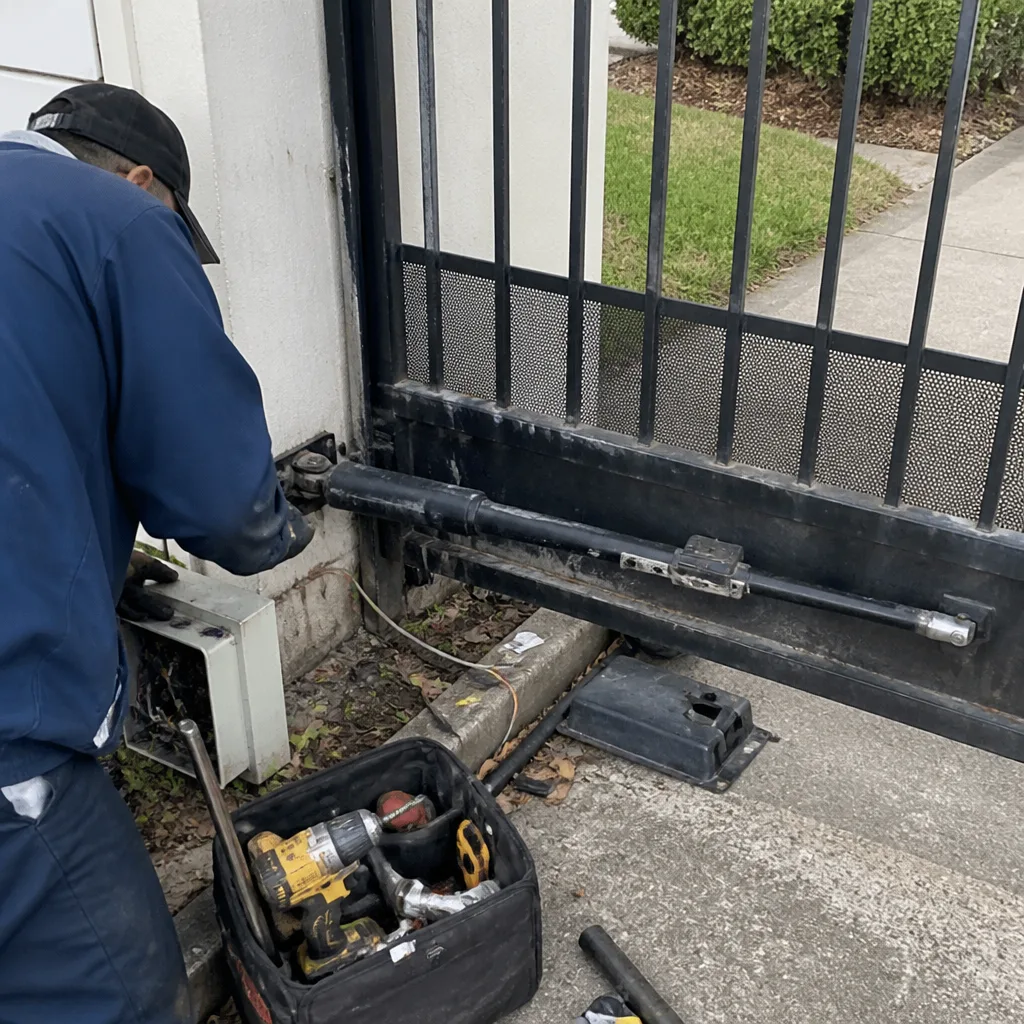 Before
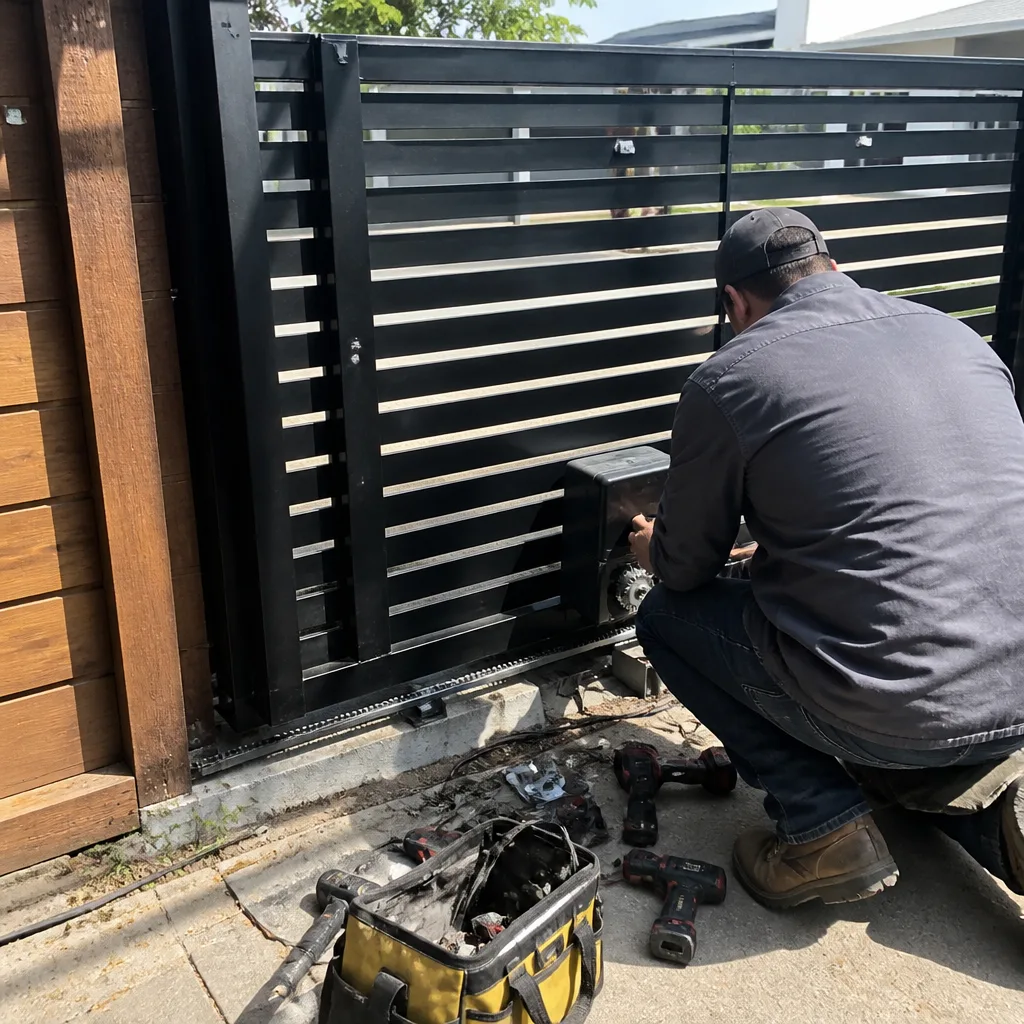 After
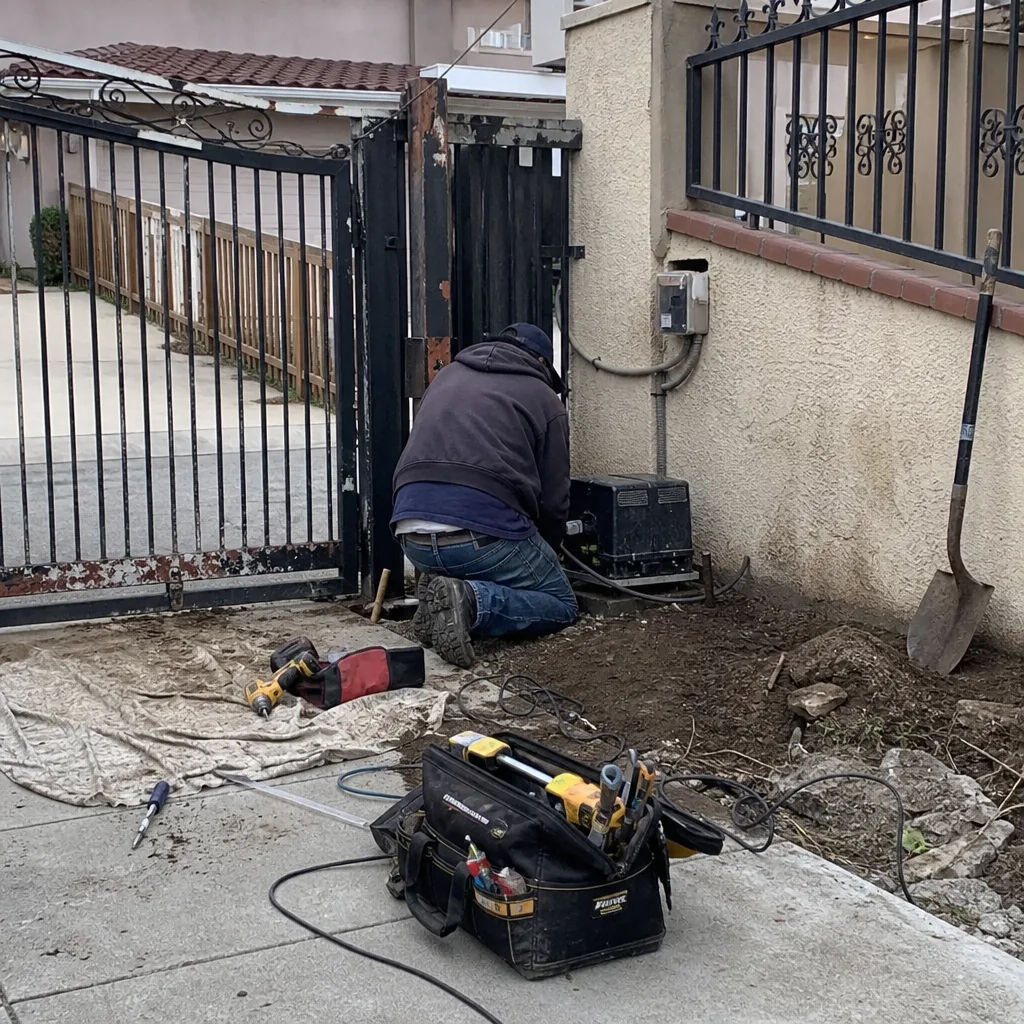 Before
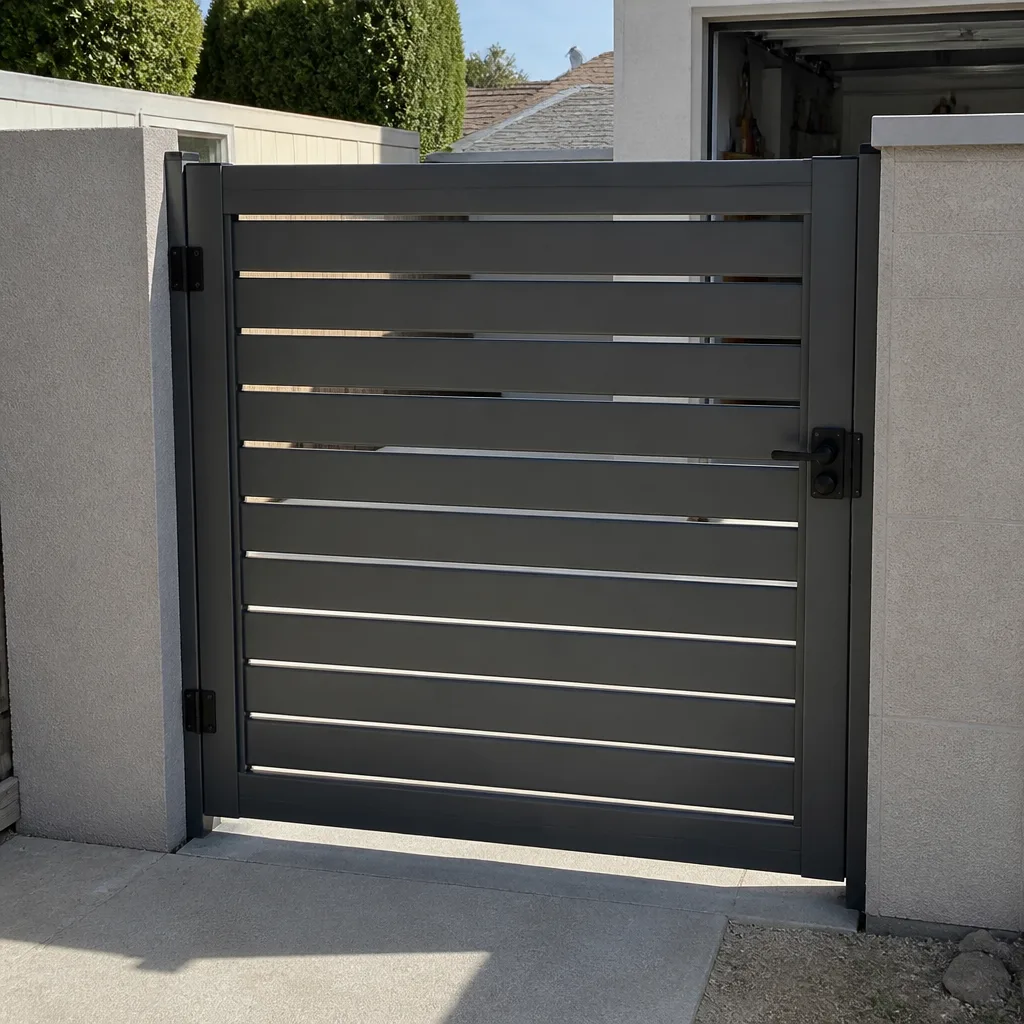 After
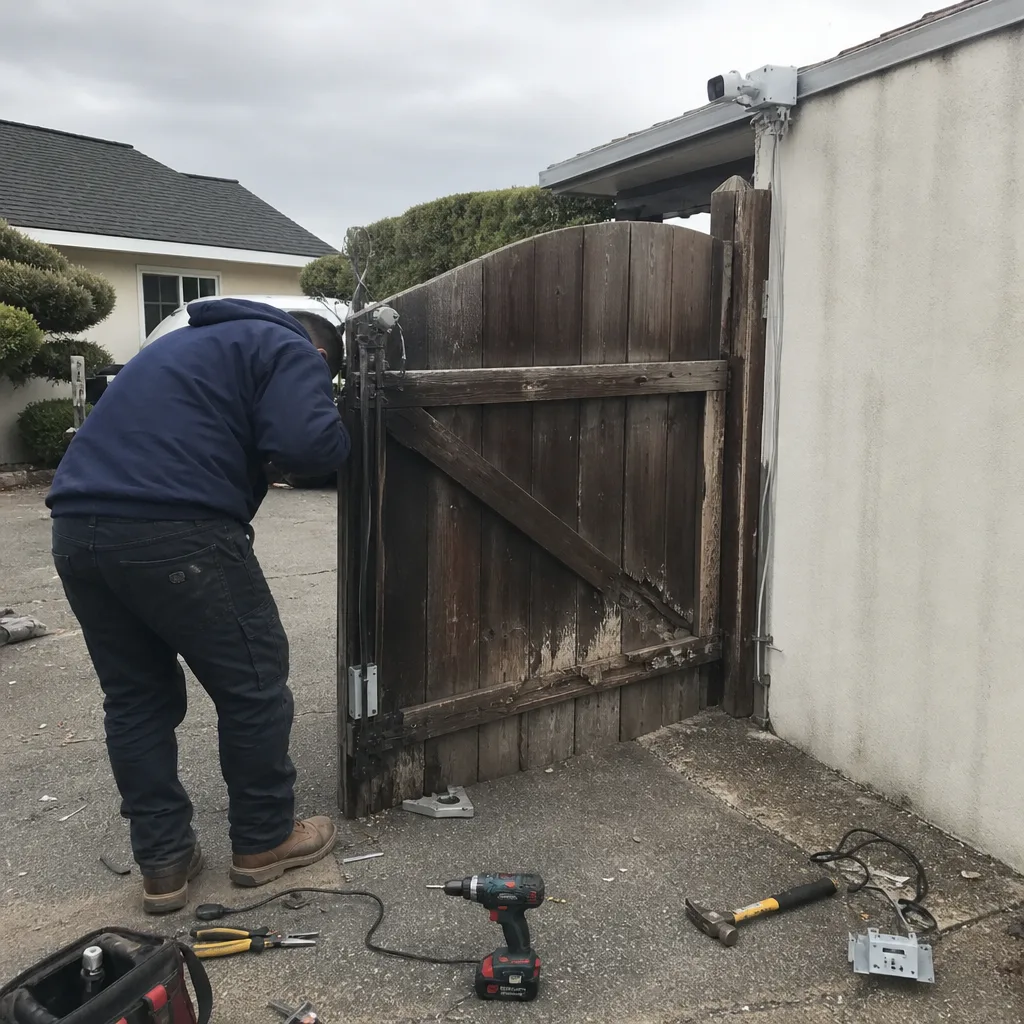 Before
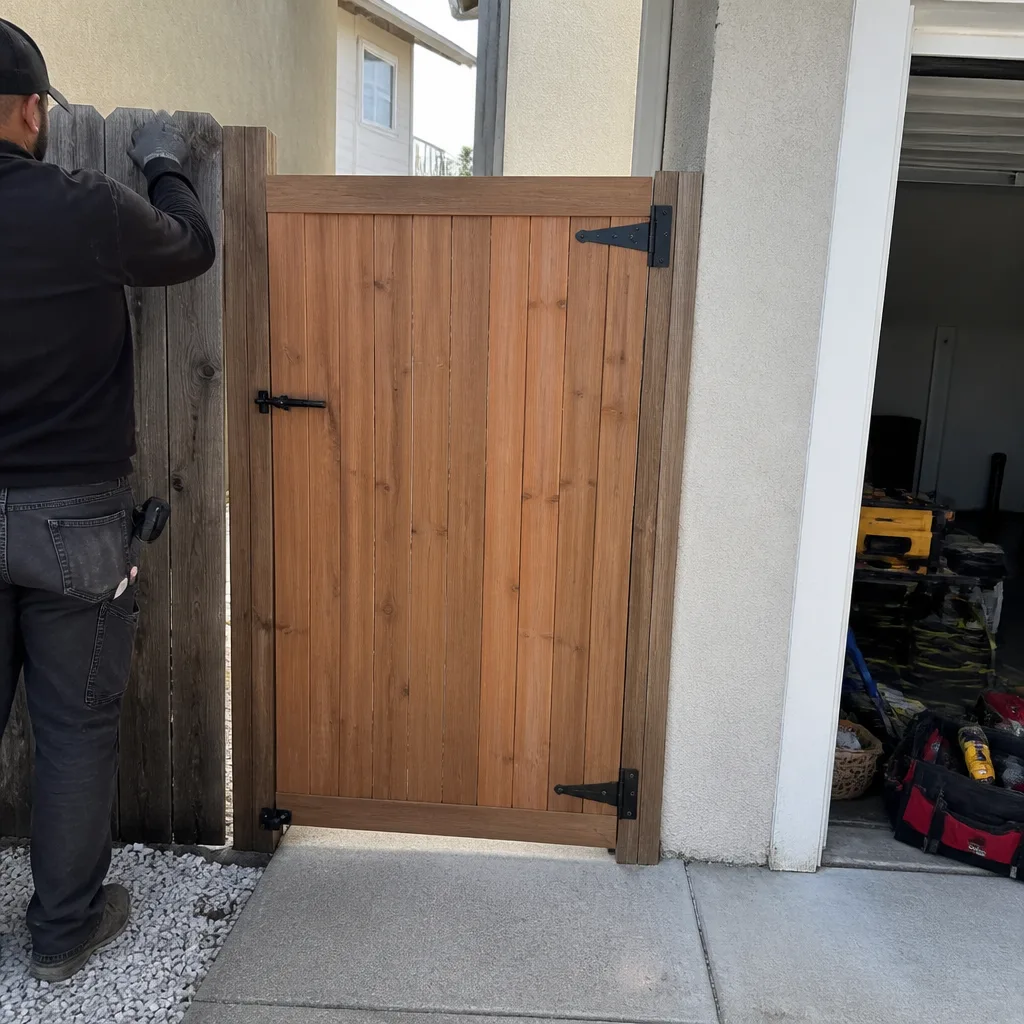 After